Born in Slovakia · Nationality Austro-Hungarian — politics / Slovak nationalism / political Catholicism / autonomy

Andrej Hlinka

Documented profile covering 6 controversies, including “1938–1945: Posthumous appropriation of his name by Hlinka Guard and use of quotations to legitimise regime and antisemitism” and “1919–1938: Consistent opposition to Czechoslovak centralism and campaign for Slovak autonomy”.

Are you concerned? Right of reply

Profile No. 2240 · Updated on 12 October 2026

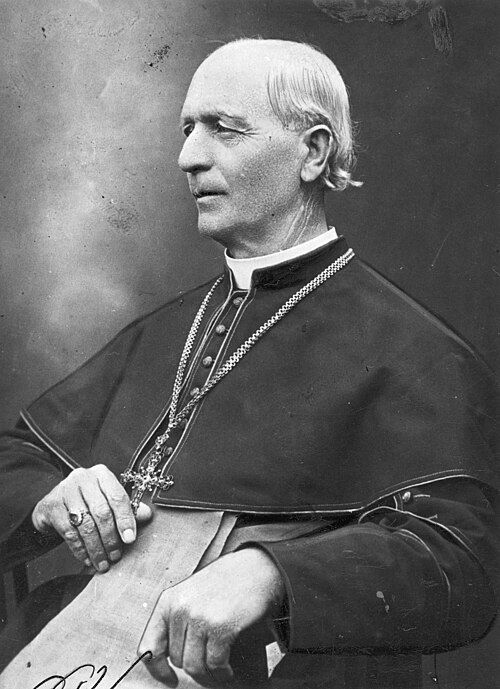
Portrait of Andrej Hlinka

Photo: Wikimedia Commons

6Documented controversies+ 1 background event
6Sources
1 followed by a conviction

I. Documented controversies

01

1938–1945

1938–1945: Posthumous appropriation of his name by Hlinka Guard and use of quotations to legitimise regime and antisemitism

No legal proceedings

After his death, the authoritarian regime made extensive use of his name: the Hlinka Guard, Hlinka Youth and a political cult. Recent research highlights that quotations attributed to Hlinka were taken out of context or manipulated to justify anti-Jewish policies.

State of the evidence
Documented
Legal status — source text
Not applicable

Sources · 1

  1. [1]
    Cambridge University Press / Contemporary European HistoryUnveiling Hidden Russophilia or Paradoxical Pragmatism? Slovak–Soviet Relations Under the Molotov–Ribbentrop PactAcademic publicationHigh reliability

Last verified: 14 September 2026

Add to this entry

02

1919–1938

1919–1938: Consistent opposition to Czechoslovak centralism and campaign for Slovak autonomy

No legal proceedings

Hlinka made Slovak autonomy within Czechoslovakia the central objective of his party and denounced unitary 'Czechoslovakism'.

State of the evidence
Well documented
Legal status — source text
Not applicable

Sources · 2

  1. [1]
    Slovak National GalleryAndrej HlinkaArchiveVery high reliability
  2. [2]
    andrejhlinka.skAndrej Hlinka – životopisSecondary sourceMedium reliability

Last verified: 14 September 2026

Add to this entry

03

1925–1938

1925–1938: His party becomes leading Slovak Catholic nationalist movement with programme described as antisemitic by YIVO

No legal proceedings

Under Hlinka, the Slovak People's Party became the leading Catholic autonomist force. YIVO describes it as Slovakia's principal antisemitic party, combining xenophobic nationalism and political Catholicism.

Legal status — source text
Not applicable

Sources · 2

  1. [1]
    YIVO Encyclopedia of Jews in Eastern EuropeAntisemitic Parties and MovementsAcademic publicationVery high reliability
  2. [2]
    Ústav pamäti národaHolocaust in SlovakiaOfficial documentVery high reliability

Last verified: 14 September 2026

Add to this entry

04

1936

1936: HSĽS congress marked by rise of radical wing and call to fight 'Judeo-Bolshevism'

No legal proceedings

Following Hitler's rise, the party's radical wing gained influence. A 1936 congress also attended by Nazi representatives adopted rhetoric advocating a struggle against 'Judeo-Bolshevism'.

State of the evidence
Documented
Legal status — source text
Not applicable

Sources · 1

  1. [1]
    Ústav pamäti národaAnti-Semitic Legislation in Slovakia and EuropeOfficial documentVery high reliability

Last verified: 14 September 2026

Add to this entry

05

1919-08–1920-04

1919–1920: Clandestine journey to Paris Peace Conference under false identity, followed by detention without trial

No legal proceedings

Hlinka travelled clandestinely to Paris to advocate Slovak autonomy, using irregular travel documents. On his return, he was detained for approximately seven months and then released following his election to Parliament.

State of the evidence
Well documented
Attribution
Political responsibility

Sources · 1

  1. [1]
    andrejhlinka.skAndrej Hlinka – životopisSecondary sourceMedium reliability

Last verified: 14 September 2026

Add to this entry

06

1906–1909

1906–1909: Conviction for Slovak nationalist agitation, imprisonment and conflict with church hierarchy

Conviction

Hlinka was prosecuted and convicted by Hungarian authorities for political agitation in support of the Slovak national movement and spent an extended period in prison. His ecclesiastical suspension was subsequently overturned by the Holy See.

State of the evidence
Established by a court
Attribution
Accused

Sources · 1

  1. [1]
    andrejhlinka.skAndrej Hlinka – životopisSecondary sourceMedium reliability

Last verified: 14 September 2026

Add to this entry

II. Documented background

Documented biographical or institutional milestones (elections, appointments, foundings, acquisitions…). These are not controversies and are not counted as such.

  1. 1938-08-16

    August 1938: Death before creation of Slovak State, post-autonomy Hlinka Guard and 1942 deportations

    Hlinka died on 16 August 1938, several weeks before Slovak autonomy in October 1938 and several months before establishment of the Slovak State in March 1939.

    Sources · 2
    1. Slovak National Gallery — Andrej Hlinka
    2. Cambridge University Press / Contemporary European History — Unveiling Hidden Russophilia or Paradoxical Pragmatism? Slovak–Soviet Relations Under the Molotov–Ribbentrop Pact

III. Constellation of documented links

No documented link with another published profile for now.

Two profiles are linked when a documented controversy of one names the other. The link points to that controversy and its sources; it does not indicate a personal relationship.

IV. Has something changed?

A new court decision, a missing source, a mistake? Tell us what should be updated: every request is read by the editorial team.

Support the archive

Controversia checks and updates its profiles independently. Support is optional and has no effect on the content of profiles.

Donate

iPhone and iPad

Install Controversia

  1. Tap Share
  2. then Add to Home Screen

Tap Share, then Add to Home Screen.