Born in Germany · Nationality German — Science / intellectuals / activism

Carl Schmitt

Documented profile covering 9 controversies, including “Post-war Glossarium: Continuing antisemitic remarks and refusal of clear repentance” and “Internment and questioning at Nuremberg as witness and 'possible defendant', without indictment”.

Are you concerned? Right of reply

Profile No. 2319 · Updated on 12 October 2026

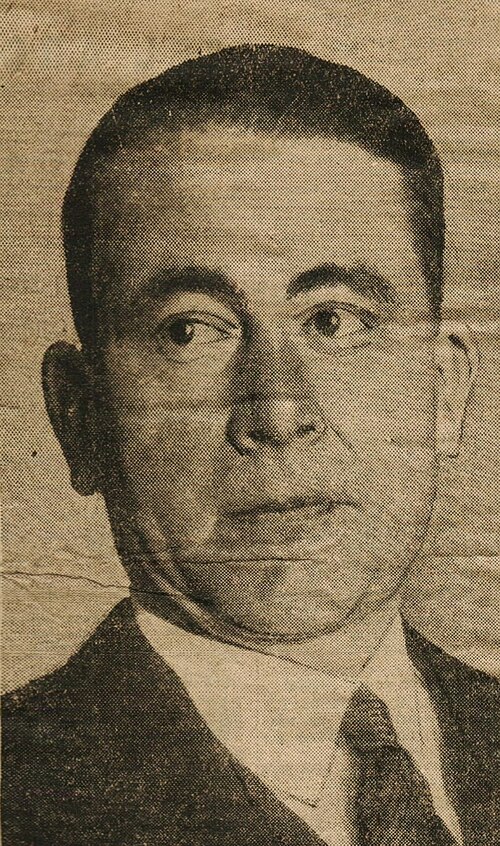
Portrait of Carl Schmitt

Photo: Wikimedia Commons

9Documented controversies+ 1 background event
8Sources
0Formal charge · all time
0Conviction

I. Documented controversies

01

1947–1951; publications postérieures

Post-war Glossarium: Continuing antisemitic remarks and refusal of clear repentance

No legal proceedings

Schmitt's journals published as Glossarium contain antisemitic remarks and hostile statements about Jewish intellectuals after 1945. Historical studies show that he subsequently denied or minimised his public antisemitic involvement under the Third Reich while continuing to use antisemitic patterns of thought in private notes.

State of the evidence
Documented
Attribution
Directly implicated

Sources · 2

  1. [1]
    Oxford AcademicThe “True Enemy”: Antisemitism in Carl Schmitt’s Life and WorkAcademic publicationVery high reliability
  2. [2]
    Modern Intellectual History / Cambridge University PressEichmann in Plettenberg: Carl Schmitt reads Hannah ArendtAcademic publicationVery high reliability

Last verified: 15 September 2026

Add to this entry

02

1945–1947

Internment and questioning at Nuremberg as witness and 'possible defendant', without indictment

No legal proceedings

Schmitt was interned by the Americans in 1945–1946, then detained for approximately two months at Nuremberg in 1947 as a witness and 'possible defendant'. Investigators examined his role as a jurist of the regime, but no formal indictment was ultimately brought against him.

State of the evidence
Documented
Attribution
Directly implicated

Sources · 1

  1. [1]
    Duncker & HumblotEx Captivitate Salus – Erfahrungen der Zeit 1945/47Secondary sourceHigh reliability

Last verified: 15 September 2026

Add to this entry

03

1939–1941

Großraum theory and Reich's spatial order amid Nazi expansion

No legal proceedings

Before and during the early war, Schmitt developed his Großraum, or greater-space, theory based on excluding external powers from an area dominated by a leading power. Its relationship to Reich expansion and Nazi international law remains a major debate about his intellectual contribution to German imperialism.

State of the evidence
Documented
Attribution
Directly implicated

Sources · 1

  1. [1]
    Oxford AcademicThe Oxford Handbook of Carl Schmitt – Carl Schmitt and the GroßraumAcademic publicationVery high reliability

Last verified: 15 September 2026

Add to this entry

04

3–4 October 1936

1936 conference on 'Jewry in legal scholarship' and antisemitic purge programme

No legal proceedings

Schmitt organised a Munich conference on the influence of 'Jewry' in legal scholarship, delivered the opening and closing addresses and called, among other things, for Jewish authors to be separately identified, libraries purged and their origins indicated in citations.

State of the evidence
Documented
Attribution
Directly implicated

Sources · 1

  1. [1]
    Bundeszentrale für politische BildungOrtung und Ordnung – Carl Schmitt im NationalsozialismusSecondary sourceVery high reliability

Last verified: 15 September 2026

Add to this entry

05

December 1936

SS attacks his opportunism and he loses positions within Nazi legal organisations

No legal proceedings

In December 1936, the SS newspaper Das Schwarze Korps attacked Schmitt, questioning the sincerity of his National Socialism and highlighting his earlier relationships with Jews. He lost several party and legal positions but remained an NSDAP member, Prussian state councillor and professor in Berlin.

State of the evidence
Documented
Attribution
Directly implicated

Sources · 1

  1. [1]
    Oxford AcademicCarl Schmitt’s Life: A ChronologyAcademic publicationVery high reliability

Last verified: 15 September 2026

Add to this entry

06

1935

Defence of Nuremberg Laws as 'constitution of freedom'

No legal proceedings

Schmitt published defences of the Nuremberg racial laws, which deprived Jews of civil rights and notably prohibited so-called mixed marriages. He described this framework as the 'constitution of freedom' and contributed to its legal legitimation.

State of the evidence
Documented
Attribution
Personally implicated

Sources · 1

  1. [1]
    German Law Journal / Cambridge University PressCarl Schmitt and Ossip Flechtheim at Nuremberg: A Crossroads for International Justice and Intellectual HistoryAcademic publicationVery high reliability

Last verified: 15 September 2026

Add to this entry

07

July 1934

'Der Führer schützt das Recht': Legal justification of Night of the Long Knives

No legal proceedings

Following extrajudicial executions during the Night of the Long Knives, Schmitt published 'Der Führer schützt das Recht', portraying Hitler's actions as the source and protection of law. The text became a major example of law being used to legitimise regime violence.

State of the evidence
Documented
Attribution
Directly implicated

Sources · 1

  1. [1]
    German Law Journal / Cambridge University PressCarl Schmitt and Ossip Flechtheim at Nuremberg: A Crossroads for International Justice and Intellectual HistoryAcademic publicationVery high reliability

Last verified: 15 September 2026

Add to this entry

08

18 April 1933

Hans Kelsen: Refusal to support petition against dismissal of Jewish legal scholar from Cologne University

No legal proceedings

Following the April 1933 Nazi law excluding numerous Jews and opponents from public service, Schmitt was the only member of Cologne's law faculty to refuse to support a petition intended to prevent Hans Kelsen's dismissal.

State of the evidence
Documented
Attribution
Directly implicated

Sources · 1

  1. [1]
    Oxford AcademicCarl Schmitt’s Life: A ChronologyAcademic publicationVery high reliability

Last verified: 15 September 2026

Add to this entry

09

1932

Preußenschlag: Legal representation of Reich during removal of Prussian government

Civil / administrative proceedings

During the July 1932 Preußenschlag, Papen's government removed Prussia's democratically elected government. Schmitt represented the Reich in Preußen contra Reich before the Staatsgerichtshof. The court subsequently ruled the operation partially unconstitutional.

State of the evidence
Documented
Attribution
Directly implicated

Sources · 1

  1. [1]
    Oxford AcademicCarl Schmitt’s Life: A ChronologyAcademic publicationVery high reliability

Last verified: 15 September 2026

Add to this entry

II. Documented background

Documented biographical or institutional milestones (elections, appointments, foundings, acquisitions…). These are not controversies and are not counted as such.

  1. May–November 1933

    Joining NSDAP and rapid appointment to key positions in Nazi legal coordination

    Schmitt joined the NSDAP on 1 May 1933. He became a Prussian state councillor, professor in Berlin and head of the university professors' section of the National Socialist jurists' association. Biographical sources describe him as an important participant in the Gleichschaltung of law and justice.

    Sources · 2
    1. Deutsche Biographie — Deutsche Biographie – Schmitt, Carl
    2. Oxford Academic — Carl Schmitt’s Life: A Chronology

III. Constellation of documented links

No documented link with another published profile for now.

Two profiles are linked when a documented controversy of one names the other. The link points to that controversy and its sources; it does not indicate a personal relationship.

IV. Has something changed?

A new court decision, a missing source, a mistake? Tell us what should be updated: every request is read by the editorial team.

Support the archive

Controversia checks and updates its profiles independently. Support is optional and has no effect on the content of profiles.

Donate

iPhone and iPad

Install Controversia

  1. Tap Share
  2. then Add to Home Screen

Tap Share, then Add to Home Screen.