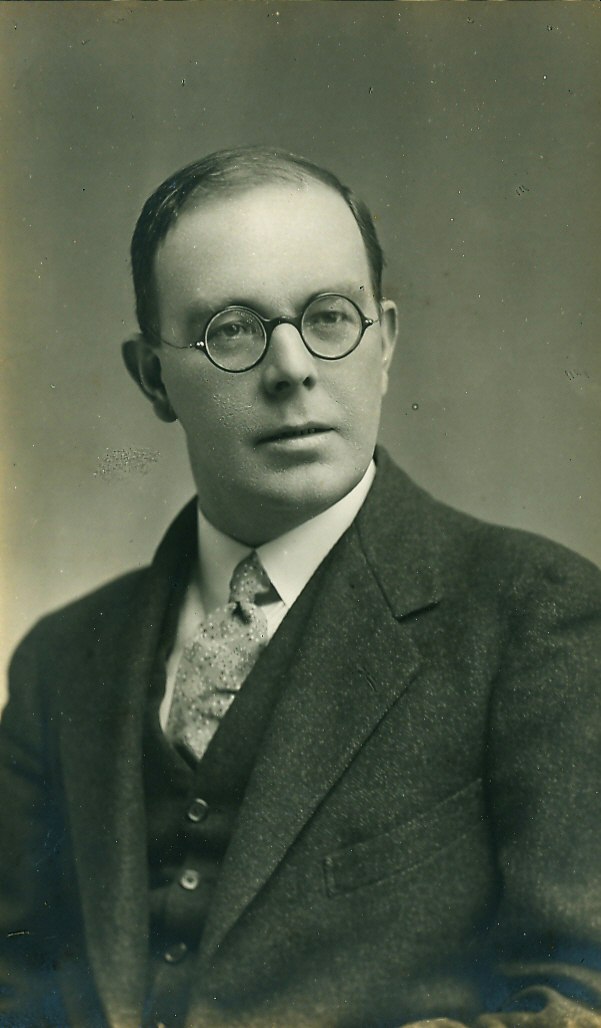
Portrait of Cyril Burt

Photo: anonymous/unknown · Public domain

Born in United Kingdom · Nationality British — Psychology / psychometrics / intelligence / eugenics / scientific integrity

Cyril Burt

Documented profile covering 6 controversies, including “1980–1995: Posthumous institutional condemnation for fraud, followed by renewed debate without definitive rehabilitation” and “1976–1990s: Controversy over Margaret Howard and Jane/J. Conway, collaborators difficult to identify”.

Are you concerned? Right of reply

Profile No. 2152 · Updated on 12 October 2026

Portrait of Cyril Burt

Photo: anonymous/unknown · Public domain

6Documented controversies+ 1 background event
8Sources
0Formal charge · all time
0Conviction

I. Documented controversies

01

1980–1995

1980–1995: Posthumous institutional condemnation for fraud, followed by renewed debate without definitive rehabilitation

No legal proceedings

In 1980, the British Psychological Society's Council publicly accepted the conclusion that Burt had fabricated data. Subsequent books re-examined the case, some defending Burt and others finding his later data unreliable. In 1992, the BPS considered it no longer appropriate to issue another institutional verdict.

State of the evidence
Documented

Sources · 3

  1. [1]
  2. [2]
    Oxford University PressCyril Burt: Fraud or Framed?Academic publicationVery high reliability
  3. [3]
    Journal of the History of the Behavioral Sciences / WileyFact and fiction in the discovery of Sir Cyril Burt's flawsAcademic publicationVery high reliability

Last verified: 14 September 2026

Add to this entry

02

1976–années 1990

1976–1990s: Controversy over Margaret Howard and Jane/J. Conway, collaborators difficult to identify

Investigation

After Burt's death, journalists and researchers sought to identify Margaret Howard and J./Jane Conway, described as collaborators or co-authors. The initial inability to locate them fuelled allegations that Burt had invented assistants to make his research appear independently supported.

Sources · 2

  1. [1]
    Oxford University PressCyril Burt: Fraud or Framed?Academic publicationVery high reliability
  2. [2]
    Journal of the History of the Behavioral Sciences / WileyFact and fiction in the discovery of Sir Cyril Burt's flawsAcademic publicationVery high reliability

Last verified: 14 September 2026

Add to this entry

03

1947–1967

1947–1967: Editorial control, self-citations and alleged pseudonymous publications in British Journal of Statistical Psychology

No legal proceedings

Burt exercised exceptional influence over the Journal, later the British Journal of Statistical Psychology, while publishing extensively in it himself. The Burt affair subsequently included allegations that he used pseudonyms or collaborators' names to produce articles supporting his theories and rebutting criticism.

State of the evidence
Allegations

Sources · 2

  1. [1]
    Oxford University PressCyril Burt: Fraud or Framed?Academic publicationVery high reliability
  2. [2]

Last verified: 14 September 2026

Add to this entry

04

1943–1966

1943–1966: Almost identical correlations in twin studies despite increasing sample sizes

No legal proceedings

Burt's studies of identical twins raised apart reported almost unchanged IQ correlations even as the number of pairs increased significantly. This consistency, noted after his death, became one of the principal indications used to suspect fabrication or reconstruction of data.

State of the evidence
Documented
Attribution
Directly implicated

Sources · 3

  1. [1]
    British Journal of Psychology / WileyThe genetic determination of differences in intelligence: a study of monozygotic twins reared together and apartAcademic publicationVery high reliability
  2. [2]
    Oxford University PressCyril Burt: Fraud or Framed?Academic publicationVery high reliability
  3. [3]
    British Journal of Psychology / WileySome further observations concerning Sir Cyril BurtAcademic publicationVery high reliability

Last verified: 14 September 2026

Add to this entry

05

années 1940–1960

1940s–1960s: Influence on school selection and controversy over 11-plus and equal opportunities

No legal proceedings

Burt's ideas about general intelligence, psychometric measurement and individual differences influenced the intellectual culture of British school selection. The 11-plus system and early selection were criticised for their social impact and bias towards middle-class children.

State of the evidence
Documented

Sources · 1

  1. [1]

Last verified: 14 September 2026

Add to this entry

06

années 1920–1940

1920s–1940s: Eugenicist involvement and research on poverty, fertility and "deficiency"

No legal proceedings

Burt was an important figure in the British eugenics movement and participated in research linking intelligence, poverty, crime, fertility and heredity. This work contributed to social policies and debates now strongly criticised for biological determinist and class-based assumptions.

State of the evidence
Documented
Attribution
Directly implicated

Sources · 2

  1. [1]
    NCBI Bookshelf / Manchester University PressDyslexia Goes Global: Psychology, Childhood, and Trans-Atlanticism (1925–48)Academic publicationHigh reliability
  2. [2]
    University of ExeterThe Rowntree Business Lectures — Cyril BurtAcademic publicationHigh reliability

Last verified: 14 September 2026

Add to this entry

II. Documented background

Documented biographical or institutional milestones (elections, appointments, foundings, acquisitions…). These are not controversies and are not counted as such.

  1. 1909–années 1930

    1909–1930s: Strongly hereditarian theory of intelligence based on social and educational comparisons

    Burt's early work on intelligence tests led him to describe general intelligence as largely innate and hereditary. His comparisons between children from different social backgrounds formed part of a view in which class differences partly reflected natural abilities.

    Sources · 2
    1. NCBI Bookshelf / Manchester University Press — Dyslexia Goes Global: Psychology, Childhood, and Trans-Atlanticism (1925–48)
    2. Oxford Academic — Making Future Leaders: Psychology, Giftedness, and Legacies of Eugenics, 1970–1989

III. Constellation of documented links

No documented link with another published profile for now.

Two profiles are linked when a documented controversy of one names the other. The link points to that controversy and its sources; it does not indicate a personal relationship.

IV. Has something changed?

A new court decision, a missing source, a mistake? Tell us what should be updated: every request is read by the editorial team.

Support the archive

Controversia checks and updates its profiles independently. Support is optional and has no effect on the content of profiles.

Donate

iPhone and iPad

Install Controversia

  1. Tap Share
  2. then Add to Home Screen

Tap Share, then Add to Home Screen.