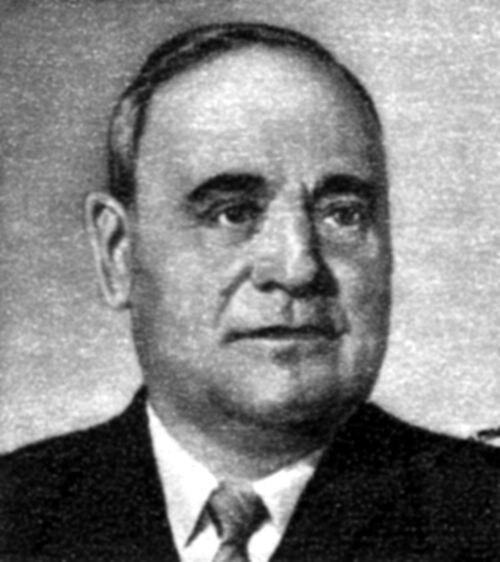
Born in Romania · Nationality Romanian — Politics / regimes / war

Gheorghe Gheorghiu-Dej

Documented profile covering 10 controversies, including “Creation and use of Securitate as instrument of political terror” and “Forced collectivisation of agriculture and mass repression of peasants”.

Are you concerned? Right of reply

Profile No. 2473 · Updated on 12 October 2026

Portrait of Gheorghe Gheorghiu-Dej

Photo: Wikimedia Commons

10Documented controversies
7Sources
0Formal charge · all time
0Conviction

I. Documented controversies

01

1948–1965

Creation and use of Securitate as instrument of political terror

No legal proceedings

The Gheorghiu-Dej regime developed the Securitate and a system of arrests, surveillance, prisons and camps designed to neutralise real or perceived opposition.

State of the evidence
Documented
Attribution
Command responsibility

Sources · 3

  1. [1]
  2. [2]
    Pitești Prison MemorialThe Gheorghe Gheorghiu Dej’s RegimeArchiveHigh reliability
  3. [3]
    Cambridge Core / Manchester University PressPolitical purges and mass repression in Romania, 1948–1955Academic publicationVery high reliability

Last verified: 15 September 2026

Add to this entry

02

1949–1962

Forced collectivisation of agriculture and mass repression of peasants

No legal proceedings

Collectivisation was imposed through administrative pressure, arrests, violence and convictions. Gheorghiu-Dej himself stated that approximately 80,000 peasants had been brought before the courts during the harshest phase, including 30,000 in public trials.

State of the evidence
Documented
Attribution
Directly implicated

Sources · 3

  1. [1]
    Memorialul Victimelor Comunismului și al RezistențeiSighet Museum: Room 18 - Collectivization. Resistance and repressionArchiveVery high reliability
  2. [2]
    Memorialul Victimelor Comunismului și al Rezistenței27 aprilie 1962 - încheierea procesului de colectivizareArchiveVery high reliability
  3. [3]
    IICCMERCronologieOfficial documentVery high reliability

Last verified: 15 September 2026

Add to this entry

03

27 April 1962

Collectivisation declared complete after thirteen years of coercion

No legal proceedings

Gheorghiu-Dej declared collectivisation complete, announcing that the vast majority of arable land and more than three million families had been incorporated into collective structures.

State of the evidence
Documented
Attribution
Directly implicated

Sources · 2

  1. [1]
    Memorialul Victimelor Comunismului și al RezistențeiSighet Museum: Room 18 - Collectivization. Resistance and repressionArchiveVery high reliability
  2. [2]
    Memorialul Victimelor Comunismului și al Rezistenței27 aprilie 1962 - încheierea procesului de colectivizareArchiveVery high reliability

Last verified: 15 September 2026

Add to this entry

04

1953–1957

Continuation of repression after Stalin's death and marginalisation of de-Stalinisation supporters

No legal proceedings

After 1953, Gheorghiu-Dej resisted far-reaching de-Stalinisation. Officials advocating clearer liberalisation, notably Miron Constantinescu and Iosif Chișinevschi, were marginalised and subsequently purged from the party leadership.

State of the evidence
Documented
Attribution
Political responsibility

Sources · 2

  1. [1]
    Cambridge Core / Manchester University PressPolitical purges and mass repression in Romania, 1948–1955Academic publicationVery high reliability
  2. [2]
    IICCMERCronologieOfficial documentVery high reliability

Last verified: 15 September 2026

Add to this entry

05

1948–17 April 1954

Show trial and execution of Lucrețiu Pătrășcanu

Conviction — against Lucrețiu Pătrășcanu

Protagonist not prosecuted — these proceedings are not counted in their formal charges or convictions.

Pătrășcanu, a former communist leader, was arrested, imprisoned for years, tried in a Stalinist show trial and executed in 1954. IICCMER describes his elimination as a stage in the purges organised by Gheorghiu-Dej to secure absolute power.

State of the evidence
Documented
Attribution
Directly implicated
Person targeted by the proceedings
Lucrețiu Pătrășcanu
Role of the person profiled
Protagonist not prosecuted

Sources · 1

  1. [1]

Last verified: 15 September 2026

Add to this entry

06

1952

Purge of Ana Pauker–Vasile Luca–Teohari Georgescu group

No legal proceedings

Gheorghiu-Dej removed several major rivals from the highest ranks of the party, including Ana Pauker, Vasile Luca and Teohari Georgescu, consolidating his personal control over the Romanian Workers' Party.

State of the evidence
Documented
Attribution
Political responsibility

Sources · 2

  1. [1]
    Cambridge Core / Manchester University PressPolitical purges and mass repression in Romania, 1948–1955Academic publicationVery high reliability
  2. [2]
    IICCMERCronologieOfficial documentVery high reliability

Last verified: 15 September 2026

Add to this entry

07

1949–1951

Pitești 're-education' experiment and systematic torture of political prisoners

No legal proceedings

The regime's prison system included the Pitești experiment, characterised by extreme torture and attempts to break prisoners psychologically so that they would participate in the re-education of other detainees.

State of the evidence
Documented
Attribution
Command responsibility

Sources · 2

  1. [1]
    Pitești Prison MemorialThe Gheorghe Gheorghiu Dej’s RegimeArchiveHigh reliability
  2. [2]

Last verified: 15 September 2026

Add to this entry

08

1948–années 1950

Mass nationalisations and forced transformation of economy

No legal proceedings

The regime nationalised major enterprises, banks and infrastructure and imposed Soviet-style central planning.

State of the evidence
Documented
Attribution
Directly implicated

Sources · 2

  1. [1]
    Cambridge Core / Manchester University PressPolitical purges and mass repression in Romania, 1948–1955Academic publicationVery high reliability
  2. [2]
    Pitești Prison MemorialThe Gheorghe Gheorghiu Dej’s RegimeArchiveHigh reliability

Last verified: 15 September 2026

Add to this entry

09

fin des années 1940–années 1950

Political prisons, forced labour and concentration camp system

No legal proceedings

Thousands of opponents, former dignitaries, intellectuals, religious figures and peasants were sent to political prisons and labour camps, notably Sighet, Aiud, Gherla, Pitești and the Danube–Black Sea Canal construction site.

State of the evidence
Documented
Attribution
Directly implicated

Sources · 3

  1. [1]
  2. [2]
    Cambridge Core / Manchester University PressPolitical purges and mass repression in Romania, 1948–1955Academic publicationVery high reliability
  3. [3]
    Pitești Prison MemorialThe Gheorghe Gheorghiu Dej’s RegimeArchiveHigh reliability

Last verified: 15 September 2026

Add to this entry

10

1945–1948

Consolidation of communist power and elimination of opposition parties

No legal proceedings

Under the leadership of the Communist Party dominated by Gheorghiu-Dej, Romania's political system was transformed into a one-party regime. Political opponents, particularly those from the historic parties, were arrested, tried or excluded from public life.

State of the evidence
Documented
Attribution
Directly implicated

Sources · 2

  1. [1]
  2. [2]
    Cambridge Core / Manchester University PressPolitical purges and mass repression in Romania, 1948–1955Academic publicationVery high reliability

Last verified: 15 September 2026

Add to this entry

II. Constellation of documented links

No documented link with another published profile for now.

Two profiles are linked when a documented controversy of one names the other. The link points to that controversy and its sources; it does not indicate a personal relationship.

III. Has something changed?

A new court decision, a missing source, a mistake? Tell us what should be updated: every request is read by the editorial team.

Support the archive

Controversia checks and updates its profiles independently. Support is optional and has no effect on the content of profiles.

Donate

iPhone and iPad

Install Controversia

  1. Tap Share
  2. then Add to Home Screen

Tap Share, then Add to Home Screen.