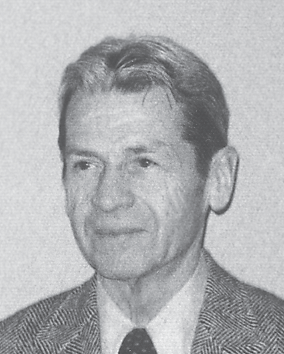
Portrait of Harold Hodge

Photo: Paul E. Morrow · CC BY-SA 2.5 · Wikimedia Commons

Nationality American — toxicology / Manhattan Project / human experimentation / fluorides

Harold Hodge

Documented profile covering 6 controversies, including “1940s–1960s: Advocacy of water fluoridation alongside his role as nuclear toxicologist” and “1953–1957: Reported role in establishing links leading to Boston Project uranium injections”.

Are you concerned? Right of reply

Profile No. 2087 · Updated on 12 October 2026

Portrait of Harold Hodge

Photo: Paul E. Morrow · CC BY-SA 2.5 · Wikimedia Commons

6Documented controversies
7Sources
0Formal charge · all time
0Conviction

I. Documented controversies

01

années 1940–1960

1940s–1960s: Advocacy of water fluoridation alongside his role as nuclear toxicologist

No legal proceedings

Hodge became a major figure in fluoride research and an advocate of water fluoridation, drawing particularly on early community studies. His dual career — studying fluoride toxicology in the atomic programme and subsequently promoting fluoridation — became a recurring element of public controversies surrounding this health policy.

State of the evidence
Documented
Attribution
Personally implicated

Sources · 2

  1. [1]
    University of Rochester Medical CenterToxicology at the University of RochesterOfficial documentHigh reliability
  2. [2]
    PMC / International Journal of Environmental Research and Public HealthFluoride: From Nutrient to Suspected NeurotoxinAcademic publicationHigh reliability

Last verified: 14 September 2026

Add to this entry

02

1953–1957

1953–1957: Reported role in establishing links leading to Boston Project uranium injections

No legal proceedings

The Boston Project at Massachusetts General Hospital injected uranium into eleven terminally ill patients to study its distribution and possible concentration in brain tumours. Historical accounts and an Irish parliamentary debate attribute to Hodge a facilitating role between William Sweet and the nuclear programme.

State of the evidence
Documented

Sources · 2

  1. [1]
    U.S. Advisory Committee on Human Radiation Experiments / U.S. Government Printing OfficeAdvisory Committee on Human Radiation Experiments — Final ReportOfficial documentVery high reliability
  2. [2]
    Houses of the OireachtasDáil Éireann Debate — Fluoridation of Water Supplies (Repeal) Bill 2013Parliamentary recordMedium reliability

Last verified: 14 September 2026

Add to this entry

03

February–March 1948

1948: Hodge challenges classification of uranium chapter as "human experimentation"

No legal proceedings

During discussions on declassifying Manhattan Project medical research, Hodge protested against the removal of passages from his uranium toxicology chapter, arguing that it did not, in his view, report experiments on humans. ACHRE places this correspondence in the context of a classification policy also motivated by liability and public relations concerns.

State of the evidence
Documented
Attribution
Directly implicated

Sources · 1

  1. [1]
    U.S. Advisory Committee on Human Radiation Experiments / U.S. Government Printing OfficeAdvisory Committee on Human Radiation Experiments — Final ReportOfficial documentVery high reliability

Last verified: 14 September 2026

Add to this entry

04

1945–1947

1945–1947: Reported involvement in planning plutonium injection programme involving patients

No legal proceedings

Archives and Eileen Welsome's research link Hodge to planning meetings for the Manhattan programme in which patients were injected with plutonium for biological measurements. The subsequent federal investigation established serious deficiencies in informed consent for several subjects, particularly at Rochester.

State of the evidence
Documented
Attribution
Command responsibility

Sources · 2

  1. [1]
    U.S. Advisory Committee on Human Radiation Experiments / U.S. Government Printing OfficeAdvisory Committee on Human Radiation Experiments — Final ReportOfficial documentVery high reliability
  2. [2]
    Fluoride Action Network (reproducing excerpts from Eileen Welsome, The Plutonium Files)Harold Hodge, the University of Rochester, and Human Radiation ExperimentsBookMedium reliability

Last verified: 14 September 2026

Add to this entry

05

1946

1946: Uranium injected into six Rochester patients to determine threshold for kidney toxicity

No legal proceedings

In the Rochester Manhattan programme, six patients were injected with uranyl nitrate to study excretion and increase doses until minimal kidney damage could be detected. The ACHRE report states that no surviving documents establish what subjects were told and highlights the secrecy surrounding the study. Hodge headed the Rochester programme's pharmacology and toxicology work.

State of the evidence
Documented
Attribution
Institutional responsibility

Sources · 2

  1. [1]
    U.S. Advisory Committee on Human Radiation Experiments / U.S. Government Printing OfficeAdvisory Committee on Human Radiation Experiments — Final ReportOfficial documentVery high reliability
  2. [2]
    Society of ToxicologyIn Memoriam — Harold C. Hodge (1904-1990)High reliability

Last verified: 14 September 2026

Add to this entry

06

1943–1945

1943–1945: Leadership of Manhattan Project toxicology and classified research on uranium, fluorides and radioactive dispersal

No legal proceedings

Hodge headed the Manhattan Project's pharmacology and toxicology division at Rochester. The programme studied uranium, fluorides and scenarios involving radioactive dispersal under military secrecy, later reassessed against research ethics and transparency standards.

State of the evidence
Documented
Attribution
Directly implicated

Sources · 2

  1. [1]
    Society of ToxicologyIn Memoriam — Harold C. Hodge (1904-1990)High reliability
  2. [2]
    U.S. Department of Energy — Office of Human Radiation ExperimentsThe Manhattan Project: A New and Secret World of Human ExperimentationOfficial documentVery high reliability

Last verified: 14 September 2026

Add to this entry

II. Constellation of documented links

No documented link with another published profile for now.

Two profiles are linked when a documented controversy of one names the other. The link points to that controversy and its sources; it does not indicate a personal relationship.

III. Has something changed?

A new court decision, a missing source, a mistake? Tell us what should be updated: every request is read by the editorial team.

Support the archive

Controversia checks and updates its profiles independently. Support is optional and has no effect on the content of profiles.

Donate

iPhone and iPad

Install Controversia

  1. Tap Share
  2. then Add to Home Screen

Tap Share, then Add to Home Screen.