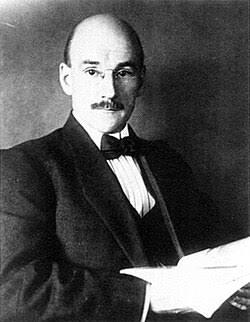
Portrait of Henry Goddard

Born in United States — psychology / psychometrics / eugenics / intelligence testing

Henry Goddard

Documented profile covering 10 controversies, including “1912 onwards: Retouched photographs in The Kallikak Family — disputed allegation of visual manipulation” and “1920s onwards: Scientific criticism followed by Goddard's retreat from several earlier conclusions”.

Are you concerned? Right of reply

Profile No. 2090 · Updated on 12 October 2026

Portrait of Henry Goddard
10Documented controversies
8Sources
0Formal charge · all time
0Conviction

I. Documented controversies

01

1912–1988

1912 onwards: Retouched photographs in The Kallikak Family — disputed allegation of visual manipulation

No legal proceedings

Photographs of the supposedly "bad" Kallikak branch were retouched to accentuate certain features. Stephen Jay Gould regarded this as contributing to the manufacture of an appearance of degeneration; historian Raymond Fancher showed that such retouching could also have resulted from printing techniques used at the time.

State of the evidence
Disputed

Sources · 2

  1. [1]
    History of Psychology / APA PsycNetHenry Goddard and the Kallikak Family PhotographsAcademic publicationHigh reliability
  2. [2]
    Wellcome CollectionTree of life — Kallikak FamilyArchiveHigh reliability

Last verified: 14 September 2026

Add to this entry

02

années 1920–1957

1920s onwards: Scientific criticism followed by Goddard's retreat from several earlier conclusions

No legal proceedings

From the 1920s onwards, psychologists, biologists and psychiatrists challenged the simplistic hereditary basis of his models and the robustness of his tests. Goddard gradually left this field, focused more on education and environment, and several historical accounts indicate that he later considered some of his early conclusions outdated or mistaken.

State of the evidence
Documented

Sources · 2

  1. [1]
    Arizona State University — Embryo Project EncyclopediaHenry Herbert Goddard (1866–1957)EncyclopediaHigh reliability
  2. [2]
    Journal of the History of the Behavioral SciencesHenry H. Goddard and the immigrants, 1910-1917: The studies and their social contextAcademic publicationHigh reliability

Last verified: 14 September 2026

Add to this entry

03

années 1910–1927

1910s–1927: Influence of The Kallikak Family on eugenics and context of Buck v. Bell

No legal proceedings

Goddard's work was widely cited by the eugenics movement and used as a reference by proponents of forced sterilisation. Historical literature links it to the intellectual climate and arguments preceding, notably, Buck v. Bell in 1927.

State of the evidence
Documented

Sources · 2

  1. [1]
    Arizona State University — Embryo Project EncyclopediaHenry Herbert Goddard (1866–1957)EncyclopediaHigh reliability
  2. [2]
    American Journal of Human Genetics / PMCEugenics and the misuse of MendelAcademic publicationVery high reliability

Last verified: 14 September 2026

Add to this entry

04

1918–1922

1918–1922: Administrative authority in Ohio and long-term institutional placement scheme for children classified as "defectives"

No legal proceedings

As head of Ohio's Bureau of Juvenile Research, Goddard advocated in official publications the sterilisation and segregation of people he classified as deficient and sought to develop a system in which minors could be assessed and subsequently kept under state control according to their classification.

State of the evidence
Documented
Attribution
Directly implicated

Sources · 1

  1. [1]

Last verified: 14 September 2026

Add to this entry

05

1917–1918

1917–1918: Participation in expansion of mass intelligence testing in US Army

No legal proceedings

During the First World War, Goddard participated in the applied psychology movement that introduced Alpha/Beta intelligence tests on a large scale among recruits. The results would be used to support hierarchical interpretations of intelligence and civic fitness among national and racial groups.

State of the evidence
Documented
Attribution
Close aide

Sources · 2

  1. [1]
    Arizona State University — Embryo Project EncyclopediaHenry Herbert Goddard (1866–1957)EncyclopediaHigh reliability
  2. [2]
    PMCValues in PsychometricsAcademic publicationHigh reliability

Last verified: 14 September 2026

Add to this entry

06

1913–1917

1913–1917: Immigrant testing at Ellis Island and very high rates of "feeblemindedness" in selected groups

No legal proceedings

The programme associated with Goddard administered mental tests to third-class immigrants at Ellis Island and published striking proportions of people classified as deficient within several small samples. These results were taken up amid the nativist and eugenic climate of the period.

State of the evidence
Documented
Attribution
Directly implicated

Sources · 2

  1. [1]
    Journal of the History of the Behavioral SciencesHenry H. Goddard and the immigrants, 1910-1917: The studies and their social contextAcademic publicationHigh reliability
  2. [2]
    Arizona State University — Embryo Project EncyclopediaHenry Herbert Goddard (1866–1957)EncyclopediaHigh reliability

Last verified: 14 September 2026

Add to this entry

07

1912–1913

1912–1913: Advocacy of segregation and sterilisation of those classified as "feebleminded"

No legal proceedings

Goddard argued that people he classified as deficient should be prevented from reproducing, considering sterilisation and, especially, long-term institutional segregation. His writings contributed to the scientific legitimisation of eugenic policies.

State of the evidence
Documented
Attribution
Directly implicated

Sources · 2

  1. [1]
    Russell Sage FoundationSterilization and SegregationArchiveHigh reliability
  2. [2]
    Arizona State University — Embryo Project EncyclopediaHenry Herbert Goddard (1866–1957)EncyclopediaHigh reliability

Last verified: 14 September 2026

Add to this entry

08

1912

1912: The Kallikak Family — pseudoscientific genealogy later shown to be erroneous

No legal proceedings

Goddard published The Kallikak Family, presenting a "good" lineage and a "degenerate" lineage as evidence of inherited intellectual disability and social behaviour. Subsequent research revealed major genealogical errors and the absence of a scientific foundation for its argument.

State of the evidence
Documented
Attribution
Directly implicated

Sources · 2

  1. [1]
    American Journal of Human Genetics / PMCEugenics and the misuse of MendelAcademic publicationVery high reliability
  2. [2]
    Wellcome CollectionTree of life — Kallikak FamilyArchiveHigh reliability

Last verified: 14 September 2026

Add to this entry

09

1911

1911: Theory of simple inheritance of "feeblemindedness"

No legal proceedings

In his research on the inheritance of "feeblemindedness", Goddard applied a simplified hereditary model to complex cognitive and social characteristics. This deterministic Mendelian approach became a cornerstone of American eugenic discourse.

State of the evidence
Documented
Attribution
Directly implicated

Sources · 2

  1. [1]
    American Journal of Human Genetics / PMCEugenics and the misuse of MendelAcademic publicationVery high reliability
  2. [2]
    Arizona State University — Embryo Project EncyclopediaHenry Herbert Goddard (1866–1957)EncyclopediaHigh reliability

Last verified: 14 September 2026

Add to this entry

10

1908–1910

1908–1910: Introduction of Binet–Simon test to United States and institutional classification of "feeblemindedness"

No legal proceedings

Goddard translated and adapted the Binet–Simon test at Vineland and made it a tool for classifying people considered mentally deficient. He subsequently popularised the category "moron", helping transform experimental psychological measures into tools for social and institutional sorting.

State of the evidence
Documented
Attribution
Institutional responsibility

Sources · 2

  1. [1]
    Arizona State University — Embryo Project EncyclopediaHenry Herbert Goddard (1866–1957)EncyclopediaHigh reliability
  2. [2]
    PMCValues in PsychometricsAcademic publicationHigh reliability

Last verified: 14 September 2026

Add to this entry

II. Constellation of documented links

No documented link with another published profile for now.

Two profiles are linked when a documented controversy of one names the other. The link points to that controversy and its sources; it does not indicate a personal relationship.

III. Has something changed?

A new court decision, a missing source, a mistake? Tell us what should be updated: every request is read by the editorial team.

Support the archive

Controversia checks and updates its profiles independently. Support is optional and has no effect on the content of profiles.

Donate

iPhone and iPad

Install Controversia

  1. Tap Share
  2. then Add to Home Screen

Tap Share, then Add to Home Screen.