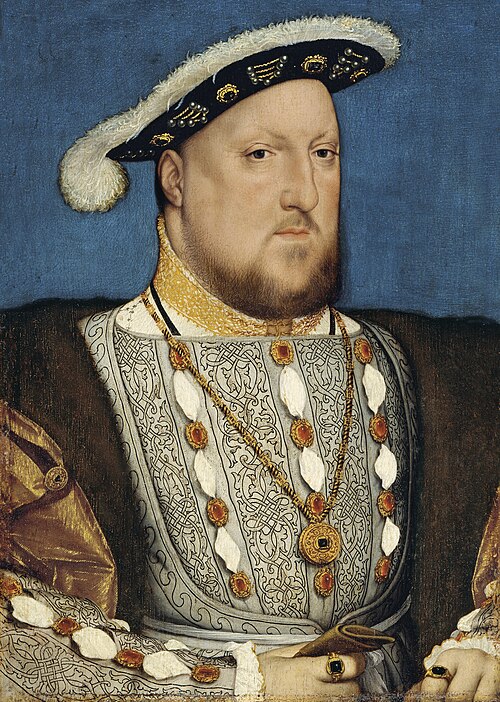
Portrait of Henry VIII

Photo: Hans Holbein the Younger · Public domain

Born in United Kingdom · Nationality English — Tudor monarchy / English Reformation / political repression / confiscations / executions

Henry VIII

Documented profile covering 10 controversies, including “1541–1542: Catherine Howard accused of adultery and executed” and “1536–1540: Dissolution of monasteries, mass seizure of church property and redistribution of land”.

Are you concerned? Right of reply

Profile No. 2130 · Updated on 12 October 2026

Portrait of Henry VIII

Photo: Hans Holbein the Younger · Public domain

10Documented controversies
10Sources
0Formal charge · all time
0Conviction

I. Documented controversies

01

November 1541–13 February 1542

1541–1542: Catherine Howard accused of adultery and executed

Conviction — against Catherine Howard

Protagonist not prosecuted — these proceedings are not counted in their formal charges or convictions.

Henry's fifth wife, Catherine Howard, is arrested following revelations about her sexual life before marriage and allegations involving Thomas Culpeper during her marriage. She is executed at the Tower of London.

State of the evidence
Allegations
Attribution
Directly implicated
Person targeted by the proceedings
Catherine Howard
Role of the person profiled
Protagonist not prosecuted

Sources · 1

  1. [1]
    Historic Royal PalacesCatherine HowardOfficial documentVery high reliability

Last verified: 14 September 2026

Add to this entry

02

1536–1540

1536–1540: Dissolution of monasteries, mass seizure of church property and redistribution of land

No legal proceedings

Henry VIII's regime closes religious houses, seizes their revenues and lands, and transfers a substantial share of monastic property to the Crown and subsequently to new owners.

State of the evidence
Documented
Attribution
Political responsibility

Sources · 1

  1. [1]
    The National ArchivesDissolution of the monasteries 1536-1540ArchiveVery high reliability

Last verified: 14 September 2026

Add to this entry

03

10 June–28 July 1540

1540: Fall of Thomas Cromwell, condemnation by attainder and beheading without ordinary criminal trial

Conviction — against Thomas Cromwell

Protagonist not prosecuted — these proceedings are not counted in their formal charges or convictions.

Thomas Cromwell, the King's principal minister, is arrested, condemned by attainder and executed on Tower Hill. He begs Henry for mercy, which never comes.

State of the evidence
Documented
Attribution
Directly implicated
Person targeted by the proceedings
Thomas Cromwell
Role of the person profiled
Protagonist not prosecuted

Sources · 1

  1. [1]
    Historic Royal PalacesThomas Cromwell's fateful match-makingOfficial documentVery high reliability

Last verified: 14 September 2026

Add to this entry

04

années 1530–1540

1530s–1540s: Increasing use of attainder and treason laws against opponents and former servants

No legal proceedings

Under Henry VIII, parliamentary attainder and treason legislation become major instruments for eliminating religious opponents, suspect nobles and former associates of those in power, sometimes without ordinary criminal procedure.

State of the evidence
Documented
Attribution
Institutional responsibility

Sources · 1

  1. [1]
    Historic Royal PalacesTower Hill Execution MemorialOfficial documentVery high reliability

Last verified: 14 September 2026

Add to this entry

05

1536–1540

1530s: Crown enrichment through sale of monastic assets and dispute over use of revenues

No legal proceedings

Assets obtained through dissolution flow in large quantities to the Crown before being sold or redistributed. Anne Boleyn wanted a greater proportion used for education or charity, while Thomas Cromwell organised their transfer to the royal treasury.

State of the evidence
Documented
Attribution
Political responsibility

Sources · 1

  1. [1]
    Historic Royal PalacesThomas CromwellOfficial documentVery high reliability

Last verified: 14 September 2026

Add to this entry

06

October 1536–1537

1536–1537: Pilgrimage of Grace and repression following renewed unrest

Conviction — against the Pilgrimage of Grace rebels

Protagonist not prosecuted — these proceedings are not counted in their formal charges or convictions.

Tens of thousands rise in northern England against the dissolution of the monasteries and other regime policies. Following a period of negotiation and renewed unrest, the government prosecutes and executes numerous participants and leaders.

State of the evidence
Documented
Attribution
Political responsibility
Person targeted by the proceedings
the Pilgrimage of Grace rebels
Role of the person profiled
Protagonist not prosecuted

Sources · 1

  1. [1]
    The National ArchivesSpotlight On: State Papers – transcriptArchiveVery high reliability

Last verified: 14 September 2026

Add to this entry

07

2–19 May 1536

1536: Anne Boleyn's trial described as a sham and Queen's execution

Conviction — against Anne Boleyn

Protagonist not prosecuted — these proceedings are not counted in their formal charges or convictions.

Anne Boleyn is arrested, accused of adultery, incest and plotting against the King's life, then convicted and beheaded. Historic Royal Palaces describes her trial as a "sham trial" filled with her enemies.

Attribution
Directly implicated
Person targeted by the proceedings
Anne Boleyn
Role of the person profiled
Protagonist not prosecuted

Sources · 1

  1. [1]
    Historic Royal PalacesAnne BoleynOfficial documentVery high reliability

Last verified: 14 September 2026

Add to this entry

08

1534–1535

1534–1535: Royal supremacy, compulsory oaths and transformation of refusal into treason

No legal proceedings

Following the Act of Supremacy, recognition of the King as Supreme Head of the Church becomes a political requirement. Refusal to acknowledge the new supremacy or the succession defined by the regime may lead to prosecution for high treason.

State of the evidence
Documented
Attribution
Directly implicated

Sources · 1

  1. [1]
    The National ArchivesChronicles of the Dissolution – Piety, Plunder and ProtestArchiveHigh reliability

Last verified: 14 September 2026

Add to this entry

09

22 June–6 July 1535

1535: Executions of John Fisher and Thomas More for resisting royal supremacy

Conviction — against John Fisher and Thomas More

Protagonist not prosecuted — these proceedings are not counted in their formal charges or convictions.

Bishop John Fisher and then former Chancellor Thomas More are executed after refusing to accept the central requirements of Henry VIII's ecclesiastical supremacy. More is imprisoned for fourteen months before his trial and beheading.

State of the evidence
Documented
Attribution
Directly implicated
Person targeted by the proceedings
John Fisher and Thomas More
Role of the person profiled
Protagonist not prosecuted

Sources · 1

  1. [1]
    Historic Royal PalacesSir Thomas More: Execution of a SaintOfficial documentVery high reliability

Last verified: 14 September 2026

Add to this entry

10

1527–1534

1527–1534: Pursuit of annulment from Catherine of Aragon and break with Rome

Civil / administrative proceedings

The failure to secure papal annulment of his marriage to Catherine of Aragon contributes directly to Henry VIII's break with Rome. Parliament adopts a series of statutes making the King the supreme authority of the Church of England.

State of the evidence
Documented
Attribution
Directly implicated

Sources · 1

  1. [1]
    UK ParliamentThe ReformationParliamentary recordVery high reliability

Last verified: 14 September 2026

Add to this entry

II. Constellation of documented links

No documented link with another published profile for now.

Two profiles are linked when a documented controversy of one names the other. The link points to that controversy and its sources; it does not indicate a personal relationship.

III. Has something changed?

A new court decision, a missing source, a mistake? Tell us what should be updated: every request is read by the editorial team.

Support the archive

Controversia checks and updates its profiles independently. Support is optional and has no effect on the content of profiles.

Donate

iPhone and iPad

Install Controversia

  1. Tap Share
  2. then Add to Home Screen

Tap Share, then Add to Home Screen.