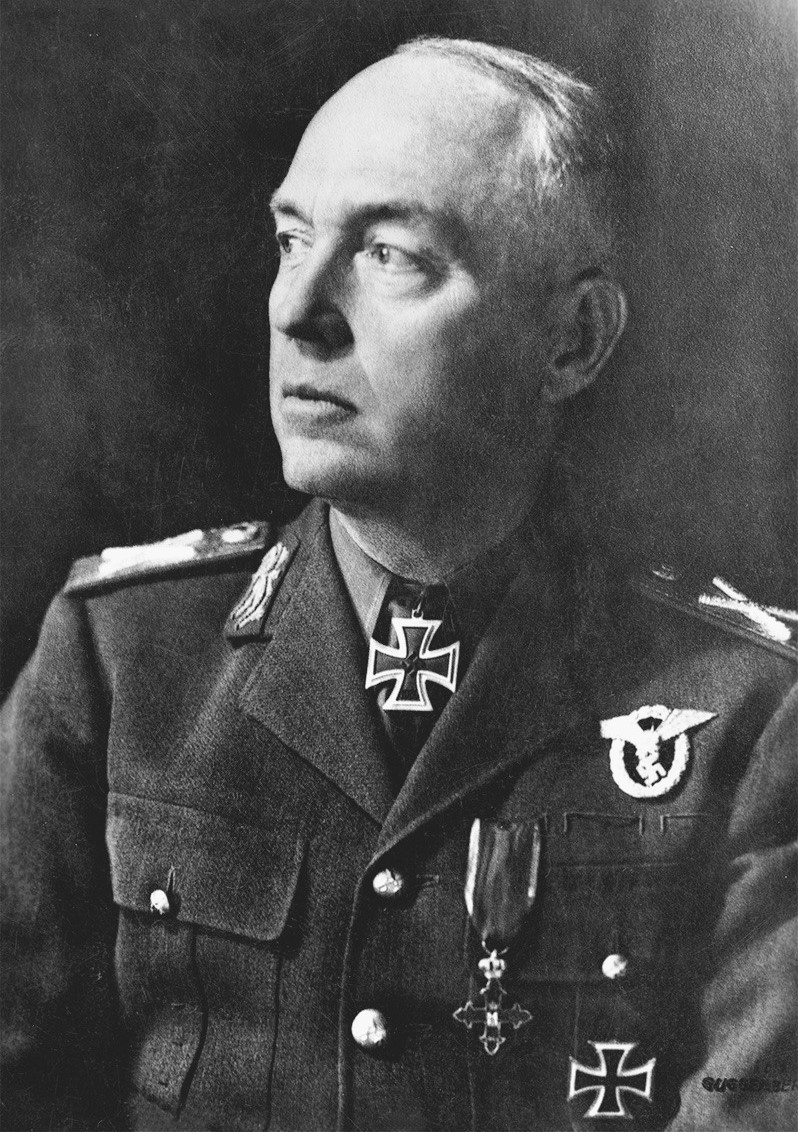
Portrait of Ion Antonescu

Photo: Unknown author Unknown author · Public domain

Born in Romania · Nationality Romanian — Military dictatorship / Second World War / Axis / Holocaust in Romania / war crimes

Ion Antonescu

Documented profile covering 14 controversies, including “2006–2008: attempt at partial posthumous review of conviction ultimately rejected by High Court” and “1946: convicted of war crimes and executed”.

Are you concerned? Right of reply

Profile No. 2048 · Updated on 12 October 2026

Portrait of Ion Antonescu

Photo: Unknown author Unknown author · Public domain

14Documented controversies+ 2 background events
9Sources
1 followed by a conviction

I. Documented controversies

Case · 9 documented stages

2006–2008: attempt at partial posthumous review of conviction ultimately rejected by High Court

Conviction
01

2006–6 May 2008

2006–2008: attempt at partial posthumous review of conviction ultimately rejected by High Court

Conviction

After 1989, judicial initiatives sought to review certain convictions involving Antonescu and other officials. Following a partially favourable appellate decision, Romania's High Court finally rejected the application for review in 2008.

State of the evidence
Documented

Sources · 1

  1. [1]

Last verified: 14 September 2026

Add to this entry

02

May–1 June 1946

1946: convicted of war crimes and executed

Conviction

Returned to Romania by Soviet authorities, Antonescu was tried by the People's Tribunal, found guilty of war crimes and sentenced to death. He was executed on 1 June 1946.

State of the evidence
Established by a court
Attribution
Accused

Sources · 2

  1. [1]
    United States Holocaust Memorial MuseumRomaniaArchiveVery high reliability
  2. [2]
    International Commission on the Holocaust in Romania / USHMMFinal Report — International Commission on the Holocaust in RomaniaOfficial documentVery high reliability

Last verified: 14 September 2026

Add to this entry

03

1941–1944

1941–1944: ghettos, camps and mass mortality in Romanian-administered Transnistria

Conviction

Romanian-administered Transnistria became an area of deportation, ghettos and camps where large numbers of Romanian and Ukrainian Jews died through massacres, famine, cold and disease.

State of the evidence
Well documented
Attribution
Command responsibility

Sources · 2

  1. [1]
    United States Holocaust Memorial MuseumTransnistria GovernorateArchiveVery high reliability
  2. [2]
    United States Holocaust Memorial MuseumRomaniaArchiveVery high reliability

Last verified: 14 September 2026

Add to this entry

05

23 August 1944

23 August 1944: arrested by King Michael after refusing immediate break with Germany

Formally charged

As the Red Army advanced, King Michael and political leaders had Antonescu arrested following failed discussions on rapidly leaving the war. Romania subsequently changed sides.

State of the evidence
Well documented
Attribution
Political responsibility

Sources · 1

  1. [1]
    United States Holocaust Memorial MuseumRomaniaArchiveVery high reliability

Last verified: 14 September 2026

Add to this entry

06

June–September 1942

1942: deportation of approximately 25,000 Romanian Roma to Transnistria

Conviction

The Romanian government deported approximately 25,000 Roma to Transnistria, categorised as nomadic or selected according to social and police criteria. Many died of hunger, disease and ill-treatment.

State of the evidence
Documented
Attribution
Directly implicated

Sources · 2

  1. [1]
    United States Holocaust Memorial MuseumTransnistria GovernorateArchiveVery high reliability
  2. [2]
    International Commission on the Holocaust in Romania / USHMMThe Role of Antonescu in the Antisemitic and Anti-Roma PoliciesOfficial documentVery high reliability

Last verified: 14 September 2026

Add to this entry

10

19–21 June 1941

June 1941: personal orders for internment and evacuation targeting Jews in Moldavia

Conviction

Days before the Iași pogrom, Antonescu ordered lists to be compiled of Jews regarded as communist agents and the evacuation or internment of Jewish populations from rural Moldavian areas, including adult men sent to Târgu Jiu.

State of the evidence
Documented
Attribution
Personally implicated

Sources · 1

  1. [1]
    International Commission on the Holocaust in Romania / USHMMThe Role of Antonescu in the Antisemitic and Anti-Roma PoliciesOfficial documentVery high reliability

Last verified: 14 September 2026

Add to this entry

11

27–30 June 1941

June 1941: order to 'cleanse Iași of its Jewish population' — direct responsibility for pogrom

Conviction

The International Commission on the Holocaust in Romania established that Antonescu ordered the complete evacuation of Iași's Jewish population and demanded that the city be 'cleansed'. The pogrom and death trains killed thousands.

State of the evidence
Documented
Attribution
Personally implicated

Sources · 2

  1. [1]
    International Commission on the Holocaust in Romania / USHMMThe Role of Antonescu in the Antisemitic and Anti-Roma PoliciesOfficial documentVery high reliability
  2. [2]
    International Commission on the Holocaust in Romania / USHMMFinal Report — International Commission on the Holocaust in RomaniaOfficial documentVery high reliability

Last verified: 14 September 2026

Add to this entry

12

July–automne 1941

Summer–autumn 1941: deportations of Jews from Bessarabia and Bukovina to Transnistria under deadly conditions

Conviction

The Antonescu regime carried out mass deportations of Jews from Bessarabia and Bukovina to Transnistria. Forced marches, shootings, hunger, disease and detention conditions caused tens of thousands of deaths.

State of the evidence
Documented
Attribution
Command responsibility

Sources · 3

  1. [1]
    U.S. Department of State, Office of the HistorianForeign Relations of the United States, 1941 — Report on deportations from Bessarabia and BukovinaArchiveVery high reliability
  2. [2]
    United States Holocaust Memorial MuseumTransnistria GovernorateArchiveVery high reliability
  3. [3]
    International Commission on the Holocaust in Romania / USHMMFinal Report — International Commission on the Holocaust in RomaniaOfficial documentVery high reliability

Last verified: 14 September 2026

Add to this entry

13

22–25 October 1941

October 1941: Odessa reprisals — orders massacres after explosion at Romanian headquarters

Conviction

After an explosion killed Romanian military officials in Odessa, Antonescu ordered large-scale reprisals. Thousands of Jews were hanged, shot, burned or killed in buildings blown up in Odessa and Dalnyk.

State of the evidence
Documented
Attribution
Command responsibility

Sources · 2

  1. [1]
    United States Holocaust Memorial MuseumOdessaArchiveVery high reliability
  2. [2]
    International Commission on the Holocaust in Romania / USHMMFinal Report — International Commission on the Holocaust in RomaniaOfficial documentVery high reliability

Last verified: 14 September 2026

Add to this entry

04

October 1942–printemps 1944

1942–1944: halt to further major Jewish deportations and gradual authorisation of returns from Transnistria

No legal proceedings

As the war turned against the Axis and under various pressures, the Antonescu regime halted large-scale deportations of Jews to Transnistria and subsequently permitted first some and then all surviving deportees to return.

State of the evidence
Documented
Attribution
Directly implicated

Sources · 2

  1. [1]
    United States Holocaust Memorial MuseumTransnistria GovernorateArchiveVery high reliability
  2. [2]
    United States Holocaust Memorial MuseumRomaniaArchiveVery high reliability

Last verified: 14 September 2026

Add to this entry

07

été–automne 1942

1942: plans to deport Jews from Old Kingdom to Nazi killing centres, ultimately abandoned

No legal proceedings

Romanian authorities negotiated with the Germans over a plan to deport Jews from Romania's central provinces to killing centres. The plan was ultimately suspended and then abandoned.

Attribution
Directly implicated

Sources · 2

  1. [1]
    United States Holocaust Memorial MuseumRomaniaArchiveVery high reliability
  2. [2]
    International Commission on the Holocaust in Romania / USHMMFinal Report — International Commission on the Holocaust in RomaniaOfficial documentVery high reliability

Last verified: 14 September 2026

Add to this entry

08

September 1940–January 1941

September 1940–January 1941: establishment of National Legionary State with Iron Guard

No legal proceedings

Antonescu initially governed in coalition with the Iron Guard, a fascist and antisemitic movement, within the National Legionary State. The Guard became the only legally recognised political organisation.

State of the evidence
Well documented
Attribution
Political responsibility

Sources · 1

  1. [1]
    International Commission on the Holocaust in Romania / USHMMFinal Report — International Commission on the Holocaust in RomaniaOfficial documentVery high reliability

Last verified: 14 September 2026

Add to this entry

09

21–23 January 1941 et suites

January 1941: suppression of Legionary rebellion followed by consolidation of personal military dictatorship

No legal proceedings

Following his break with the Iron Guard, Antonescu used the army to suppress its rebellion. He subsequently removed the Legionaries from power and ruled Romania without genuine political pluralism.

State of the evidence
Well documented
Attribution
Command responsibility

Sources · 1

  1. [1]
    International Commission on the Holocaust in Romania / USHMMFinal Report — International Commission on the Holocaust in RomaniaOfficial documentVery high reliability

Last verified: 14 September 2026

Add to this entry

14

4–6 September 1940

September 1940: obtains dictatorial powers and forces Carol II's abdication

No legal proceedings

Amid the crisis caused by Romania's territorial losses in 1940, General Ion Antonescu obtained full powers and forced Carol II to abdicate in favour of Michael I. Antonescu became Conducător and concentrated most executive power in his hands.

State of the evidence
Well documented
Attribution
Directly implicated

Last verified: 14 September 2026

Add to this entry

II. Documented background

Documented biographical or institutional milestones (elections, appointments, foundings, acquisitions…). These are not controversies and are not counted as such.

  1. 22 June 1941–1944

    June 1941: participation in Operation Barbarossa and continuation of war beyond Dniester

    Antonescu committed Romania alongside Germany to the invasion of the Soviet Union. Recovery of Bessarabia and northern Bukovina was the initial stated aim, but Romanian forces continued fighting beyond the Dniester, deep into Soviet territory.

    Sources · 2
    1. AGERPRES — Armata Română a intrat în război împotriva Uniunii Sovietice
    2. U.S. Department of State, Office of the Historian — Foreign Relations of the United States, June 22, 1941 — Romania enters war against USSR
  2. 23 November 1940

    November 1940: Romania joins Tripartite Pact and aligns with Axis

    Under Antonescu, Romania joined the Tripartite Pact and became one of Nazi Germany's principal allies on the Eastern Front.

    Sources · 2
    1. United States Holocaust Memorial Museum — Romania
    2. U.S. Department of State, Office of the Historian — Foreign Relations of the United States, June 22, 1941 — Romania enters war against USSR

III. Constellation of documented links

  • Linked profile (portrait or initials) — click to open it
  • Line width: number of documented references
  • Hover over or tap a line: controversies and sources

Two profiles are linked when a documented controversy of one names the other. The link points to that controversy and its sources; it does not indicate a personal relationship.

List of documented links (2)
  1. Horia Sima1 documented reference
  2. Mihai Antonescu1 documented reference

IV. Has something changed?

A new court decision, a missing source, a mistake? Tell us what should be updated: every request is read by the editorial team.

Support the archive

Controversia checks and updates its profiles independently. Support is optional and has no effect on the content of profiles.

Donate

iPhone and iPad

Install Controversia

  1. Tap Share
  2. then Add to Home Screen

Tap Share, then Add to Home Screen.