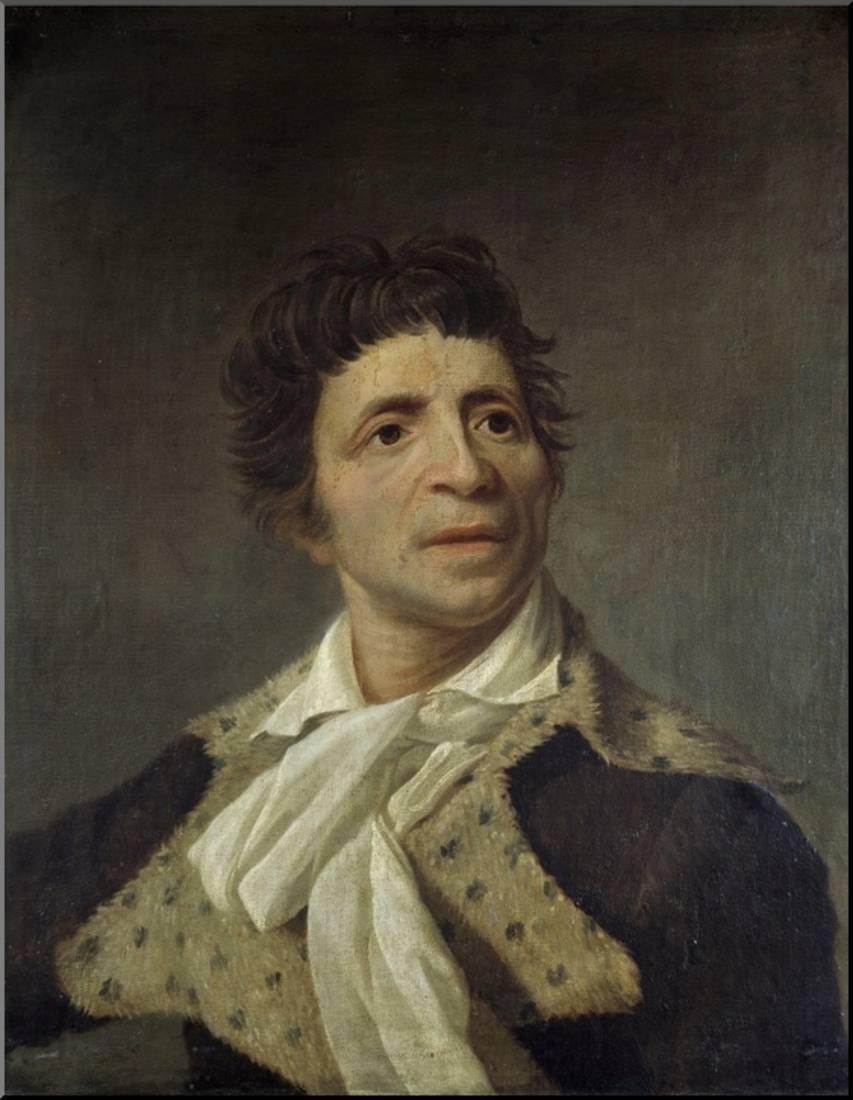
Portrait of Jean-Paul Marat

Photo: Joseph Boze · Public domain

Born in Switzerland · Nationality French — French Revolution / press / political violence / medicine

Jean-Paul Marat

Documented profile covering 10 controversies, including “1793–1795: Posthumous elevation to Jacobin martyr, followed by Thermidorian reaction and removal from Panthéon” and “1792–1793: Political war against Girondins and repeated accusations of treason”.

Are you concerned? Right of reply

Profile No. 2150 · Updated on 12 October 2026

Portrait of Jean-Paul Marat

Photo: Joseph Boze · Public domain

10Documented controversies
4Sources
0Conviction

I. Documented controversies

01

1793–1795

1793–1795: Posthumous elevation to Jacobin martyr, followed by Thermidorian reaction and removal from Panthéon

No legal proceedings

After his assassination by Charlotte Corday, Marat was elevated to the status of a revolutionary martyr, interred in the Panthéon, portrayed by David and celebrated through a civic cult. After Thermidor, this memory was abruptly reversed and his remains removed from the Panthéon.

State of the evidence
Documented

Sources · 2

  1. [1]
    British MuseumJean Paul MaratArchiveVery high reliability
  2. [2]
    World History EncyclopediaAssassination of MaratSecondary sourceHigh reliability

Last verified: 14 September 2026

Add to this entry

02

1792–1793

1792–1793: Political war against Girondins and repeated accusations of treason

No legal proceedings

Elected to the Convention, Marat made the Girondins his principal opponents and accused them of federalism, corruption and seeking to destroy Paris.

State of the evidence
Reported by the press
Attribution
Directly implicated

Sources · 2

  1. [1]
    JSTORJean Paul Marat: Tribune of the French RevolutionAcademic publicationVery high reliability
  2. [2]
    Cambridge University PressJacques-Louis David — sample chapter including Marat trialAcademic publicationVery high reliability

Last verified: 14 September 2026

Add to this entry

03

1793-04

April 1793: Charged before Revolutionary Tribunal and acquitted

Acquitted / conviction overturned

The Convention, temporarily dominated by the Girondins, referred Marat to the Revolutionary Tribunal over writings considered seditious and violent. He defended himself and was acquitted on 24 April, then carried in triumph.

Legal status — source text
Acquitted / conviction overturned

Sources · 1

  1. [1]
    Cambridge University PressJacques-Louis David — sample chapter including Marat trialAcademic publicationVery high reliability

Last verified: 14 September 2026

Add to this entry

04

1793-05–1793-06

May–June 1793: Support for Parisian uprising that politically eliminates Girondins

No legal proceedings

Marat encouraged the sections and sans-culottes to act against Girondin leaders; armed pressure on the Convention resulted in the arrest of dozens of deputies.

State of the evidence
Documented
Attribution
Directly implicated

Sources · 2

  1. [1]
    JSTORJean Paul Marat: Tribune of the French RevolutionAcademic publicationVery high reliability
  2. [2]
    World History EncyclopediaAssassination of MaratSecondary sourceHigh reliability

Last verified: 14 September 2026

Add to this entry

05

1789–1792

1789–1792: L’Ami du peuple and repeated rhetoric calling for executions of political enemies

No legal proceedings

Marat's newspaper repeatedly denounced named individuals and called for traitors, officials and counter-revolutionaries to be punished or killed, contributing to his reputation for inciting violence.

State of the evidence
Documented
Attribution
Directly implicated

Sources · 2

  1. [1]
    JSTORJean Paul Marat: Tribune of the French RevolutionAcademic publicationVery high reliability
  2. [2]
    World History EncyclopediaAssassination of MaratSecondary sourceHigh reliability

Last verified: 14 September 2026

Add to this entry

06

1791–1792

1791–1792: Calls for temporary dictatorial power to save Revolution

No legal proceedings

Marat repeatedly advocated the idea that a dictator or tribune with extraordinary powers might be necessary to neutralise the Revolution's enemies.

State of the evidence
Documented
Attribution
Directly implicated

Sources · 2

  1. [1]
    JSTORJean Paul Marat: Tribune of the French RevolutionAcademic publicationVery high reliability
  2. [2]
    World History EncyclopediaAssassination of MaratSecondary sourceHigh reliability

Last verified: 14 September 2026

Add to this entry

07

1792-08–1792-09

August–September 1792: Lists of suspects and atmosphere preceding September Massacres

No legal proceedings

Before the prison massacres, Marat publicly denounced numerous suspects and supported the need to eliminate internal conspirators.

State of the evidence
Documented

Sources · 2

  1. [1]
    JSTORJean Paul Marat: Tribune of the French RevolutionAcademic publicationVery high reliability
  2. [2]
    World History EncyclopediaAssassination of MaratSecondary sourceHigh reliability

Last verified: 14 September 2026

Add to this entry

08

September 1792

September 1792: Defence of September Massacres as measure of revolutionary salvation

No legal proceedings

After the massacres, Marat largely justified them as the people's response to the threat posed by conspirators and enemies held in custody.

State of the evidence
Documented
Attribution
Directly implicated

Sources · 2

  1. [1]
    JSTORJean Paul Marat: Tribune of the French RevolutionAcademic publicationVery high reliability
  2. [2]
    World History EncyclopediaAssassination of MaratSecondary sourceHigh reliability

Last verified: 14 September 2026

Add to this entry

09

1790

1790: Proceedings against his newspaper, clandestinity and temporary flight to England

Investigation

His attacks on the authorities led to warrants, searches and periods in hiding; Marat temporarily took refuge in London.

State of the evidence
Documented

Sources · 2

  1. [1]
    JSTORJean Paul Marat: Tribune of the French RevolutionAcademic publicationVery high reliability
  2. [2]
    British MuseumJean Paul MaratArchiveVery high reliability

Last verified: 14 September 2026

Add to this entry

10

années 1770–1780

1770s–1780s: Scientific dispute with Academy of Sciences over work on optics, electricity and heat

No legal proceedings

Before the Revolution, Marat sought scientific recognition for his experimental work but came into conflict with scholars at the Academy, whom he accused of conspiracy and professional exclusivity.

State of the evidence
Documented
Attribution
Directly implicated

Sources · 1

  1. [1]
    JSTORJean Paul Marat: Tribune of the French RevolutionAcademic publicationVery high reliability

Last verified: 14 September 2026

Add to this entry

II. Constellation of documented links

No documented link with another published profile for now.

Two profiles are linked when a documented controversy of one names the other. The link points to that controversy and its sources; it does not indicate a personal relationship.

III. Has something changed?

A new court decision, a missing source, a mistake? Tell us what should be updated: every request is read by the editorial team.

Support the archive

Controversia checks and updates its profiles independently. Support is optional and has no effect on the content of profiles.

Donate

iPhone and iPad

Install Controversia

  1. Tap Share
  2. then Add to Home Screen

Tap Share, then Add to Home Screen.