Born in Croatia · Nationality Hungarian — Politics / communist regime / repression / political justice / human rights

Josip Broz Tito

Documented profile covering 8 controversies, including “1974: Constitution grants Tito presidency without term limit” and “1971–1972: Croatian Spring — purge of approximately 800 officials after Tito's direct intervention”.

Are you concerned? Right of reply

Profile No. 2022 · Updated on 12 October 2026

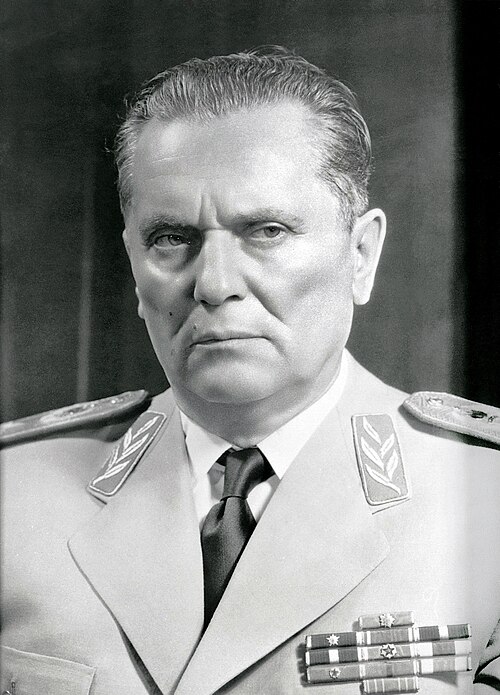
Portrait of Josip Broz Tito

Photo: Wikimedia Commons

8Documented controversies
12Sources
0Formal charge · all time
0Conviction

I. Documented controversies

01

1974

1974: Constitution grants Tito presidency without term limit

No legal proceedings

The 1974 federal Constitution retained an exception allowing Josip Broz Tito to serve as President of the Republic without any term limit. Recent legal scholarship expressly characterises the arrangement as a lifetime mandate and subjects it to severe criticism.

State of the evidence
Documented
Attribution
Political responsibility

Sources · 2

  1. [1]
    University of Kragujevac DOI repositoryIzvršna vlast na osnovu Ustava SFRJ iz 1974. godineAcademic publicationHigh reliability
  2. [2]
    University of Kragujevac DOI repositoryBez ograničenja trajanja mandataAcademic publicationHigh reliability

Last verified: 14 September 2026

Add to this entry

02

fin 1971–1972

1971–1972: Croatian Spring — purge of approximately 800 officials after Tito's direct intervention

No legal proceedings

The Croatian Spring crisis ended in political repression described as very severe in US diplomatic records: approximately 800 officials were purged following Tito's direct personal intervention to restore party and state discipline.

State of the evidence
Documented
Attribution
Political responsibility

Sources · 1

  1. [1]
    U.S. Department of State, Office of the HistorianFRUS 1969–1976, Vol. E-15, Part 1, Document 61ArchiveVery high reliability

Last verified: 14 September 2026

Add to this entry

03

1968

1968: student protests — information control and subsequent sanctions against students and teachers

No legal proceedings

The 1968 student movements in Zagreb and Belgrade denounced inequality and shortcomings in reforms, among other issues. Historical research describes a state-controlled press that minimised or suppressed information, followed by party expulsions affecting students and professors linked to protests; Tito intervened publicly in the crisis.

State of the evidence
Documented

Sources · 1

  1. [1]
    Časopis za suvremenu povijest / HrčakStudent Protest at the Zagreb Faculty of Arts in 1968Academic publicationHigh reliability

Last verified: 14 September 2026

Add to this entry

04

1949–1956

1949–1956: Goli Otok — political internment, forced labour and violence against actual or alleged Cominform supporters

No legal proceedings

After the Tito–Stalin split, Goli Otok became the principal camp for actual or suspected Cominform supporters. Approximately 13,000 people passed through it according to the cited research; detainees could be sent there on mere suspicion or denunciation and subjected to forced labour, humiliation, physical violence and psychological abuse.

State of the evidence
Well documented

Sources · 2

  1. [1]
    Udruga Ante Zemljar / Goli otok memorial projectWhat is Goli otok?ArchiveHigh reliability
  2. [2]
    Historijski zbornik / HrčakBroj kažnjenika na Golom otoku i drugim logorima za informbirovceAcademic publicationHigh reliability

Last verified: 14 September 2026

Add to this entry

05

January 1954–January 1955

1954–1955: Milovan Đilas removed, then secretly tried for hostile propaganda following criticism of Party monopoly

Conviction — against a third party

Protagonist not prosecuted — these proceedings are not counted in their formal charges or convictions.

After publishing articles criticising party dictatorship and bureaucratisation, Milovan Đilas was publicly attacked by Tito as a 'revisionist' and lost all his positions. In January 1955, Đilas and Vladimir Dedijer were tried behind closed doors and convicted of propaganda hostile to the government.

Attribution
Political responsibility
Role of the person profiled
Protagonist not prosecuted

Sources · 2

  1. [1]
    U.S. Department of State, Office of the HistorianThe Djilas AffairArchiveVery high reliability
  2. [2]
    U.S. Department of State, Office of the HistorianFRUS 1955–1957, Vol. XXVI — Djilas and Dedijer secret trialArchiveVery high reliability

Last verified: 14 September 2026

Add to this entry

06

1944–1948

1944–1948: decisions and policies concerning Yugoslav Germans — post-war expulsions, internment and violence

No legal proceedings

Croatian archival research describes Tito's personal decisions or approvals affecting the fate of Yugoslav Germans at the end of the war and immediately afterwards, amid expulsions, internment, killings and civilian deaths in camps.

State of the evidence
Documented

Sources · 1

  1. [1]
    Časopis za suvremenu povijest / HrčakJosip Broz Tito i sudbina jugoslavenskih NijemacaAcademic publicationHigh reliability

Last verified: 14 September 2026

Add to this entry

07

September–October 1946

1946: trial of Archbishop Alojzije Stepinac — criticism of political trial and defence safeguards

Conviction — against Alojzije Stepinac

Protagonist not prosecuted — these proceedings are not counted in their formal charges or convictions.

The Yugoslav regime arrested and tried Archbishop Alojzije Stepinac. A US congressional study noted, in particular, application of legislation enacted after the alleged acts and major restrictions on defence preparation; the United States publicly protested against the trial and conviction.

Person targeted by the proceedings
Alojzije Stepinac
Role of the person profiled
Protagonist not prosecuted

Sources · 2

  1. [1]
    U.S. Government Publishing Office / U.S. SenateThe Church and State Under Communism — Stepinac trial sectionOfficial documentVery high reliability
  2. [2]
    U.S. Department of State, Office of the HistorianForeign Relations of the United States, 1946, Vol. VI — Stepinac referenceArchiveVery high reliability

Last verified: 14 September 2026

Add to this entry

08

May 1945 et après-guerre

1945: Bleiburg and 'Way of the Cross' marches — mass executions of prisoners and civilians after surrender

No legal proceedings

After forces associated with the Independent State of Croatia surrendered at Bleiburg, numerous prisoners and civilians who fell into the hands of the communist Yugoslav army were summarily executed or died during forced marches known as the 'Way of the Cross'. Historiography explicitly examines Tito's responsibility for these post-war crimes.

State of the evidence
Well documented

Sources · 1

  1. [1]
    Hrčak / University of SplitThe reception of Bleiburg by the Croatian public and as topic of historical researchAcademic publicationHigh reliability

Last verified: 14 September 2026

Add to this entry

II. Constellation of documented links

No documented link with another published profile for now.

Two profiles are linked when a documented controversy of one names the other. The link points to that controversy and its sources; it does not indicate a personal relationship.

III. Has something changed?

A new court decision, a missing source, a mistake? Tell us what should be updated: every request is read by the editorial team.

Support the archive

Controversia checks and updates its profiles independently. Support is optional and has no effect on the content of profiles.

Donate

iPhone and iPad

Install Controversia

  1. Tap Share
  2. then Add to Home Screen

Tap Share, then Add to Home Screen.