Born in Germany · Nationality German — monarchy / imperialism / diplomacy / colonialism / First World War

Kaiser Wilhelm II

Documented profile covering 12 controversies, including “1919–1941: Radical antisemitism in exile and private calls for elimination of Jews from Germany” and “1919–1920: Article 227 of Treaty of Versailles — unprecedented proposed international trial of Kaiser, extradition refused”.

Are you concerned? Right of reply

Profile No. 2108 · Updated on 12 October 2026

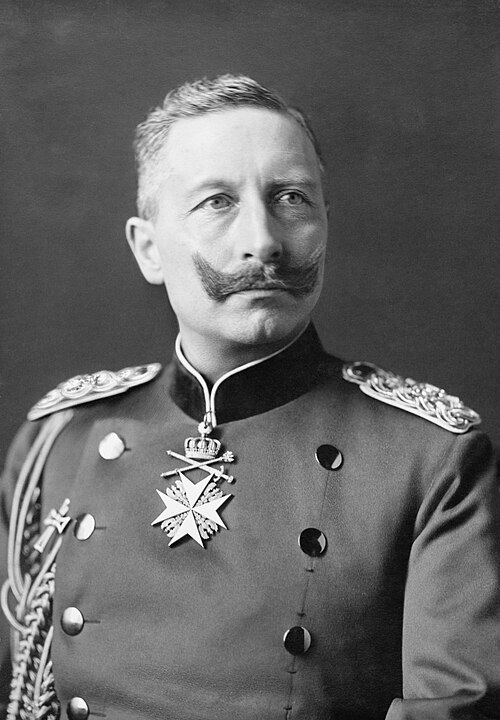
Portrait of Kaiser Wilhelm II

Photo: Wikimedia Commons

12Documented controversies
14Sources
0Formal charge · all time
0Conviction

I. Documented controversies

01

1919–1941

1919–1941: Radical antisemitism in exile and private calls for elimination of Jews from Germany

No legal proceedings

During his Dutch exile, Wilhelm II expressed increasingly violent antisemitism in correspondence, describing Jews as responsible for Germany's downfall and using language of elimination or extermination. These texts have become a central element in historical reassessment of his later life.

State of the evidence
Documented
Attribution
Personally implicated

Sources · 1

  1. [1]
    Cambridge University PressThe rabid anti-Semite in exileAcademic publicationVery high reliability

Last verified: 14 September 2026

Add to this entry

02

June 1919–1920

1919–1920: Article 227 of Treaty of Versailles — unprecedented proposed international trial of Kaiser, extradition refused

Investigation

The Treaty of Versailles provided for Wilhelm II to be arraigned for "a supreme offence against international morality and the sanctity of treaties" before a special tribunal. The Allies requested his extradition, but the Dutch government refused to surrender him and no trial took place.

State of the evidence
Documented

Sources · 2

  1. [1]
    Cambridge University PressWilhelm II as Supreme Warlord in the First World WarAcademic publicationVery high reliability
  2. [2]
    Cambridge University PressA new life in Amerongen and DoornAcademic publicationVery high reliability

Last verified: 14 September 2026

Add to this entry

03

August 1914–November 1918

1914–1918: Role as "Supreme Warlord" during First World War, with real influence but diminishing operational control

No legal proceedings

As Emperor and supreme commander of German forces, Wilhelm II bore major political and symbolic responsibility during the war. However, his operational influence declined sharply in favour of the Supreme Army Command (OHL), notably Hindenburg and Ludendorff, especially from 1916.

State of the evidence
Documented

Sources · 1

  1. [1]
    Cambridge University PressWilhelm II as Supreme Warlord in the First World WarAcademic publicationVery high reliability

Last verified: 14 September 2026

Add to this entry

04

9–28 November 1918

1918: Abdication and flight to Netherlands as Empire collapses

No legal proceedings

As revolution spread across Germany and the army could no longer guarantee his position, Wilhelm II left the headquarters at Spa for the Netherlands. His abdication was announced on 9 November; he subsequently signed a formal statement of renunciation. His departure was strongly criticised in Germany as flight at the moment of defeat.

State of the evidence
Documented
Attribution
Personally implicated

Sources · 1

  1. [1]
    Cambridge University PressA new life in Amerongen and DoornAcademic publicationVery high reliability

Last verified: 14 September 2026

Add to this entry

05

5 July–fin July 1914

1914: "Blank cheque" to Austria-Hungary during July Crisis

No legal proceedings

After the assassination of Franz Ferdinand, Germany assured Austria-Hungary of broad support against Serbia. This "blank cheque", approved within the imperial government with Wilhelm II's support, encouraged Vienna's hard-line approach and was a major factor in escalation towards European war.

State of the evidence
Documented
Attribution
Shared responsibility

Sources · 1

  1. [1]
    1914-1918 Online / Freie Universität BerlinGermany's Blank Cheque to Austria-HungaryEncyclopediaVery high reliability

Last verified: 14 September 2026

Add to this entry

06

1908–1912

1908–1912: Supports expansion of battle fleet, worsening Anglo-German naval arms race

No legal proceedings

Wilhelm II supported Admiral Tirpitz's substantial expansion of the High Seas Fleet. The policy heightened British perceptions of a German threat and contributed to the dreadnought race, higher military spending and deteriorating relations with London.

State of the evidence
Documented
Attribution
Directly implicated

Sources · 1

  1. [1]
    Cambridge University PressThe Battlefleet and the Growing Risk of War with Britain, 1911–1912Academic publicationVery high reliability

Last verified: 14 September 2026

Add to this entry

07

1906–1909

1906–1909: Eulenburg affair — scandal involving inner circle and crisis of "personal monarchy"

No legal proceedings

Journalist Maximilian Harden's campaign against Prince Philipp zu Eulenburg, Wilhelm II's close friend and unofficial adviser, triggered successive trials concerning homosexuality, perjury and defamation, shaking the imperial court. The scandal fuelled criticism of power exercised through an inner circle of associates not accountable to Parliament.

State of the evidence
Documented
Attribution
Directly implicated

Sources · 1

  1. [1]
    Cambridge University PressThe Eulenburg Affair, 1906–1909Academic publicationVery high reliability

Last verified: 14 September 2026

Add to this entry

08

28 October–November 1908

1908: Daily Telegraph Affair — uncontrolled remarks politically weaken Emperor

No legal proceedings

An interview given by Wilhelm II to the Daily Telegraph contained improvised statements about Britain, the Boer War and German diplomacy. The remarks provoked outrage abroad and in Germany, reinforcing the view that the Emperor's personal interventions posed a diplomatic risk.

State of the evidence
Documented
Attribution
Personally implicated

Sources · 2

  1. [1]
    German History in Documents and ImagesThe Daily Telegraph Affair (October 28, 1908)Academic publicationVery high reliability
  2. [2]
    Cambridge University Press“Baseless Allegations”: Wilhelm II and the Hale Interview of 1908Academic publicationVery high reliability

Last verified: 14 September 2026

Add to this entry

09

1904–1907

1904–1907: Herero and Nama genocide — major imperial responsibility, disputed personal extermination order

No legal proceedings

During Wilhelm II's reign, German forces committed genocide against the Herero and Nama in South West Africa, notably under General Lothar von Trotha's command. Whether the Emperor personally ordered extermination has been the subject of significant historiographical debate.

State of the evidence
Disputed

Sources · 2

  1. [1]
    Cambridge University PressDid the Kaiser Order the Genocide?Academic publicationVery high reliability
  2. [2]

Last verified: 14 September 2026

Add to this entry

10

31 March 1905–1906

1905: Landing at Tangier — imperial intervention triggers First Moroccan Crisis

No legal proceedings

Wilhelm II landed at Tangier and publicly expressed support for the Moroccan Sultan's sovereignty, effectively challenging French predominance in Morocco. The intervention initiated the First Moroccan Crisis, intensified Germany's diplomatic isolation and raised the prospect of a European war.

State of the evidence
Well documented
Attribution
Political responsibility

Sources · 1

  1. [1]
    Cambridge University PressWar in the West: The Landing in Tangier and the Fiasco of Algeciras, 1905–1906Academic publicationVery high reliability

Last verified: 14 September 2026

Add to this entry

11

27 July 1900

1900: "Hun speech" — rhetorical instruction to take no prisoners in China

No legal proceedings

Before the German expeditionary force departed to suppress the Boxer Rebellion, Wilhelm II delivered a speech at Bremerhaven calling on soldiers to strike without mercy, saying that no quarter should be given and no prisoners taken. The most inflammatory version invoked Attila's Huns.

State of the evidence
Documented
Attribution
Command responsibility

Sources · 1

  1. [1]
    German History in Documents and ImagesWilhelm II: “Hun Speech” (1900)Academic publicationVery high reliability

Last verified: 14 September 2026

Add to this entry

12

3 January 1896

1896: Kruger Telegram — personal approval and diplomatic crisis with United Kingdom

No legal proceedings

Wilhelm II approved the dispatch of a telegram congratulating President Paul Kruger of the Transvaal after the failure of the Jameson Raid. In the United Kingdom, the message was regarded as hostile interference in Britain's imperial sphere and sparked a strong wave of anti-German sentiment.

State of the evidence
Documented
Attribution
Directly implicated

Sources · 1

  1. [1]
    German History in Documents and ImagesThe Krüger Telegram (1896)Academic publicationVery high reliability

Last verified: 14 September 2026

Add to this entry

II. Constellation of documented links

No documented link with another published profile for now.

Two profiles are linked when a documented controversy of one names the other. The link points to that controversy and its sources; it does not indicate a personal relationship.

III. Has something changed?

A new court decision, a missing source, a mistake? Tell us what should be updated: every request is read by the editorial team.

Support the archive

Controversia checks and updates its profiles independently. Support is optional and has no effect on the content of profiles.

Donate

iPhone and iPad

Install Controversia

  1. Tap Share
  2. then Add to Home Screen

Tap Share, then Add to Home Screen.