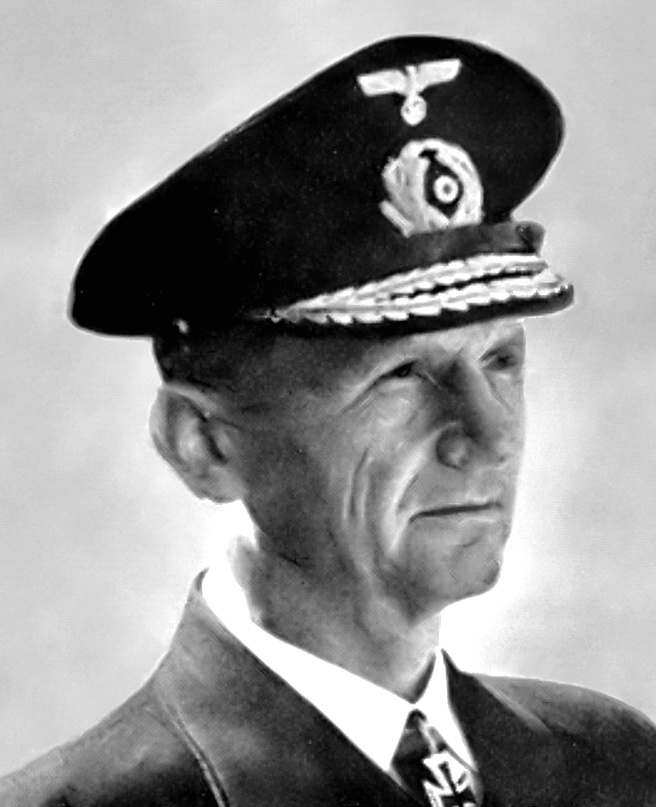
Portrait of Karl Dönitz

Photo: Public domain · Wikimedia Commons

Born in Germany · Nationality German — Kriegsmarine / submarine warfare / Nazi regime / Flensburg government / Nuremberg

Karl Dönitz

Documented profile covering 10 controversies, including “1946: sentenced to ten years for crimes against peace and war crimes, acquitted of conspiracy” and “February 1945: discussion of possible denunciation of Geneva Convention and wording about measures taken “without warning””.

Are you concerned? Right of reply

Profile No. 2636 · Updated on 12 October 2026

Portrait of Karl Dönitz

Photo: Public domain · Wikimedia Commons

10Documented controversies
6Sources
1 followed by a conviction

I. Documented controversies

Case · 6 documented stages

1946: sentenced to ten years for crimes against peace and war crimes, acquitted of conspiracy

Conviction
01

1 October 1946

1946: sentenced to ten years for crimes against peace and war crimes, acquitted of conspiracy

Conviction

The International Military Tribunal acquitted Dönitz of conspiracy but found him guilty of waging aggressive war and war crimes. He was sentenced to ten years' imprisonment and released from Spandau in 1956.

Attribution
Accused

Sources · 3

  1. [1]
    Avalon Project — Yale Law SchoolJudgment: DoenitzCourt decisionVery high reliability
  2. [2]
    United States Holocaust Memorial MuseumKarl DönitzArchiveVery high reliability
  3. [3]
    Deutsches Historisches MuseumLeMO Biografie — Karl DönitzArchiveVery high reliability

Last verified: 14 September 2026

Add to this entry

03

April–1 May 1945

April–May 1945: continuation of fighting despite considering war lost, then succession to Hitler as head of state

Conviction

The Tribunal noted that in April 1945, despite recognising that the military situation was hopeless, Dönitz urged the navy to continue fighting. On 1 May, designated Hitler's successor, he became head of the German state.

State of the evidence
Established by a court
Attribution
Political responsibility

Sources · 3

  1. [1]
    Avalon Project — Yale Law SchoolJudgment: DoenitzCourt decisionVery high reliability
  2. [2]
    Deutsches Historisches MuseumLeMO Biografie — Karl DönitzArchiveVery high reliability
  3. [3]
    United States Holocaust Memorial MuseumKarl DönitzArchiveVery high reliability

Last verified: 14 September 2026

Add to this entry

07

1942–1943

1942–1943: retention of Commando Order within navy and execution of Allied crew handed over to SD

Conviction

Dönitz acknowledged receiving the Commando Order. In 1943, the crew of an Allied motor boat captured by naval forces in Norway was interrogated and then handed over to the SD and executed; the Tribunal noted that Dönitz had allowed the order to remain in force after becoming Commander-in-Chief of the navy.

State of the evidence
Established by a court
Attribution
Command responsibility

Sources · 1

  1. [1]
    Avalon Project — Yale Law SchoolJudgment: DoenitzCourt decisionVery high reliability

Last verified: 14 September 2026

Add to this entry

08

17 September 1942

1942: “Laconia Order” — prohibition on rescue operations after torpedo attacks

Conviction

Following the torpedoing of Laconia and an aerial attack on German submarines engaged in rescuing survivors, Dönitz ordered U-boats to cease rescue operations for shipwreck survivors, except where intelligence interests justified them.

State of the evidence
Documented
Attribution
Directly implicated

Sources · 3

  1. [1]
    Avalon Project — Yale Law SchoolJudgment: DoenitzCourt decisionVery high reliability
  2. [2]
    Naval History and Heritage CommandThe Trial of Admiral DoenitzOfficial documentVery high reliability
  3. [3]
    Naval History and Heritage CommandH-Gram 095Official documentVery high reliability

Last verified: 14 September 2026

Add to this entry

09

September 1939–January 1940

1939–1940: submarine warfare and orders for attacks without warning on merchant and neutral vessels

Conviction

Dönitz directed German submarine warfare and progressively expanded attacks without warning, including against neutral vessels in certain operational areas. The Tribunal found that these orders violated the applicable naval protocol in several circumstances.

State of the evidence
Established by a court
Attribution
Directly implicated

Sources · 2

  1. [1]
    Avalon Project — Yale Law SchoolJudgment: DoenitzCourt decisionVery high reliability
  2. [2]
    Deutsches Historisches MuseumLeMO Biografie — Karl DönitzArchiveVery high reliability

Last verified: 14 September 2026

Add to this entry

10

October 1939–April 1940

1939–1940: operational participation of submarine fleet in invasion of Norway

Conviction

As early as 1939, Dönitz made recommendations concerning submarine bases in Norway and, in March 1940, prepared operational orders for U-boats supporting the German invasion of Norway.

State of the evidence
Established by a court
Attribution
Command responsibility

Sources · 1

  1. [1]
    Avalon Project — Yale Law SchoolJudgment: DoenitzCourt decisionVery high reliability

Last verified: 14 September 2026

Add to this entry

02

20 February 1945

February 1945: discussion of possible denunciation of Geneva Convention and wording about measures taken “without warning”

No legal proceedings

During discussions about denouncing the Geneva Convention, Dönitz considered that the disadvantages outweighed the benefits. Minutes also summarised his position as suggesting that it would be preferable to take certain measures without warning while preserving international appearances.

Attribution
Directly implicated

Sources · 1

  1. [1]
    Avalon Project — Yale Law SchoolJudgment: DoenitzCourt decisionVery high reliability

Last verified: 14 September 2026

Add to this entry

04

1–9 May 1945

May 1945: strategy of partial surrenders in West while temporarily continuing fighting in East

No legal proceedings

From Flensburg, Dönitz attempted to arrange a phased surrender to maximise the passage of German soldiers and civilians into Western zones while continuing operations against the Red Army for longer. The unconditional surrender finally took effect on 8–9 May.

State of the evidence
Documented
Attribution
Political responsibility

Sources · 2

  1. [1]
    Deutsches Historisches MuseumLeMO Biografie — Karl DönitzArchiveVery high reliability
  2. [2]
    Avalon Project — Yale Law SchoolJudgment: DoenitzCourt decisionVery high reliability

Last verified: 14 September 2026

Add to this entry

05

1943–1944

1943–1944: ideological Nazification of officer corps and public antisemitic rhetoric

No legal proceedings

As Commander-in-Chief, Dönitz declared that officers should feel jointly responsible for the National Socialist state and rejected the idea of an apolitical officer. In March 1944, he used rhetoric about the “poison” of Judaism in a public speech.

State of the evidence
Documented
Attribution
Directly implicated

Sources · 2

  1. [1]
    Deutsches Historisches MuseumLeMO Biografie — Karl DönitzArchiveVery high reliability
  2. [2]
    Avalon Project — Yale Law SchoolNuremberg Trial Proceedings Vol. 13 — 10 May 1946Primary sourceVery high reliability

Last verified: 14 September 2026

Add to this entry

06

11 December 1944

1944: proposal to employ 12,000 concentration camp prisoners in shipyards

No legal proceedings

During a conference, Dönitz discussed using 12,000 concentration camp prisoners in shipyards. The Tribunal noted that he knew large numbers of people from occupied territories were held in camps.

State of the evidence
Established by a court
Attribution
Directly implicated

Sources · 1

  1. [1]
    Avalon Project — Yale Law SchoolJudgment: DoenitzCourt decisionVery high reliability

Last verified: 14 September 2026

Add to this entry

II. Constellation of documented links

No documented link with another published profile for now.

Two profiles are linked when a documented controversy of one names the other. The link points to that controversy and its sources; it does not indicate a personal relationship.

III. Has something changed?

A new court decision, a missing source, a mistake? Tell us what should be updated: every request is read by the editorial team.

Support the archive

Controversia checks and updates its profiles independently. Support is optional and has no effect on the content of profiles.

Donate

iPhone and iPad

Install Controversia

  1. Tap Share
  2. then Add to Home Screen

Tap Share, then Add to Home Screen.