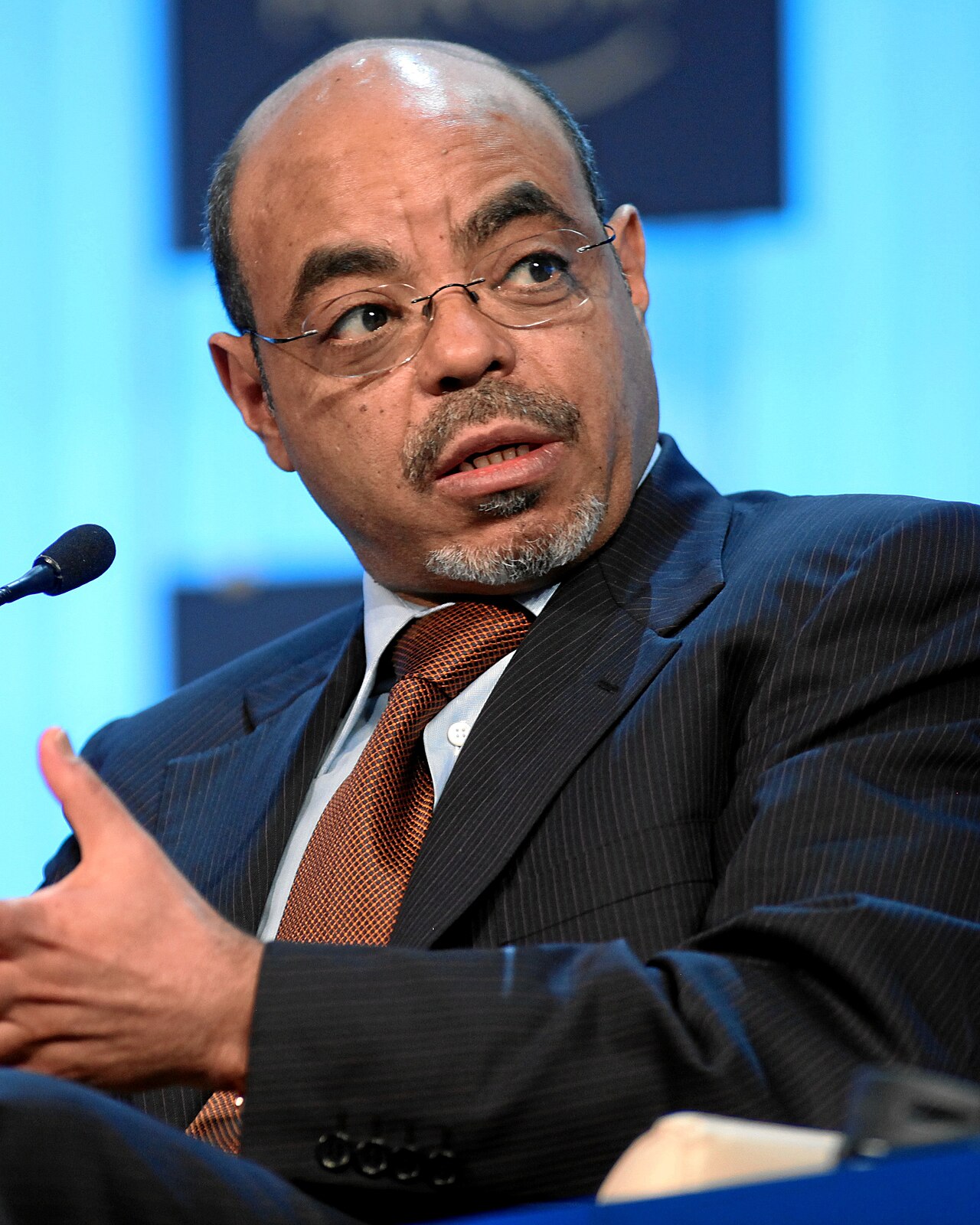
Portrait of Meles Zenawi

Photo: World Economic Forum · CC BY-SA 2.0 · Wikimedia Commons

Born in Ethiopia · Nationality Ethiopian — Politics / regime / war / security / human rights

Meles Zenawi

Documented profile covering 12 controversies, including “2009: Broadly worded counter-terrorism law used against journalists and opponents” and “2010–2012: Victory with 99.6% of seats, shrinking political space and convictions of journalists”.

Are you concerned? Right of reply

Profile No. 2173 · Updated on 12 October 2026

Portrait of Meles Zenawi

Photo: World Economic Forum · CC BY-SA 2.0 · Wikimedia Commons

12Documented controversies
15Sources
0Formal charge · all time
0Conviction

I. Documented controversies

01

July 2009–2012

2009: Broadly worded counter-terrorism law used against journalists and opponents

Conviction — against journalists and opponents

Protagonist not prosecuted — these proceedings are not counted in their formal charges or convictions.

The 2009 counter-terrorism law drew strong criticism because its broad definitions could criminalise reporting, contacts with banned groups or forms of dissent. It was subsequently used in prosecutions against journalists and opponents.

State of the evidence
Documented
Person targeted by the proceedings
journalists and opponents
Role of the person profiled
Protagonist not prosecuted

Sources · 2

  1. [1]
    Committee to Protect JournalistsAnti-terrorism legislation further restricts Ethiopian pressPressHigh reliability
  2. [2]
    Human Rights WatchEthiopia: Journalists Convicted Under Unfair LawNGO reportVery high reliability

Last verified: 14 September 2026

Add to this entry

02

2010–2012

2010–2012: Victory with 99.6% of seats, shrinking political space and convictions of journalists

Conviction — against journalists

Protagonist not prosecuted — these proceedings are not counted in their formal charges or convictions.

In the 2010 elections, the EPRDF and its allies won 99.6% of seats in a context HRW described as marked by intimidation, control over public space and weak independent media. Subsequent years saw further prosecutions and convictions of journalists under counter-terrorism legislation.

State of the evidence
Documented
Attribution
Political responsibility
Person targeted by the proceedings
journalists
Role of the person profiled
Protagonist not prosecuted

Sources · 3

  1. [1]
    Human Rights WatchEthiopia: Government Repression Undermines PollNGO reportVery high reliability
  2. [2]
    Human Rights WatchEthiopia: Journalists Convicted Under Unfair LawNGO reportVery high reliability
  3. [3]

Last verified: 14 September 2026

Add to this entry

03

2008–2010

2008–2010: Public resources and aid programmes allegedly used to consolidate political control

No legal proceedings

HRW collected testimony alleging that access to seeds, fertilisers, land, credit, public employment and aid programmes could depend on membership of or support for the ruling party, creating a system of political pressure in rural areas.

State of the evidence
Allegations
Attribution
Directly implicated

Sources · 1

  1. [1]

Last verified: 14 September 2026

Add to this entry

04

2009–

2009: Associations law severely restricts foreign funding of human rights organisations

No legal proceedings

The Charities and Societies Proclamation of 2009 restricted the ability of organisations receiving more than a low threshold of foreign funding to work on human rights, democracy and governance, significantly reducing the space for independent civil society.

State of the evidence
Documented

Sources · 2

  1. [1]
  2. [2]
    Ministry of Justice of EthiopiaCharities and Societies Proclamation No. 621/2009Parliamentary recordVery high reliability

Last verified: 14 September 2026

Add to this entry

05

2006–2008

2006–2008: Ethiopian military intervention in Somalia and indiscriminate shelling of Mogadishu

No legal proceedings

Ethiopia intervened militarily in Somalia to support the Transitional Federal Government. Human Rights Watch documented indiscriminate artillery, rocket and mortar attacks by Ethiopian forces in Mogadishu, along with other violations committed by various belligerents.

State of the evidence
Documented

Sources · 1

  1. [1]
    Human Rights Watch“So Much to Fear”: War Crimes and the Devastation of SomaliaNGO reportVery high reliability

Last verified: 14 September 2026

Add to this entry

06

June 2007–2008

2007–2008: Ogaden counter-insurgency — executions, torture, rape, burned villages and forced displacement

No legal proceedings

Following an ONLF attack on an oil facility, Meles announced a major counter-offensive. HRW documented executions, torture, rape, village burnings and forced displacement by the army, describing certain patterns as war crimes and crimes against humanity.

State of the evidence
Allegations

Sources · 1

  1. [1]

Last verified: 14 September 2026

Add to this entry

07

2005–2007

2005–2007: Extensive treason and serious criminal proceedings against opponents, journalists and activists

Conviction — against opponents and journalists

Protagonist not prosecuted — these proceedings are not counted in their formal charges or convictions.

Following post-election violence, opposition leaders, journalists and civil society representatives faced very serious charges, including treason, in proceedings condemned as politically motivated.

State of the evidence
Documented
Person targeted by the proceedings
opponents and journalists
Role of the person profiled
Protagonist not prosecuted

Sources · 2

  1. [1]
    Human Rights WatchWorld Report 2006: EthiopiaNGO reportVery high reliability
  2. [2]

Last verified: 14 September 2026

Add to this entry

08

1992–2005

1992–2005: Systemic political repression in Oromia under EPRDF

No legal proceedings

Human Rights Watch describes a longstanding pattern in Oromia of arbitrary arrests, torture, harassment, surveillance and the use of local structures to control political expression and discourage opposition under the EPRDF government led by Meles Zenawi.

State of the evidence
Documented
Attribution
Political responsibility

Last verified: 14 September 2026

Add to this entry

09

May 2005

May 2005: Competitive elections amid repression and restrictions on opposition

No legal proceedings

The May 2005 elections saw an unusual political opening, but HRW research shows that much of the country, notably Oromia, remained subject to intimidation, detention and surveillance of dissenting voices, undermining equality of electoral competition.

State of the evidence
Documented
Attribution
Political responsibility

Sources · 2

  1. [1]
  2. [2]
    Human Rights WatchWorld Report 2006: EthiopiaNGO reportVery high reliability

Last verified: 14 September 2026

Add to this entry

10

June–November 2005

June and November 2005: Lethal force against post-election protests and mass arrests

No legal proceedings

Following disputes over election results, security forces killed numerous protesters in Addis Ababa during the crises of June and November and arrested thousands. The repression marked an abrupt closure of the political space opened before the vote.

State of the evidence
Documented

Sources · 2

  1. [1]
    Human Rights WatchWorld Report 2006: EthiopiaNGO reportVery high reliability
  2. [2]
    Human Rights WatchEthiopia: Hidden Crackdown in Rural AreasNGO reportVery high reliability

Last verified: 14 September 2026

Add to this entry

11

December 2003–2004

2003–2004: Gambella violence against Anuak and failure of accountability

No legal proceedings

In Gambella, hundreds of Anuak were killed in violence in which soldiers and police participated according to HRW; military attacks and abuses continued, and the official investigation mechanism was criticised for lacking credibility and independence.

State of the evidence
Documented

Sources · 2

  1. [1]
  2. [2]
    Human Rights WatchWorld Report 2005: EthiopiaNGO reportVery high reliability

Last verified: 14 September 2026

Add to this entry

12

1998–2000

1998–2000: Mass detention and expulsion of people of Eritrean origin during war

No legal proceedings

During the war with Eritrea, Ethiopian authorities detained and then expelled tens of thousands of people regarded as Eritrean or of Eritrean origin, often without effective individual review or judicial remedy, with assets frozen or lost.

State of the evidence
Well documented

Sources · 1

  1. [1]
    Human Rights WatchThe Horn of Africa War: Mass Expulsions and the Nationality IssueNGO reportVery high reliability

Last verified: 14 September 2026

Add to this entry

II. Constellation of documented links

No documented link with another published profile for now.

Two profiles are linked when a documented controversy of one names the other. The link points to that controversy and its sources; it does not indicate a personal relationship.

III. Has something changed?

A new court decision, a missing source, a mistake? Tell us what should be updated: every request is read by the editorial team.

Support the archive

Controversia checks and updates its profiles independently. Support is optional and has no effect on the content of profiles.

Donate

iPhone and iPad

Install Controversia

  1. Tap Share
  2. then Add to Home Screen

Tap Share, then Add to Home Screen.