Born in Democratic Republic of the Congo · Nationalities Zairean, Congolese (Léopoldville) — Politics / authoritarian regime / human rights / economy / corruption / public life

Mobutu Sese Seko

Documented profile covering 13 controversies, including “1990–1997: democratisation announced but transition blocked, competing governments and presidential power preserved” and “1991 and 1993: military mutinies, looting and violence within deliberately underfunded army system”.

Are you concerned? Right of reply

Profile No. 1982 · Updated on 12 October 2026

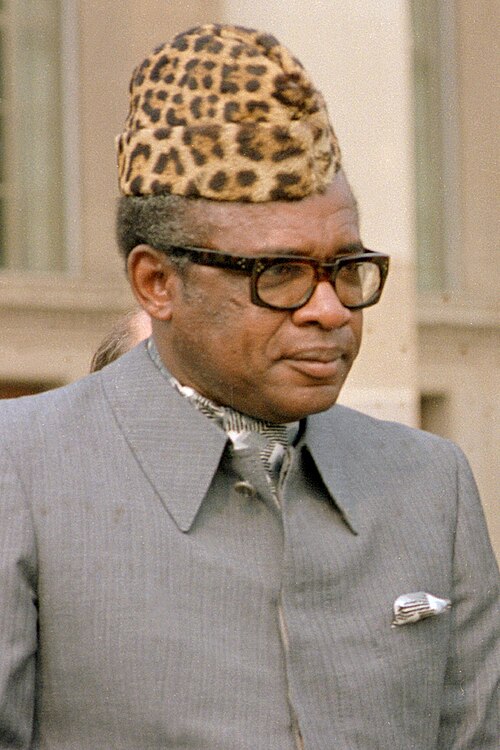
Portrait of Mobutu Sese Seko

Photo: Wikimedia Commons

13Documented controversies
13Sources
0Formal charge · all time
0Conviction

I. Documented controversies

01

24 April 1990–May 1997

1990–1997: democratisation announced but transition blocked, competing governments and presidential power preserved

No legal proceedings

After announcing multiparty politics, Mobutu retained most instruments of power, confronted the Sovereign National Conference, dismissed or circumvented transitional governments and contributed to prolonged institutional deadlock until his regime fell in 1997.

State of the evidence
Documented
Attribution
Political responsibility

Sources · 2

  1. [1]
    Human Rights WatchTransition, War and Human Rights in the CongoNGOHigh reliability
  2. [2]
    Human Rights WatchWorld Report 1993 — ZaireNGOHigh reliability

Last verified: 14 September 2026

Add to this entry

02

September 1991–January 1993

1991 and 1993: military mutinies, looting and violence within deliberately underfunded army system

No legal proceedings

Poorly paid or unpaid soldiers engaged in widespread looting in 1991 and again in 1993, with deaths, rapes and attacks on civilians, media outlets, churches and opponents. Mobutu's military system had long relied on competing, underpaid and patronage-based units.

State of the evidence
Documented
Attribution
Political responsibility

Sources · 2

  1. [1]
    Human Rights WatchWorld Report 1994 — ZaireNGOHigh reliability
  2. [2]

Last verified: 14 September 2026

Add to this entry

03

November 1991–1993

1991–1993: expulsions and violence campaign against Kasaians in Shaba

No legal proceedings

A campaign of violence and expulsions targeting Kasaians in Shaba displaced tens and then hundreds of thousands of people. Human Rights Watch described a campaign fuelled by regional officials close to central government.

State of the evidence
Documented
Attribution
Political responsibility

Sources · 1

  1. [1]
    Human Rights WatchWorld Report 1994 — ZaireNGOHigh reliability

Last verified: 14 September 2026

Add to this entry

04

16 February 1992

1992: 'March of Hope' — deadly use of force against Christian mobilisation

No legal proceedings

A mass Christian mobilisation in support of the Sovereign National Conference was suppressed by security forces. Human Rights Watch documented gunfire and a death toll of at least several dozen, with many injured.

State of the evidence
Documented

Sources · 1

  1. [1]
    Human Rights Watch / Africa WatchZaire: Two Years Without TransitionNGOHigh reliability

Last verified: 14 September 2026

Add to this entry

05

24 November 1965–24 April 1990

1965–1990: second coup and institutionalisation of personal one-party rule

No legal proceedings

Mobutu seized power in a second coup in November 1965, progressively concentrated power around the presidency and the MPR, and turned Mobutism into a state ideology. Security services were used to silence opponents.

State of the evidence
Documented
Legal status — source text
Not applicable
Attribution
Political responsibility

Sources · 2

  1. [1]
    Human Rights WatchZaire: Repression as PolicyNGOHigh reliability
  2. [2]
    Human Rights WatchTransition, War and Human Rights in the CongoNGOHigh reliability

Last verified: 14 September 2026

Add to this entry

06

années 1970–1990

1970s–1990s: kleptocracy, embezzlement of public resources and personal use of central bank

No legal proceedings

Investigations and financial archives describe a system in which state resources, including those of the central bank, were routinely used for the personal benefit of Mobutu and his network. Media estimates of his wealth reached several billion dollars.

State of the evidence
Documented
Attribution
Personally implicated

Last verified: 14 September 2026

Add to this entry

07

11–12 May 1990

1990: Lubumbashi University massacre following announcement of democratisation

No legal proceedings

A few weeks after the announcement of the end of one-party rule, security forces attacked the University of Lubumbashi campus. The exact number killed remains disputed, but the incident triggered a major domestic and international crisis and accelerated opposition to the regime.

State of the evidence
Disputed

Sources · 2

  1. [1]
    Human Rights Watch / Africa WatchZaire: Two Years Without TransitionNGOHigh reliability
  2. [2]
    Human Rights WatchWorld Report 1993 — ZaireNGOHigh reliability

Last verified: 14 September 2026

Add to this entry

08

30 November 1973–1978

1973–1974: 'Zairianisation' followed by 'radicalisation' — confiscations, politically allocated businesses and economic collapse

No legal proceedings

Mobutu launched 'Zairianisation': foreign companies were nationalised or allocated to Zairians chosen by the political authorities. The World Bank described the experiment as a fiasco that contributed to falling economic activity, capital flight, shortages and long-term decline.

State of the evidence
Documented
Attribution
Political responsibility

Sources · 2

  1. [1]
  2. [2]

Last verified: 14 September 2026

Add to this entry

09

February–July 1972

1972: confrontation with Cardinal Malula and political campaign against Catholic Church

No legal proceedings

As part of the policy of 'authenticity', Mobutu accused Cardinal Joseph-Albert Malula and Kinshasa priests of subversion. The cardinal was removed from his residence and the conflict was accompanied by substantial pressure on Catholic institutions.

State of the evidence
Documented
Attribution
Political responsibility

Last verified: 14 September 2026

Add to this entry

10

June 1971

1971: forced conscription of thousands of students following renewed university unrest

Civil / administrative proceedings

Following new demonstrations linked partly to the memory of those killed in 1969, the authorities conscripted approximately 2,500 students from Kinshasa into the army and prosecuted several student leaders.

State of the evidence
Documented

Sources · 1

  1. [1]

Last verified: 14 September 2026

Add to this entry

11

4 June 1969

1969: bloody suppression of student demonstrations in Kinshasa

Protagonist not prosecuted

Protagonist not prosecuted — these proceedings are not counted in their formal charges or convictions.

Security forces opened fire on student demonstrators in Kinshasa. Historical estimates vary, with unofficial death tolls ranging from approximately ten to several dozen, while hundreds of students were detained and several convicted.

State of the evidence
Documented
Role of the person profiled
Protagonist not prosecuted

Sources · 1

  1. [1]

Last verified: 14 September 2026

Add to this entry

12

May–2 June 1966

1966: 'Pentecost Plot' trial and public hanging of four former officials

Conviction — against the Pentecost plot defendants

Protagonist not prosecuted — these proceedings are not counted in their formal charges or convictions.

Évariste Kimba, Jérôme Anany, Emmanuel Bamba and Alexandre Mahamba were tried for a plot against Mobutu and publicly hanged in Kinshasa. The episode became a symbol of the new regime's brutal consolidation.

Attribution
Political responsibility
Person targeted by the proceedings
the Pentecost plot defendants
Role of the person profiled
Protagonist not prosecuted

Last verified: 14 September 2026

Add to this entry

13

14 September 1960–17 January 1961

1960–1961: 'neutralisation' coup, Lumumba's arrest and chain of events leading to his execution

No legal proceedings

Colonel Mobutu overturned the institutional balance in September 1960 by 'neutralising' Patrice Lumumba and Joseph Kasa-Vubu. After escaping, Lumumba was recaptured by Mobutu's forces on 1 December, then transferred to Katanga, where he was executed on 17 January 1961.

Sources · 1

  1. [1]
    U.S. Department of State, Office of the HistorianForeign Relations of the United States — Congo, 1960–1968ArchiveVery high reliability

Last verified: 14 September 2026

Add to this entry

II. Constellation of documented links

No documented link with another published profile for now.

Two profiles are linked when a documented controversy of one names the other. The link points to that controversy and its sources; it does not indicate a personal relationship.

III. Has something changed?

A new court decision, a missing source, a mistake? Tell us what should be updated: every request is read by the editorial team.

Support the archive

Controversia checks and updates its profiles independently. Support is optional and has no effect on the content of profiles.

Donate

iPhone and iPad

Install Controversia

  1. Tap Share
  2. then Add to Home Screen

Tap Share, then Add to Home Screen.