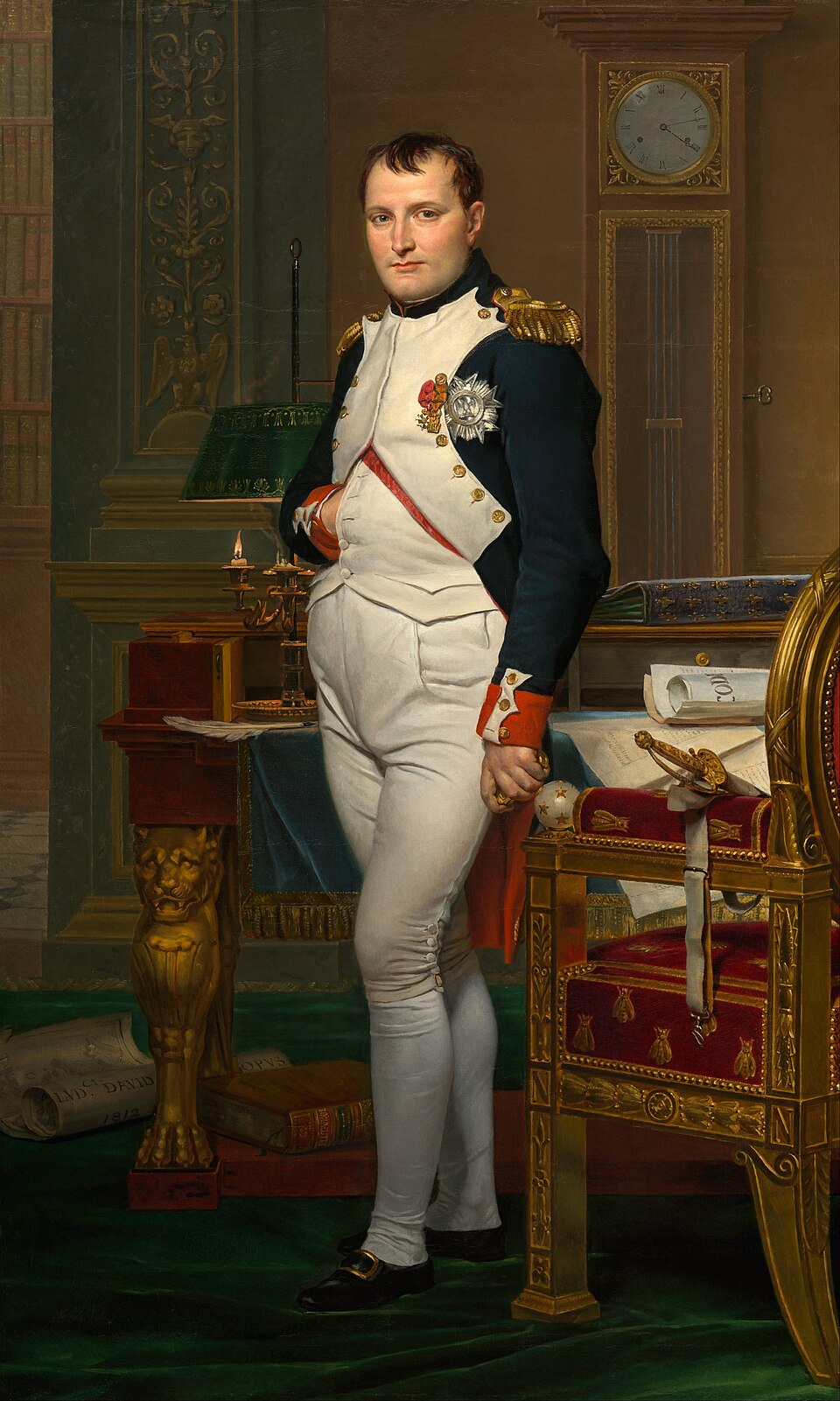
Portrait of Napoleon Bonaparte

Photo: Jacques-Louis David · Public domain

Born in France · Nationality French — Politics / empire / war / colonialism / law

Napoleon Bonaparte

Documented profile covering 18 controversies, including “1806–1814: Continental System, economic coercion and severe effects on European economies” and “1808–1814: Abdications of Bayonne, installation of Joseph Bonaparte and Peninsular War”.

Are you concerned? Right of reply

Profile No. 2148 · Updated on 12 October 2026

Portrait of Napoleon Bonaparte

Photo: Jacques-Louis David · Public domain

18Documented controversies
12Sources
0Formal charge · all time
0Conviction

I. Documented controversies

01

1806–1814

1806–1814: Continental System, economic coercion and severe effects on European economies

No legal proceedings

To stifle British trade, Napoleon imposed the Continental Blockade on allied or occupied states. The policy encouraged smuggling, shortages, tensions with Russia and coercive interventions.

State of the evidence
Documented

Sources · 1

  1. [1]
    British MuseumNapoléon I, Emperor of the FrenchArchiveVery high reliability

Last verified: 14 September 2026

Add to this entry

02

1808–1814

1808–1814: Abdications of Bayonne, installation of Joseph Bonaparte and Peninsular War

No legal proceedings

Napoleon forced Charles IV and Ferdinand VII to relinquish the Spanish throne, placed his brother Joseph on it and provoked an extremely deadly occupation war marked by guerrilla warfare, repression and atrocities on both sides.

State of the evidence
Documented
Attribution
Directly implicated

Sources · 2

  1. [1]
    British MuseumNapoléon I, Emperor of the French — biographyArchiveVery high reliability
  2. [2]
    Encyclopedic referenceAbdications of BayonneSecondary sourceMedium reliability

Last verified: 14 September 2026

Add to this entry

03

1804–1810

1804–1810: Dynastic nepotism — placement of brothers and relatives on European thrones

No legal proceedings

Napoleon placed several family members at the head of satellite kingdoms: Joseph in Naples and then Spain, Louis in Holland, Jérôme in Westphalia, and other relatives within the imperial administration.

State of the evidence
Documented

Sources · 1

  1. [1]
    British MuseumNapoléon I, Emperor of the FrenchArchiveVery high reliability

Last verified: 14 September 2026

Add to this entry

04

1808

1808: "Infamous Decree" against Jews despite Napoleonic legal emancipation

No legal proceedings

After reorganising Jewish religious worship and confirming several civil rights, Napoleon imposed temporary restrictions in 1808 on certain debts, economic activities, residence and military conscription of Jews, as well as naming rules.

State of the evidence
Documented
Attribution
Directly implicated

Sources · 1

  1. [1]

Last verified: 14 September 2026

Add to this entry

05

1799–1804

1799–1804: Rapid restrictions on press and establishment of structured political censorship

No legal proceedings

The Consulate drastically reduced the number of political newspapers and established censorship, surveillance and prior authorisation of performances and publications.

State of the evidence
Documented
Attribution
Political responsibility

Sources · 1

  1. [1]
    Fondation NapoléonCensorship and Literature under Napoleon ISecondary sourceVery high reliability

Last verified: 14 September 2026

Add to this entry

06

1800–1804

1800–1804: Political policing, surveillance of opponents and abductions of émigrés abroad

No legal proceedings

The Napoleonic regime developed a highly intrusive political police apparatus, monitored correspondence and opponents, and had certain émigrés arrested outside French borders.

State of the evidence
Documented
Attribution
Political responsibility

Sources · 2

  1. [1]
    Fondation NapoléonLes émigrés sont de retourSecondary sourceHigh reliability
  2. [2]
    Fondation NapoléonL’exécution du duc d’EnghienSecondary sourceVery high reliability

Last verified: 14 September 2026

Add to this entry

07

1804-03

March 1804: Abduction, summary trial and execution of Duc d'Enghien

Conviction — against the Duke of Enghien

Protagonist not prosecuted — these proceedings are not counted in their formal charges or convictions.

The Duc d'Enghien was seized on foreign territory, transferred to Vincennes, tried by a military commission and shot a few hours later. Napoleon subsequently acknowledged giving the order.

State of the evidence
Documented
Attribution
Directly implicated
Person targeted by the proceedings
the Duke of Enghien
Role of the person profiled
Protagonist not prosecuted

Sources · 1

  1. [1]
    Fondation NapoléonL’exécution du duc d’EnghienSecondary sourceVery high reliability

Last verified: 14 September 2026

Add to this entry

08

1804

1804: Proclamation of hereditary Empire and coronation

No legal proceedings

Five years after the coup, Bonaparte transformed the Republic into a hereditary Empire and was crowned Emperor.

State of the evidence
Documented
Attribution
Directly implicated

Sources · 1

  1. [1]
    British MuseumNapoléon I, Emperor of the FrenchArchiveVery high reliability

Last verified: 14 September 2026

Add to this entry

09

1804

1804: Civil Code — consolidation of male civil equality but major reversal of married women's rights

No legal proceedings

The Civil Code unified French law but strengthened the authority of husbands and fathers, restricted wives' legal capacity and property rights, and established significant inequalities in marital obligations.

State of the evidence
Documented
Attribution
Political responsibility

Sources · 1

  1. [1]
    Library of CongressWomen in Napoleonic FranceOfficial documentVery high reliability

Last verified: 14 September 2026

Add to this entry

10

1802–1803

1802: Leclerc expedition to Saint-Domingue and plan to restore colonial authority

No legal proceedings

Bonaparte sent a large expedition under Leclerc to restore metropolitan authority, disarm local forces and neutralise Toussaint Louverture.

State of the evidence
Documented
Attribution
Political responsibility

Sources · 2

  1. [1]
    Cambridge University PressHaiti, Slavery and the War in the CaribbeanAcademic publicationVery high reliability
  2. [2]
    Fondation pour la mémoire de l'esclavageNapoléon et le rétablissement de l'esclavage — l'essentielOfficial documentVery high reliability

Last verified: 14 September 2026

Add to this entry

11

1802–1803

1802: Arrest of Toussaint Louverture, deportation to France and death at Fort de Joux

Protagonist not prosecuted

Protagonist not prosecuted — these proceedings are not counted in their formal charges or convictions.

Toussaint Louverture was arrested by the French, secretly deported to mainland France and imprisoned at Fort de Joux, where he died in 1803.

Attribution
Political responsibility
Person targeted by the proceedings
Toussaint Louverture
Role of the person profiled
Protagonist not prosecuted

Sources · 2

  1. [1]
    Cambridge University PressHaiti, Slavery and the War in the CaribbeanAcademic publicationVery high reliability
  2. [2]
    Fondation pour la mémoire de l'esclavageNapoléon et le rétablissement de l'esclavage — l'essentielOfficial documentVery high reliability

Last verified: 14 September 2026

Add to this entry

12

1802

1802: Consulship for life and plebiscite strengthening personal rule

No legal proceedings

Bonaparte became First Consul for life following another plebiscite, a major step towards transforming the regime into a monarchy.

State of the evidence
Documented
Attribution
Political responsibility

Sources · 2

  1. [1]
    British MuseumNapoléon I, Emperor of the FrenchArchiveVery high reliability
  2. [2]
    Fondation NapoléonCensorship and Literature under Napoleon ISecondary sourceVery high reliability

Last verified: 14 September 2026

Add to this entry

13

1802

20 May–July 1802: Maintenance and subsequent restoration of slavery in French colonies

No legal proceedings

Under Bonaparte, the law of 20 May maintained slavery in colonies where it still existed, and consular acts permitted its restoration in territories where the abolition of 1794 had been implemented, notably Guadeloupe.

State of the evidence
Documented
Attribution
Directly implicated

Sources · 2

  1. [1]
    Assemblée nationale1802-1804 - Rétablissement progressif de l'esclavageOfficial documentVery high reliability
  2. [2]
    Fondation pour la mémoire de l'esclavageNapoléon et le rétablissement de l'esclavage — l'essentielOfficial documentVery high reliability

Last verified: 14 September 2026

Add to this entry

14

1798–1801

1798: Egyptian expedition — invasion of Ottoman territory and French colonial administration

No legal proceedings

Napoleon invaded Egypt as part of a strategy targeting British interests and established a French administration while proclaiming respect for Islam.

State of the evidence
Documented

Sources · 1

  1. [1]
    British MuseumNapoléon I, Emperor of the FrenchArchiveVery high reliability

Last verified: 14 September 2026

Add to this entry

15

1799-03

March 1799: Massacre of Ottoman prisoners at Jaffa

No legal proceedings

After the capture of Jaffa, several thousand Ottoman prisoners were executed on French orders, a decision traditionally attributed to Bonaparte.

State of the evidence
Documented

Sources · 2

  1. [1]
    British MuseumNapoléon I, Emperor of the FrenchArchiveVery high reliability
  2. [2]
    Napoleon SeriesNapoleon’s Massacre at JaffaSecondary sourceMedium reliability

Last verified: 14 September 2026

Add to this entry

16

1799

1799: Allegation that opium was administered to plague-stricken soldiers at Jaffa — disputed

No legal proceedings

British and French memoirs accused Bonaparte of ordering opium to be administered to plague patients left at Jaffa during the retreat.

Sources · 1

  1. [1]
    British MuseumNapoléon I, Emperor of the FrenchArchiveVery high reliability

Last verified: 14 September 2026

Add to this entry

17

1799-11-09–1799-11-10

9–10 November 1799: Coup of 18 Brumaire and overthrow of Directory

Civil / administrative proceedings

Bonaparte participated in the plot that overthrew the Directory, used the army to disperse the Councils and imposed the Consulate.

State of the evidence
Documented
Attribution
Directly implicated

Sources · 1

  1. [1]
    Fondation Napoléon18 Brumaire: the context and course of a coup d’ÉtatSecondary sourceVery high reliability

Last verified: 14 September 2026

Add to this entry

18

1795-10-05

5 October 1795: Suppression of royalist uprising of 13 Vendémiaire in Paris

No legal proceedings

Bonaparte commanded the artillery that crushed the royalist uprising against the Convention, using grapeshot in the streets of Paris.

State of the evidence
Documented

Sources · 1

  1. [1]
    British MuseumNapoléon I, Emperor of the FrenchArchiveVery high reliability

Last verified: 14 September 2026

Add to this entry

II. Constellation of documented links

No documented link with another published profile for now.

Two profiles are linked when a documented controversy of one names the other. The link points to that controversy and its sources; it does not indicate a personal relationship.

III. Has something changed?

A new court decision, a missing source, a mistake? Tell us what should be updated: every request is read by the editorial team.

Support the archive

Controversia checks and updates its profiles independently. Support is optional and has no effect on the content of profiles.

Donate

iPhone and iPad

Install Controversia

  1. Tap Share
  2. then Add to Home Screen

Tap Share, then Add to Home Screen.