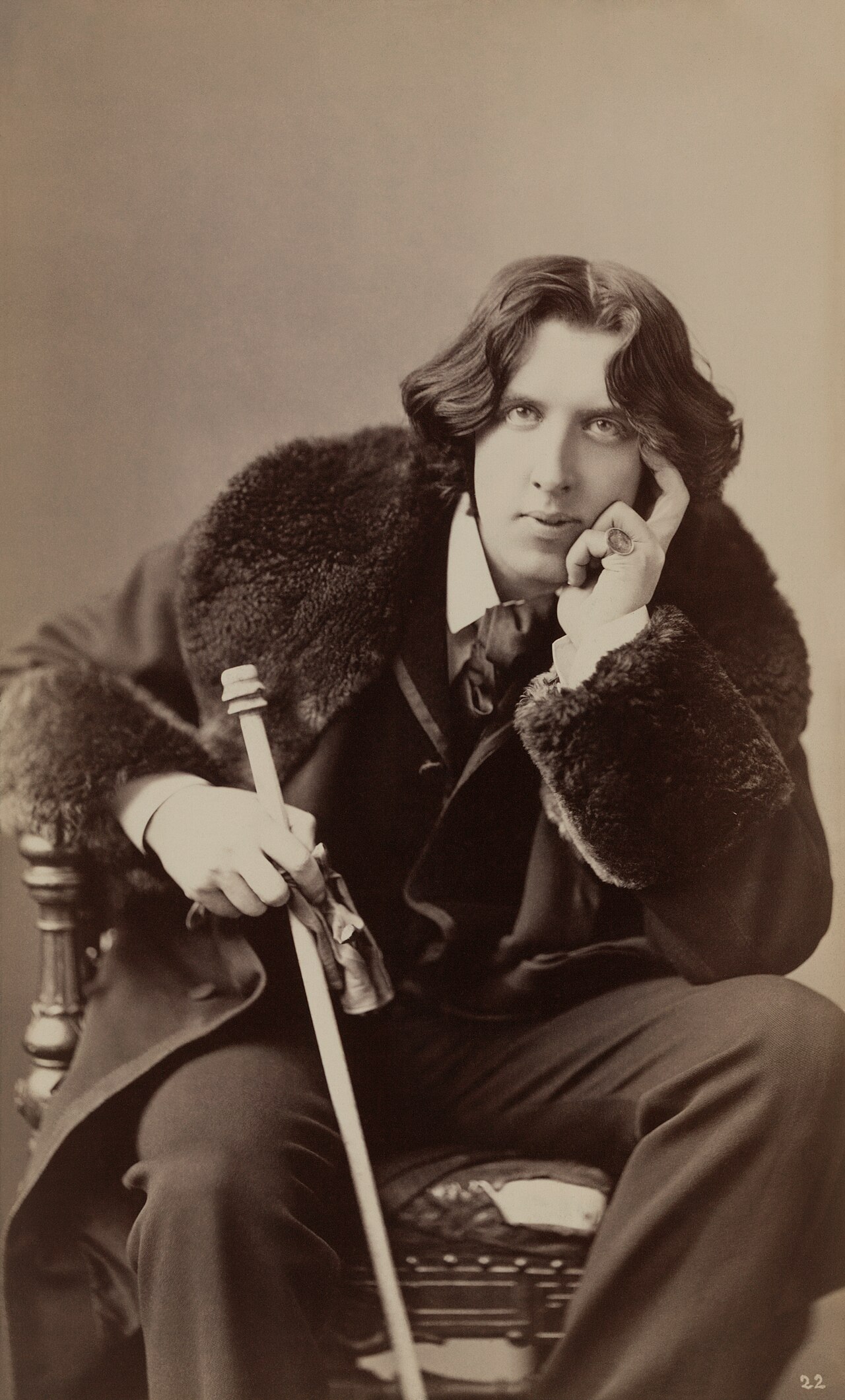
Portrait of Oscar Wilde

Photo: Napoleon Sarony / Adam Cuerden · Public domain

Born in Ireland · Nationalities British, French, Irish — Literature / theatre / censorship / justice / LGBT history

Oscar Wilde

Documented profile covering 5 controversies, including “2017: posthumous pardon under “Turing Law” for conviction involving now-lawful homosexual acts” and “1895–1897: prosecution for “gross indecency”, first jury unable to reach verdict, then two years' hard labour”.

Are you concerned? Right of reply

Profile No. 2640 · Updated on 12 October 2026

Portrait of Oscar Wilde

Photo: Napoleon Sarony / Adam Cuerden · Public domain

5Documented controversies
6Sources
1 followed by a conviction

I. Documented controversies

Case · 2 documented stages

2017: posthumous pardon under “Turing Law” for conviction involving now-lawful homosexual acts

Conviction
01

2017

2017: posthumous pardon under “Turing Law” for conviction involving now-lawful homosexual acts

Conviction

Under the rehabilitation measures known as the “Turing Law”, Wilde's historical conviction for homosexual acts that no longer constitute offences received a posthumous pardon. The British National Archives explicitly describes the measure as the belated legal conclusion of his case.

State of the evidence
Documented

Sources · 2

  1. [1]
    The National Archives (UK)The life and court trials of Oscar WildeArchiveVery high reliability
  2. [2]
    Historic EnglandCriminal desires: law and oppressionOfficial documentVery high reliability

Last verified: 14 September 2026

Add to this entry

02

April 1895–May 1897

1895–1897: prosecution for “gross indecency”, first jury unable to reach verdict, then two years' hard labour

Conviction

Following the failure of the Queensberry trial, Wilde was arrested and prosecuted under section 11 of the Criminal Law Amendment Act 1885 for “gross indecency” with men. The first jury failed to reach a verdict on several counts; a second trial resulted in conviction and the maximum sentence of two years' hard labour.

State of the evidence
Established by a court
Attribution
Accused

Sources · 2

  1. [1]
    The National Archives (UK)The life and court trials of Oscar WildeArchiveVery high reliability
  2. [2]
    Historic EnglandCriminal desires: law and oppressionOfficial documentVery high reliability

Last verified: 14 September 2026

Add to this entry

03

February–April 1895

1895: Wilde sues Marquess of Queensberry for libel and loses case

Acquitted / conviction overturned — against the Marquess of Queensberry

Protagonist not prosecuted — these proceedings are not counted in their formal charges or convictions.

After the Marquess of Queensberry left a card accusing him of “posing as a somdomite” [sic], Wilde brought a criminal libel prosecution. The defence produced evidence concerning his relationships with men; Wilde withdrew the prosecution and Queensberry was acquitted, immediately opening the way for criminal proceedings against Wilde.

State of the evidence
Documented
Attribution
Protagonist is the complainant
Person targeted by the proceedings
the Marquess of Queensberry
Role of the person profiled
Protagonist not prosecuted

Sources · 1

  1. [1]
    The National Archives (UK)The life and court trials of Oscar WildeArchiveVery high reliability

Last verified: 14 September 2026

Add to this entry

04

1892

1892: Lord Chamberlain bans stage performance of Salomé

Civil / administrative proceedings

While Sarah Bernhardt was rehearsing Salomé in London, the Lord Chamberlain refused permission for its performance. The ban was based on theatrical censorship rules, notably concerning depictions of biblical characters, and prevented the planned English première.

State of the evidence
Documented
Attribution
Directly implicated

Sources · 2

  1. [1]
    University College OxfordWilde's SaloméAcademic publicationVery high reliability
  2. [2]
    Journal of Victorian Culture / Oxford AcademicPolitical Censorship on the Late-Victorian Stage: Rereading Oscar WildeAcademic publicationHigh reliability

Last verified: 14 September 2026

Add to this entry

05

1890–1891

1890–1891: The Picture of Dorian Gray — moral scandal, homosexual subtext and editorial revisions

No legal proceedings

The first version of The Picture of Dorian Gray, published in 1890, provoked intense criticism over its supposed immorality and allusions to desire between men. Wilde subsequently revised the text for the 1891 book edition, notably adding a preface and softening certain passages.

State of the evidence
Documented
Attribution
Directly implicated

Sources · 2

  1. [1]
    British LibraryThe Picture of Dorian GrayVery high reliability
  2. [2]

Last verified: 14 September 2026

Add to this entry

II. Constellation of documented links

No documented link with another published profile for now.

Two profiles are linked when a documented controversy of one names the other. The link points to that controversy and its sources; it does not indicate a personal relationship.

III. Has something changed?

A new court decision, a missing source, a mistake? Tell us what should be updated: every request is read by the editorial team.

Support the archive

Controversia checks and updates its profiles independently. Support is optional and has no effect on the content of profiles.

Donate

iPhone and iPad

Install Controversia

  1. Tap Share
  2. then Add to Home Screen

Tap Share, then Add to Home Screen.