Born in Cambodia · Nationality Cambodian — Politics / Khmer Rouge / crimes against humanity / genocide / war / purges / transitional justice

Pol Pot

Documented profile covering 15 controversies, including “1997–1998: Arrested by Ta Mok faction, subjected to internal 'trial' and dies before international proceedings” and “1997: Orders killing of Son Sen, his wife Yun Yat and numerous members of their family”.

Are you concerned? Right of reply

Profile No. 1891 · Updated on 12 October 2026

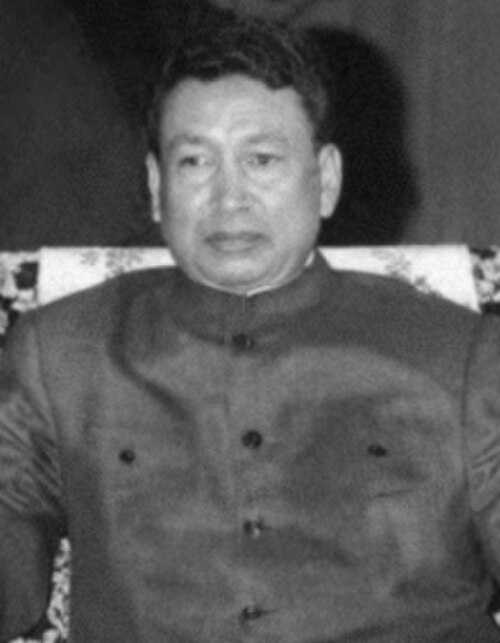
Portrait of Pol Pot

Photo: Wikimedia Commons

15Documented controversies+ 1 background event
10Sources
1 followed by a conviction

I. Documented controversies

01

June 1997–15 April 1998

1997–1998: Arrested by Ta Mok faction, subjected to internal 'trial' and dies before international proceedings

No legal proceedings

Following Son Sen's murder, Ta Mok turned against Pol Pot, had him arrested and placed under house arrest after an internal Khmer Rouge proceeding. Pol Pot died on 15 April 1998 at a border camp before he could be tried by an international court.

State of the evidence
Documented

Sources · 2

  1. [1]
    Extraordinary Chambers in the Courts of CambodiaTa MokCourt recordHigh reliability
  2. [2]
    Extraordinary Chambers in the Courts of CambodiaPol Pot (Saloth Sar)Court recordHigh reliability

Last verified: 13 September 2026

Add to this entry

02

10 June 1997

1997: Orders killing of Son Sen, his wife Yun Yat and numerous members of their family

No legal proceedings

Amid the Khmer Rouge's internal crisis, Son Sen, his wife Yun Yat and several members of their family were killed on Pol Pot's orders.

State of the evidence
Documented
Attribution
Directly implicated

Sources · 2

  1. [1]
    Extraordinary Chambers in the Courts of CambodiaSon SenCourt recordHigh reliability
  2. [2]
    Extraordinary Chambers in the Courts of CambodiaTa MokCourt recordHigh reliability

Last verified: 13 September 2026

Add to this entry

03

April 1975–January 1979

1975–1979: Radical collectivisation, abolition of ordinary economic life and mass forced labour

No legal proceedings

The regime imposed a radical transformation of society: displacement, cooperatives, agricultural labour and construction projects under coercion, accompanied by extreme deprivation, famine, disease and punishments for those who resisted.

State of the evidence
Documented
Attribution
Directly implicated

Sources · 2

  1. [1]
    Extraordinary Chambers in the Courts of CambodiaTrial 002/02Court recordHigh reliability
  2. [2]
    Extraordinary Chambers in the Courts of CambodiaCase 002Court recordHigh reliability

Last verified: 13 September 2026

Add to this entry

04

1975–1979

1975–1979: Persecution of former Khmer Republic officials and people considered class enemies

No legal proceedings

The CPK targeted former officials, military personnel and civil servants of the Khmer Republic, together with other categories regarded as political enemies, through arrests, executions, disappearances and exclusion.

State of the evidence
Documented
Attribution
Directly implicated

Sources · 2

  1. [1]
    Extraordinary Chambers in the Courts of CambodiaTrial 002/02Court recordHigh reliability
  2. [2]
    Extraordinary Chambers in the Courts of CambodiaNuon Chea — key findings on CPK leadership and decision-makingCourt recordHigh reliability

Last verified: 13 September 2026

Add to this entry

05

1975–1979

1975–1979: Persecution of Buddhism and religious practices

No legal proceedings

The Khmer Rouge regime persecuted Buddhist monks and institutions, suppressed or obstructed religious practices and incorporated this policy into its project of radical social transformation.

State of the evidence
Documented
Attribution
Directly implicated

Sources · 2

  1. [1]
    Extraordinary Chambers in the Courts of CambodiaTrial 002/02Court recordHigh reliability
  2. [2]
    Extraordinary Chambers in the Courts of CambodiaCase 002Court recordHigh reliability

Last verified: 13 September 2026

Add to this entry

06

1975–1979

1975–1979: System of security centres, torture and executions — S-21 as emblematic case

No legal proceedings

The regime established a network of security centres, of which S-21 in Phnom Penh became the best known. The ECCC concluded that at least 10,887 detainees were imprisoned there and that at least 11,742 were executed on site or nearby, figures presented as minimum estimates.

State of the evidence
Documented
Attribution
Directly implicated

Sources · 2

  1. [1]
    Extraordinary Chambers in the Courts of CambodiaS-21 Prisoner ListCourt recordHigh reliability
  2. [2]
    Extraordinary Chambers in the Courts of CambodiaPol Pot (Saloth Sar)Court recordHigh reliability

Last verified: 13 September 2026

Add to this entry

07

1975–1979

1975–1979: Persecution and genocide of Vietnamese population in Cambodia

Conviction — against a third party

Protagonist not prosecuted — these proceedings are not counted in their formal charges or convictions.

Vietnamese people in Cambodia were expelled, persecuted and subsequently targeted in mass killings. In Case 002/02, the ECCC convicted CPK leaders of genocide against the Vietnamese group.

State of the evidence
Established by a court
Role of the person profiled
Protagonist not prosecuted

Sources · 2

  1. [1]
    Extraordinary Chambers in the Courts of CambodiaTrial 002/02Court recordHigh reliability
  2. [2]
    Extraordinary Chambers in the Courts of CambodiaNuon Chea — key findings on CPK leadership and decision-makingCourt recordHigh reliability

Last verified: 13 September 2026

Add to this entry

08

1975–1979

1975–1979: Persecution of Muslim Cham people and subsequent judicial findings of genocide

No legal proceedings

The regime persecuted Muslim Cham people, notably through bans on religious practices, dispersal of communities and massacres. The Case 002/02 proceedings resulted in findings of genocide linked to CPK policy.

State of the evidence
Documented

Sources · 2

  1. [1]
    Extraordinary Chambers in the Courts of CambodiaTrial 002/02Court recordHigh reliability
  2. [2]
    Extraordinary Chambers in the Courts of CambodiaCase 002Court recordHigh reliability

Last verified: 13 September 2026

Add to this entry

09

January 1979 et années suivantes

1979: Fall of regime followed by leadership of continuing conflict against Vietnam

No legal proceedings

After Vietnamese forces captured Phnom Penh, Pol Pot and other leaders withdrew and organised the continuation of armed resistance from border areas.

State of the evidence
Documented
Attribution
Directly implicated

Sources · 1

  1. [1]
    Extraordinary Chambers in the Courts of CambodiaPol Pot (Saloth Sar)Court recordHigh reliability

Last verified: 13 September 2026

Add to this entry

10

15–19 August 1979

1979: Trial in absentia and death sentence for genocide by Phnom Penh revolutionary tribunal

Conviction

The People's Revolutionary Tribunal tried Pol Pot and Ieng Sary in their absence, found them guilty of genocide and sentenced them to death.

State of the evidence
Documented
Attribution
Accused

Sources · 2

  1. [1]
    Extraordinary Chambers in the Courts of CambodiaPol Pot (Saloth Sar)Court recordHigh reliability
  2. [2]
    International Crimes DatabaseProsecutor v. Pol Pot and Ieng Sary — People's Revolutionary TribunalDatabaseHigh reliability

Last verified: 13 September 2026

Add to this entry

11

1976–1978

1976–1978: Internal Party and army purges targeting officials accused of treason

No legal proceedings

As political paranoia intensified, thousands of Khmer Rouge officials and members of their families were arrested, interrogated, tortured or executed as alleged spies or traitors.

State of the evidence
Documented
Attribution
Directly implicated

Sources · 3

  1. [1]
    Extraordinary Chambers in the Courts of CambodiaS-21 Prisoner ListCourt recordHigh reliability
  2. [2]
    Extraordinary Chambers in the Courts of CambodiaPol Pot (Saloth Sar)Court recordHigh reliability
  3. [3]
    Extraordinary Chambers in the Courts of CambodiaNuon Chea — key findings on CPK leadership and decision-makingCourt recordHigh reliability

Last verified: 13 September 2026

Add to this entry

12

1978

1978: Purge of Eastern Zone and mass displacement of its population

No legal proceedings

In 1978, the CPK leadership purged the Eastern Zone, accused of disloyalty and Vietnamese influence. Officials were executed and a substantial part of the population was displaced to other regions, where many were subsequently persecuted.

State of the evidence
Documented
Attribution
Directly implicated

Sources · 2

  1. [1]
    Extraordinary Chambers in the Courts of CambodiaTrial 002/02Court recordHigh reliability
  2. [2]
    Extraordinary Chambers in the Courts of CambodiaNuon Chea — key findings on CPK leadership and decision-makingCourt recordHigh reliability

Last verified: 13 September 2026

Add to this entry

13

1977–December 1978

1977–1978: Border attacks against Vietnam and escalation towards open war

No legal proceedings

Democratic Kampuchea carried out deadly attacks along the Vietnamese border as relations between the former allies deteriorated into open war and the Vietnamese invasion of December 1978.

State of the evidence
Documented
Attribution
Political responsibility

Sources · 2

  1. [1]
    Extraordinary Chambers in the Courts of CambodiaPol Pot (Saloth Sar)Court recordHigh reliability
  2. [2]
    Extraordinary Chambers in the Courts of CambodiaCase 002Court recordHigh reliability

Last verified: 13 September 2026

Add to this entry

14

1963–17 April 1975

1963–1975: Takes leadership of Communist Party of Kampuchea and pursues armed revolutionary strategy

No legal proceedings

Saloth Sar, known as Pol Pot, became secretary of the Communist Party of Kampuchea and progressively led the clandestine and subsequently insurgent movement that captured Phnom Penh in 1975.

State of the evidence
Documented
Attribution
Directly implicated

Sources · 2

  1. [1]
    Extraordinary Chambers in the Courts of CambodiaPol Pot (Saloth Sar)Court recordHigh reliability
  2. [2]
    Extraordinary Chambers in the Courts of CambodiaWho Were the Khmer Rouge?Court recordHigh reliability

Last verified: 13 September 2026

Add to this entry

15

avant et autour du 17 April 1975

1975: Decision to empty Phnom Penh and other cities immediately after Khmer Rouge victory

No legal proceedings

CPK leaders, including Pol Pot, finalised a policy of evacuating Phnom Penh before their victory. On 17 April 1975, the Khmer Rouge ordered the population to leave the capital.

State of the evidence
Documented

Sources · 4

  1. [1]
    Extraordinary Chambers in the Courts of CambodiaWho Were the Khmer Rouge?Court recordHigh reliability
  2. [2]
    Extraordinary Chambers in the Courts of CambodiaThe Democratic Kampuchea RegimeCourt recordHigh reliability
  3. [3]
    Extraordinary Chambers in the Courts of CambodiaNuon Chea — key findings on CPK leadership and decision-makingCourt recordHigh reliability
  4. [4]
    Extraordinary Chambers in the Courts of CambodiaCase 002Court recordHigh reliability

Last verified: 13 September 2026

Add to this entry

II. Documented background

Documented biographical or institutional milestones (elections, appointments, foundings, acquisitions…). These are not controversies and are not counted as such.

  1. 1975–1979

    1975–1979: Forced marriages, compulsory consummation and sexual violence under regime family policy

    In numerous areas, authorities arranged marriages without genuine consent and monitored their consummation. The ECCC classified forced marriage and rape in this context as crimes against humanity.

    Sources · 2
    1. Extraordinary Chambers in the Courts of Cambodia — Trial 002/02
    2. Extraordinary Chambers in the Courts of Cambodia — Case 002

III. Constellation of documented links

No documented link with another published profile for now.

Two profiles are linked when a documented controversy of one names the other. The link points to that controversy and its sources; it does not indicate a personal relationship.

IV. Has something changed?

A new court decision, a missing source, a mistake? Tell us what should be updated: every request is read by the editorial team.

Support the archive

Controversia checks and updates its profiles independently. Support is optional and has no effect on the content of profiles.

Donate

iPhone and iPad

Install Controversia

  1. Tap Share
  2. then Add to Home Screen

Tap Share, then Add to Home Screen.