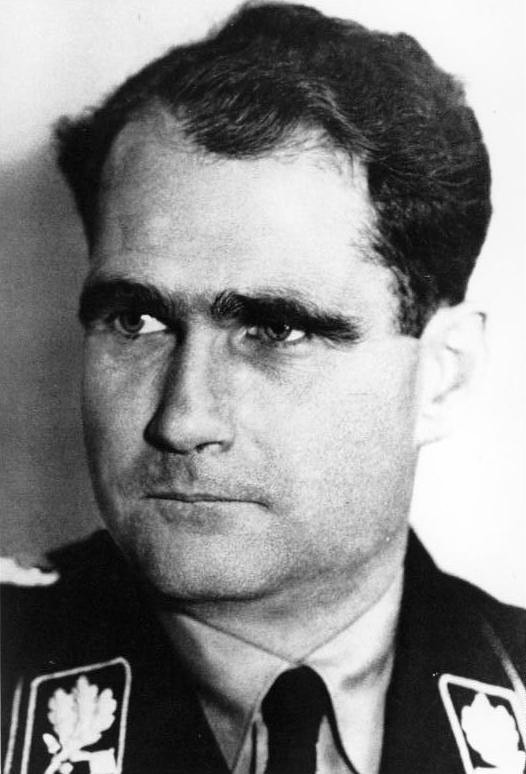
Portrait of Rudolf Hess

Photo: Unknown author Unknown author · CC BY-SA 3.0 de · Wikimedia Commons

Born in Egypt · Nationality German — Politics / Nazi regime / aggressive war / Nuremberg trial

Rudolf Hess

Documented profile covering 8 controversies, including “1947–1987: life imprisonment at Spandau, followed by suicide in prison aged 93” and “1945–1946: found fit despite memory problems; guilty on counts 1 and 2, acquitted on counts 3 and 4”.

Are you concerned? Right of reply

Profile No. 2694 · Updated on 12 October 2026

Portrait of Rudolf Hess

Photo: Unknown author Unknown author · CC BY-SA 3.0 de · Wikimedia Commons

8Documented controversies+ 1 background event
4Sources
2 followed by a conviction

I. Documented controversies

Case · 5 documented stages

1947–1987: life imprisonment at Spandau, followed by suicide in prison aged 93

Conviction
01

1947–17 August 1987

1947–1987: life imprisonment at Spandau, followed by suicide in prison aged 93

Conviction

Hess was imprisoned at Spandau in Berlin and eventually became its only prisoner. He served his life sentence until committing suicide in 1987 at the age of 93.

State of the evidence
Well documented
Attribution
Accused

Sources · 1

  1. [1]
    United States Holocaust Memorial MuseumInternational Military Tribunal: The DefendantsOfficial documentVery high reliability

Last verified: 14 September 2026

Add to this entry

02

1945–1 October 1946

1945–1946: found fit despite memory problems; guilty on counts 1 and 2, acquitted on counts 3 and 4

Conviction

After medical assessment, the Tribunal refused to suspend his trial. Hess was found guilty of conspiracy and crimes against peace but acquitted of war crimes and crimes against humanity, and was sentenced to life imprisonment.

Attribution
Accused

Sources · 2

  1. [1]
    Avalon Project / Yale Law SchoolJudgment: HessCourt decisionVery high reliability
  2. [2]
    Avalon Project / Yale Law SchoolJudgement: SentencesCourt decisionVery high reliability

Last verified: 14 September 2026

Add to this entry

04

April–October 1939

1939: incorporation of Czech and Polish territories into Reich and propaganda support for aggression against Poland

Conviction

Hess signed legislation incorporating the Sudetenland administratively and, following the invasion of Poland, decrees incorporating Danzig and Polish territories and establishing the General Government. Before the attack, he publicly accused Poland and the United Kingdom of responsibility for tensions.

State of the evidence
Established by a court
Attribution
Directly implicated

Sources · 1

  1. [1]
    Avalon Project / Yale Law SchoolJudgment: HessCourt decisionVery high reliability

Last verified: 14 September 2026

Add to this entry

06

March–September 1938

1938: active support for Anschluss and pressure on Czechoslovakia

Conviction

Hess maintained links with clandestine Austrian Nazis, was in Vienna when German troops entered and signed the law uniting Austria with the Reich. During the Sudeten crisis, he helped make the party apparatus available for secret mobilisation.

State of the evidence
Established by a court
Attribution
Political responsibility

Sources · 1

  1. [1]
    Avalon Project / Yale Law SchoolJudgment: HessCourt decisionVery high reliability

Last verified: 14 September 2026

Add to this entry

07

16 March 1935 et années suivantes

1935: signs law restoring compulsory military service and publicly supports rearmament

Conviction

Hess signed the law introducing conscription in breach of the Versailles settlement and conducted propaganda supporting rearmament, calling on the population to sacrifice its standard of living in favour of armaments.

State of the evidence
Established by a court
Attribution
Directly implicated

Sources · 1

  1. [1]
    Avalon Project / Yale Law SchoolJudgment: HessCourt decisionVery high reliability

Last verified: 14 September 2026

Add to this entry

03

10 May 1941

1941: solo flight to Scotland with peace proposals and immediate arrest

No legal proceedings

Hess flew alone to Scotland in an attempt to establish political contact and propose a German–British peace. He was arrested on arrival and remained in British custody until his transfer for the Nuremberg trial.

State of the evidence
Well documented
Attribution
Directly implicated

Sources · 2

  1. [1]
    Avalon Project / Yale Law SchoolJudgment: HessCourt decisionVery high reliability
  2. [2]
    United States Holocaust Memorial MuseumInternational Military Tribunal: The DefendantsOfficial documentVery high reliability

Last verified: 14 September 2026

Add to this entry

05

September 1935–May 1938

1935–1938: signs and implements racial measures under Nuremberg Laws

No legal proceedings

Hess signed the Law for the Protection of German Blood and German Honour, and his apparatus issued measures removing certain political rights from Jews, among other things; he also signed the extension of racial rules to Austria after the Anschluss.

State of the evidence
Documented
Attribution
Directly implicated

Sources · 2

  1. [1]
    Avalon Project / Yale Law SchoolJudgment: Dissenting Opinion — Rudolf HessCourt recordVery high reliability
  2. [2]
    Avalon Project / Yale Law SchoolJudgment: HessCourt decisionVery high reliability

Last verified: 14 September 2026

Add to this entry

08

November 1923–1924

1923–1924: participation in Munich putsch, imprisonment with Hitler and consolidation of political relationship

Conviction

Hess participated in the Beer Hall Putsch and was subsequently imprisoned with Hitler at Landsberg, during which period he became one of Hitler's closest confidants.

State of the evidence
Established by a court
Attribution
Directly implicated

Sources · 1

  1. [1]
    Avalon Project / Yale Law SchoolJudgment: HessCourt decisionVery high reliability

Last verified: 14 September 2026

Add to this entry

II. Documented background

Documented biographical or institutional milestones (elections, appointments, foundings, acquisitions…). These are not controversies and are not counted as such.

  1. 21 April 1933–1941

    1933: appointed Deputy Führer with authority to decide party matters on Hitler's behalf

    Hitler appointed Hess his deputy, giving him extensive authority over the party leadership. As Minister without Portfolio, he also participated in screening and approving proposed Reich legislation.

    Sources · 1
    1. Avalon Project / Yale Law School — Judgment: Hess

III. Constellation of documented links

  • Linked profile (portrait or initials) — click to open it
  • Line width: number of documented references
  • Hover over or tap a line: controversies and sources

Two profiles are linked when a documented controversy of one names the other. The link points to that controversy and its sources; it does not indicate a personal relationship.

List of documented links (1)
  1. Martin Bormann1 documented reference

IV. Has something changed?

A new court decision, a missing source, a mistake? Tell us what should be updated: every request is read by the editorial team.

Support the archive

Controversia checks and updates its profiles independently. Support is optional and has no effect on the content of profiles.

Donate

iPhone and iPad

Install Controversia

  1. Tap Share
  2. then Add to Home Screen

Tap Share, then Add to Home Screen.