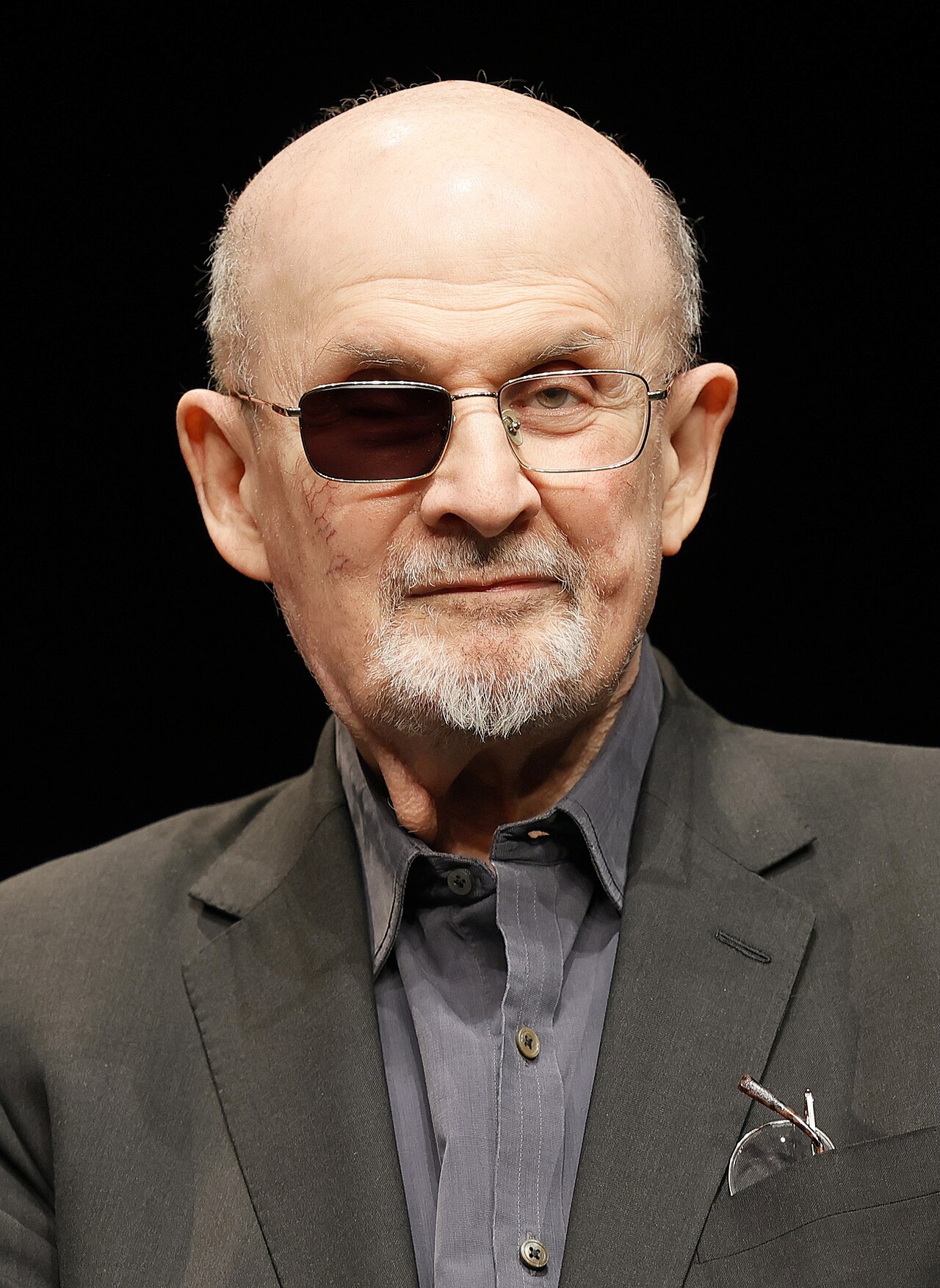
Portrait of Salman Rushdie

Photo: Elena Ternovaja · CC BY-SA 3.0 · Wikimedia Commons

Born in India · Nationalities Indian, British, American — Culture / literature / freedom of expression / religious controversies

Salman Rushdie

Documented profile covering 9 controversies, including “2022–2025: attempted murder at Chautauqua; attacker sentenced to 25 years” and “2024–2025: administrative basis for Indian ban on The Satanic Verses cannot be found; new application rejected”.

Are you concerned? Right of reply

Profile No. 2682 · Updated on 12 October 2026

Portrait of Salman Rushdie

Photo: Elena Ternovaja · CC BY-SA 3.0 · Wikimedia Commons

9Documented controversies
18Sources
0Formal charge · all time
0Conviction

I. Documented controversies

01

12 August 2022–16 May 2025

2022–2025: attempted murder at Chautauqua; attacker sentenced to 25 years

Conviction — against a third party

Protagonist is the victim — these proceedings are not counted in their formal charges or convictions.

Rushdie was repeatedly stabbed on stage at Chautauqua in August 2022 and lost, among other things, sight in his right eye. Hadi Matar was found guilty in February 2025 of attempted murder and assault, then sentenced in May 2025 to 25 years' imprisonment for the attack on Rushdie, with an additional sentence for assaulting the moderator.

State of the evidence
Established by a court
Attribution
Protagonist is the victim
Role of the person profiled
Protagonist is the victim

Sources · 2

  1. [1]
  2. [2]

Last verified: 14 September 2026

Add to this entry

02

November 2024–September 2025

2024–2025: administrative basis for Indian ban on The Satanic Verses cannot be found; new application rejected

Civil / administrative proceedings

In November 2024, the Delhi High Court closed a challenge to the 1988 import ban after the administration acknowledged that it could no longer locate the notification; the court held that, for those proceedings, it had to presume that the notification did not exist. In 2025, the Supreme Court subsequently rejected an application seeking a new ban on the novel.

State of the evidence
Documented

Last verified: 14 September 2026

Add to this entry

03

April–May 2015

2015: PEN–Charlie Hebdo dispute, verbal attacks on writers opposing award and subsequent regret over insult

No legal proceedings

Rushdie vigorously defended PEN America's decision to honour Charlie Hebdo following the January 2015 attack. He called six writers who withdrew their participation “pussies” and “fellow travellers” of Islamist fanaticism, triggering a public dispute with figures including Francine Prose. He subsequently expressed regret over the sexually charged insult while maintaining his substantive disagreement.

State of the evidence
Documented
Attribution
Personally implicated

Last verified: 14 September 2026

Add to this entry

04

January 2012

2012: withdrawal from Jaipur Literature Festival, followed by cancellation of video appearance amid threats of violence

No legal proceedings

Rushdie initially cancelled his visit to the Jaipur Literature Festival after being warned of an assassination plot; he subsequently claimed that authorities had misled him about the threat's existence. A planned video appearance was eventually cancelled after police warned organisers of a risk of violence and rioting.

State of the evidence
Documented

Sources · 2

  1. [1]
  2. [2]
    Radio Free Europe/Radio LibertyRushdie Scraps Video Link To Indian Book FestivalBroadcastHigh reliability

Last verified: 14 September 2026

Add to this entry

05

June 2007

2007: British knighthood provokes protests, political condemnations and renewed calls for his death

No legal proceedings

Awarding Rushdie the title of Knight Bachelor for services to literature triggered protests in Pakistan and Iran. Pakistan's parliament condemned the honour, Iranian representatives protested officially and some leaders or groups renewed calls to kill the writer.

State of the evidence
Documented

Sources · 2

  1. [1]
    Al JazeeraPakistanis protest over knighthoodPressHigh reliability
  2. [2]
    ABC News AustraliaPakistan, Iran protest over Rushdie knighthoodBroadcastHigh reliability

Last verified: 14 September 2026

Add to this entry

06

14 February 1989–1998

1989–1998: Khomeini fatwa calling for his death, years in hiding and prolonged diplomatic crisis

No legal proceedings

Ayatollah Ruhollah Khomeini issued a fatwa in February 1989 calling for the killing of Rushdie and people involved in publishing the book. The writer lived under protection for years; translators and publishers were attacked. In 1998, the Iranian government announced that it would not seek to implement the fatwa, although Iranian religious authorities said it could not formally revoke it.

State of the evidence
Well documented

Sources · 3

  1. [1]
    The GuardianRushdie in hiding after Ayatollah's death threatPressVery high reliability
  2. [2]
  3. [3]
    Al JazeeraIran condemns UK Rushdie honourPressHigh reliability

Last verified: 14 September 2026

Add to this entry

07

24 December 1990–années suivantes

1990–1991: public profession of Muslim faith and promise not to release paperback edition, subsequently repudiated

No legal proceedings

After nearly two years in hiding, Rushdie publicly declared a return to Islam, distanced himself from certain passages of the novel and announced that he would not authorise a paperback edition or new translations while the risk of offence remained. He subsequently described this attempted reconciliation as a serious mistake and withdrew his profession of faith.

State of the evidence
Documented
Attribution
Personally implicated

Sources · 3

  1. [1]
    The GuardianHow one book ignited a culture warPressHigh reliability
  2. [2]
    UPI ArchivesRushie decides against paperbackNews agencyHigh reliability
  3. [3]

Last verified: 14 September 2026

Add to this entry

08

September 1988–February 1989

1988–1989: The Satanic Verses triggers bans, book burnings, demonstrations and blasphemy allegations

No legal proceedings

Publication of The Satanic Verses triggered an international crisis: India quickly banned importation of the book, copies were publicly burned in the United Kingdom and demonstrations, sometimes violent, took place in several countries. Muslim organisations and leaders accused the novel of blasphemy and demanded its withdrawal.

State of the evidence
Well documented

Sources · 2

  1. [1]
  2. [2]
    The GuardianRushdie in hiding after Ayatollah's death threatPressVery high reliability

Last verified: 14 September 2026

Add to this entry

09

1984

1984: Indira Gandhi's defamation action over passage in Midnight's Children settled by removing sentence

Civil / administrative proceedings

Indira Gandhi brought a defamation action in the United Kingdom over a sentence in Midnight's Children concerning her husband Feroze Gandhi and their son Sanjay. Rushdie agreed to remove the disputed sentence from subsequent editions, and the case was settled without a judgment on the merits.

State of the evidence
Settlement

Last verified: 14 September 2026

Add to this entry

II. Constellation of documented links

  • Linked profile (portrait or initials) — click to open it
  • Line width: number of documented references
  • Hover over or tap a line: controversies and sources

Two profiles are linked when a documented controversy of one names the other. The link points to that controversy and its sources; it does not indicate a personal relationship.

List of documented links (1)
  1. Ali Khamenei1 documented reference

III. Has something changed?

A new court decision, a missing source, a mistake? Tell us what should be updated: every request is read by the editorial team.

Support the archive

Controversia checks and updates its profiles independently. Support is optional and has no effect on the content of profiles.

Donate

iPhone and iPad

Install Controversia

  1. Tap Share
  2. then Add to Home Screen

Tap Share, then Add to Home Screen.