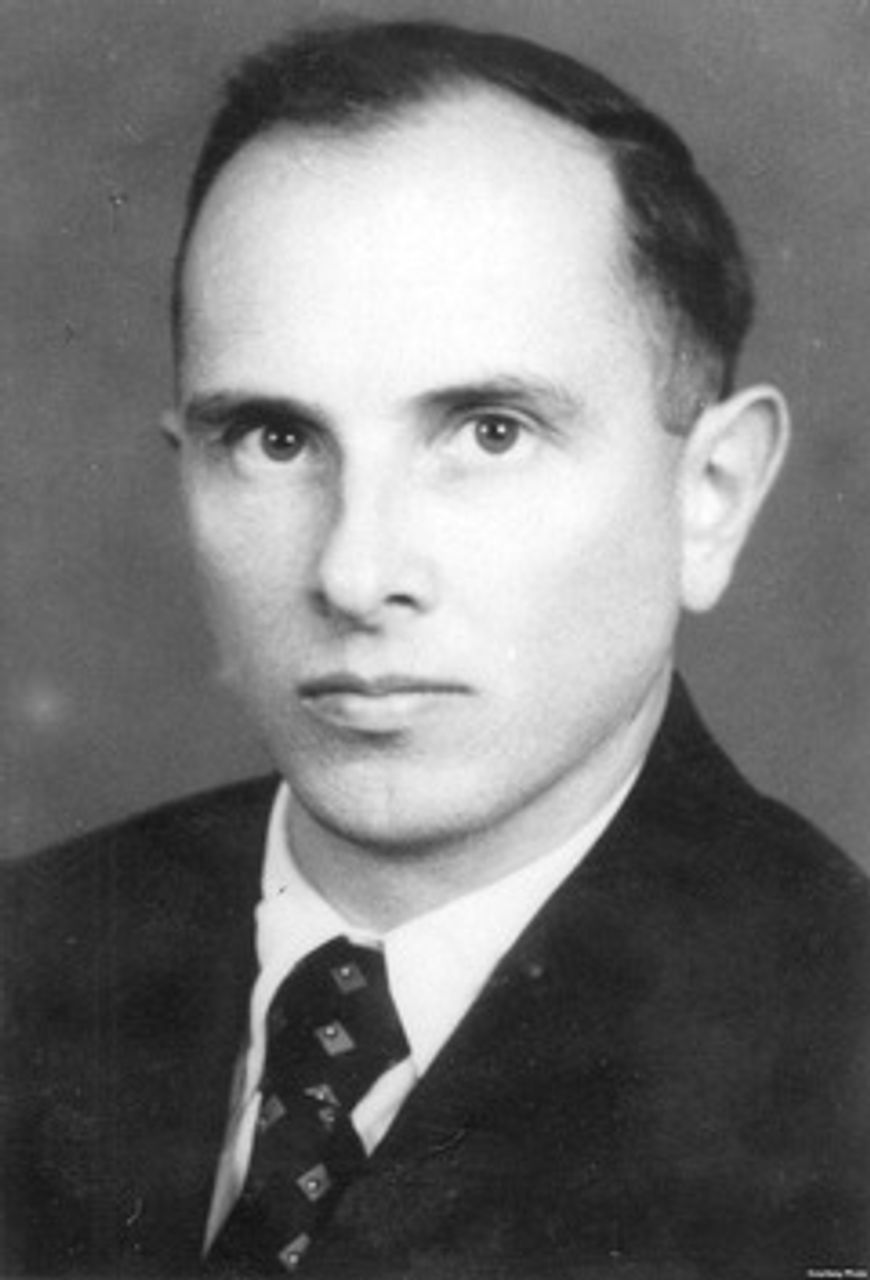
Portrait of Stepan Bandera

Photo: Unknown author Unknown author · Public domain

Born in Ukraine · Nationalities Ukrainian, stateless — Politics / regimes / war

Stepan Bandera

Documented profile covering 12 controversies, including “1948–1950s: struggle for control of OUN in exile and cooperation with MI6 to infiltrate agents into USSR” and “1944: release from Sachsenhausen and renewed contacts with Germany for anti-Soviet operations”.

Are you concerned? Right of reply

Profile No. 2584 · Updated on 12 October 2026

Portrait of Stepan Bandera

Photo: Unknown author Unknown author · Public domain

12Documented controversies
4Sources
1 followed by a conviction

I. Documented controversies

01

1948–années 1950

1948–1950s: struggle for control of OUN in exile and cooperation with MI6 to infiltrate agents into USSR

No legal proceedings

After the war, Bandera remained head of an OUN faction in exile, clashed with other nationalists over his leadership style and, from 1949, cooperated with British intelligence service MI6, which used his networks to send agents into the Soviet Union.

State of the evidence
Documented
Attribution
Directly implicated

Sources · 1

  1. [1]
    Institute of National Remembrance (Poland)Stepan Bandera - leader of the Organisation of Ukrainian NationalistsOfficial documentHigh reliability

Last verified: 15 September 2026

Add to this entry

02

27 September 1944–1945

1944: release from Sachsenhausen and renewed contacts with Germany for anti-Soviet operations

No legal proceedings

In autumn 1944, as the Reich's military position collapsed, Bandera was released from Sachsenhausen amid renewed German attempts to mobilise Ukrainian forces against the USSR and develop sabotage and intelligence operations.

State of the evidence
Documented
Attribution
Political responsibility

Sources · 1

  1. [1]
    Institute of National Remembrance (Poland)Stepan Bandera - leader of the Organisation of Ukrainian NationalistsOfficial documentHigh reliability

Last verified: 15 September 2026

Add to this entry

03

July 1941–27 September 1944

1941–1944: arrested by Nazis and detained at Sachsenhausen after refusing to renounce independence proclamation

No legal proceedings

German authorities arrested Bandera after he refused to revoke the proclamation of a Ukrainian state. He was detained in Berlin and subsequently at Sachsenhausen concentration camp until September 1944.

State of the evidence
Documented
Attribution
Directly implicated

Sources · 2

  1. [1]
    Encyclopedia of UkraineBandera, StepanEncyclopediaHigh reliability
  2. [2]
    Institute of National Remembrance (Poland)Stepan Bandera - leader of the Organisation of Ukrainian NationalistsOfficial documentHigh reliability

Last verified: 15 September 2026

Add to this entry

04

1943–1944

1943–1944: massacres of Poles by OUN-B/UPA during his internment — direct responsibility highly limited or unestablished

No legal proceedings

The OUN-B and UPA conducted a campaign of massacres and expulsions against Poles in Volhynia and then Eastern Galicia. The IPN emphasises that Bandera was imprisoned in Germany and that the extent of his contact with the underground leadership remains unknown.

State of the evidence
Documented

Sources · 1

  1. [1]
    Institute of National Remembrance (Poland)Stepan Bandera - leader of the Organisation of Ukrainian NationalistsOfficial documentHigh reliability

Last verified: 15 September 2026

Add to this entry

05

1940–April 1941

1940–1941: OUN-B split and adoption of authoritarian, ultranationalist programme marked by fascist influences

No legal proceedings

Following the OUN split, Bandera led the OUN-B. The IPN notes that principles, symbols and rituals resembling fascism were adopted at the 1941 Kraków congress, while the movement prepared an authoritarian and violent “national revolution”.

State of the evidence
Documented
Attribution
Directly implicated

Sources · 1

  1. [1]
    Institute of National Remembrance (Poland)Stepan Bandera - leader of the Organisation of Ukrainian NationalistsOfficial documentHigh reliability

Last verified: 15 September 2026

Add to this entry

06

1940–June 1941

1940–1941: cooperation with German military and intelligence structures before Barbarossa

No legal proceedings

In preparation for the German–Soviet war, the OUN-B maintained links with German military circles, participated in training Ukrainian units and organised groups intended to follow the German advance into Soviet territory.

State of the evidence
Documented
Attribution
Directly implicated

Sources · 2

  1. [1]
    Encyclopedia of UkraineBandera, StepanEncyclopediaHigh reliability
  2. [2]
    Institute of National Remembrance (Poland)Stepan Bandera - leader of the Organisation of Ukrainian NationalistsOfficial documentHigh reliability

Last verified: 15 September 2026

Add to this entry

07

30 June 1941

30 June 1941: proclamation of Ukrainian state under Bandera's leadership with declared cooperation with Germany

No legal proceedings

In Lviv, OUN-B leaders proclaimed the restoration of a Ukrainian state “under the leadership of Stepan Bandera”. The text announced cooperation with Germany in the war against Moscow, and Bandera appointed Yaroslav Stetsko to head the government.

State of the evidence
Documented
Attribution
Directly implicated

Sources · 2

  1. [1]
    Encyclopedia of UkraineProclamation of Ukrainian statehood, 1941EncyclopediaHigh reliability
  2. [2]
    Encyclopedia of UkraineBandera, StepanEncyclopediaHigh reliability

Last verified: 15 September 2026

Add to this entry

08

June–July 1941

June–July 1941: anti-Jewish pogroms in western Ukraine and OUN-B role — Bandera's personal responsibility not established

No legal proceedings

Activists and structures linked to the OUN-B participated in incitement and anti-Jewish violence in western Ukraine at the time of the German invasion. Bandera's movement therefore forms an important organisational context for the 1941 pogroms.

Sources · 2

  1. [1]
    United States Holocaust Memorial MuseumThe Lwów Pogrom of July 1, 1941Official documentVery high reliability
  2. [2]
    Institute of National Remembrance (Poland)Stepan Bandera - leader of the Organisation of Ukrainian NationalistsOfficial documentHigh reliability

Last verified: 15 September 2026

Add to this entry

Case · 4 documented stages

1934: preparation of assassination of Polish minister Bronisław Pieracki

Conviction
09

15 June 1934 / procès 1935–1936

1934: preparation of assassination of Polish minister Bronisław Pieracki

Conviction

OUN militants assassinated Polish Interior Minister Bronisław Pieracki. Bandera was prosecuted for his leadership and organisational role in this clandestine campaign and sentenced to death, later commuted to life imprisonment.

State of the evidence
Documented
Attribution
Directly implicated

Sources · 1

  1. [1]
    Institute of National Remembrance (Poland)Stepan Bandera - leader of the Organisation of Ukrainian NationalistsOfficial documentHigh reliability

Last verified: 15 September 2026

Add to this entry

10

1935–1936

1935–1936: two trials in Poland, death sentences followed by life imprisonment for OUN terrorist activities

Conviction

Bandera was tried in Warsaw and then Lviv for his role in the OUN's clandestine and violent activities. He received death sentences, subsequently commuted to life imprisonment, and remained imprisoned until the collapse of the Polish state in 1939.

Attribution
Accused

Sources · 1

  1. [1]
    Institute of National Remembrance (Poland)Stepan Bandera - leader of the Organisation of Ukrainian NationalistsOfficial documentHigh reliability

Last verified: 15 September 2026

Add to this entry

11

1933–1934

1933–1934: OUN turn towards individual terrorism and preparation of targeted assassinations

Conviction

After becoming head of the OUN National Executive in Galicia, Bandera steered the organisation towards individual terrorism against Polish officials and Ukrainians labelled collaborators. The IPN describes his personal role in selecting perpetrators and planning attacks in detail.

State of the evidence
Documented
Attribution
Directly implicated

Sources · 1

  1. [1]
    Institute of National Remembrance (Poland)Stepan Bandera - leader of the Organisation of Ukrainian NationalistsOfficial documentHigh reliability

Last verified: 15 September 2026

Add to this entry

12

25 July 1934

1934: murder of Ukrainian headteacher Ivan Babiy, considered a “traitor” by OUN

Conviction

Ivan Babiy, the head of a Ukrainian school in Lviv who opposed OUN propaganda at his school, was assassinated by the organisation. IPN sources link the decision to Bandera's position, which regarded Babiy's stance as betrayal.

State of the evidence
Documented
Attribution
Directly implicated

Sources · 1

  1. [1]
    Institute of National Remembrance (Poland)Stepan Bandera - leader of the Organisation of Ukrainian NationalistsOfficial documentHigh reliability

Last verified: 15 September 2026

Add to this entry

II. Constellation of documented links

  • Linked profile (portrait or initials) — click to open it
  • Line width: number of documented references
  • Hover over or tap a line: controversies and sources

Two profiles are linked when a documented controversy of one names the other. The link points to that controversy and its sources; it does not indicate a personal relationship.

List of documented links (1)
  1. Viktor Yushchenko1 documented reference

III. Has something changed?

A new court decision, a missing source, a mistake? Tell us what should be updated: every request is read by the editorial team.

Support the archive

Controversia checks and updates its profiles independently. Support is optional and has no effect on the content of profiles.

Donate

iPhone and iPad

Install Controversia

  1. Tap Share
  2. then Add to Home Screen

Tap Share, then Add to Home Screen.