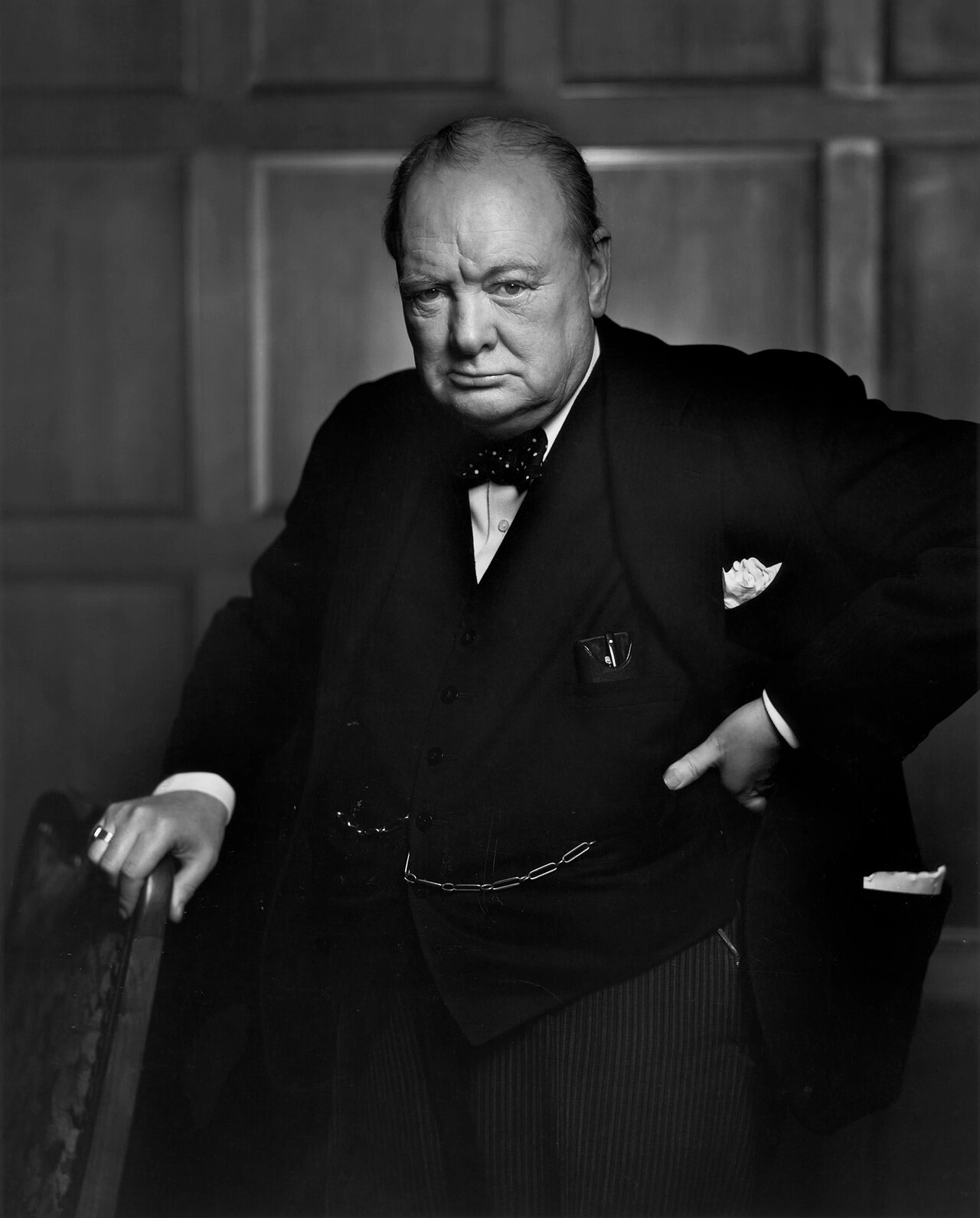
Portrait of Winston Churchill

Photo: Public domain · Wikimedia Commons

Born in United Kingdom — Politics / war / empire / economics / international relations

Winston Churchill

Documented profile covering 13 controversies, including “1942–1945: Support for area bombing campaign against German cities, then distancing after Dresden” and “1943–1944: Bengal famine — inadequate relief, wartime shipping priorities and debate over Churchill's responsibility”.

Are you concerned? Right of reply

Profile No. 2147 · Updated on 12 October 2026

Portrait of Winston Churchill

Photo: Public domain · Wikimedia Commons

13Documented controversies+ 1 background event
17Sources
0Formal charge · all time
0Conviction

I. Documented controversies

01

1942–1945

1942–1945: Support for area bombing campaign against German cities, then distancing after Dresden

No legal proceedings

Churchill's government supported the strategy of bombing urban areas to destroy German industry and morale. After Dresden, Churchill drafted a memorandum warning against attacks intended principally to terrorise cities.

State of the evidence
Documented
Attribution
Shared responsibility

Sources · 1

  1. [1]
    International Churchill SocietyChurchill and Bombing PolicySecondary sourceHigh reliability

Last verified: 14 September 2026

Add to this entry

02

1943–1944

1943–1944: Bengal famine — inadequate relief, wartime shipping priorities and debate over Churchill's responsibility

No legal proceedings

The Bengal famine caused several million deaths. Indian requests for food imports long encountered wartime shipping priorities and restrictive decisions by the War Cabinet led by Churchill.

State of the evidence
Documented
Attribution
Political responsibility

Sources · 2

  1. [1]
    Journal of Asian Studies / Cambridge CoreGovernment Famine Relief in Bengal, 1943Academic publicationVery high reliability
  2. [2]
    Cambridge University PressChurchill, India and RaceAcademic publicationVery high reliability

Last verified: 14 September 2026

Add to this entry

03

1940-07-03

1940: Mers el-Kébir — British order to neutralise French fleet, causing nearly 1,300 deaths

No legal proceedings

Fearing that the French fleet might fall into German hands after the armistice, Churchill supported Operation Catapult. At Mers el-Kébir, the Royal Navy opened fire after an ultimatum failed, killing approximately 1,300 French sailors.

State of the evidence
Documented
Attribution
Political responsibility

Sources · 2

  1. [1]
    Revue historique des Armées / PerséeMers el-Kébir après Mers el-Kébir (1940-1945)Academic publicationVery high reliability
  2. [2]
    Institut de FranceLe drame de Mers El-Kébir le 3 juillet 1940Official documentVery high reliability

Last verified: 14 September 2026

Add to this entry

04

1930–1935

1930–1935: Campaign against Indian self-government and personal attacks on Gandhi

No legal proceedings

Churchill campaigned vigorously against constitutional change in India and used humiliating language about Gandhi, notably the phrase "half-naked fakir".

State of the evidence
Documented
Attribution
Political responsibility

Sources · 1

  1. [1]
    Cambridge University PressChurchill, India and RaceAcademic publicationVery high reliability

Last verified: 14 September 2026

Add to this entry

05

1935

1935: Opposition to Government of India Act despite majority shift within his own party

No legal proceedings

Churchill fought the Government of India Act 1935, opposing much of the Conservative establishment and contributing to a lasting political rupture with Indian nationalists.

State of the evidence
Documented
Attribution
Political responsibility

Sources · 1

  1. [1]
    Cambridge University PressChurchill, India and RaceAcademic publicationVery high reliability

Last verified: 14 September 2026

Add to this entry

06

May 1926

1926: General Strike — hard line and transformation of British Gazette into government propaganda organ

No legal proceedings

During the General Strike, Churchill took charge of the British Gazette, which portrayed strikers as a constitutional threat while the state controlled access to paper and distribution facilities.

State of the evidence
Documented
Attribution
Political responsibility

Sources · 1

  1. [1]
    The National Archives (UK)The General StrikeArchiveVery high reliability

Last verified: 14 September 2026

Add to this entry

07

1925

1925: Return of sterling to gold standard at pre-war parity

No legal proceedings

As Chancellor of the Exchequer, Churchill restored sterling to the gold standard at its pre-1914 parity. Keynes criticised the decision for overvaluing the currency and increasing pressure on wages, exports and employment.

State of the evidence
Documented
Attribution
Political responsibility

Sources · 2

  1. [1]
    UK ParliamentGOLD STANDARD BILL. Hansard, 5 May 1925Parliamentary recordVery high reliability
  2. [2]
    Review of Political Economy / Taylor & FrancisMr Churchill, Mr Keynes and the UK’s Re-Entry to and Exit from the Gold StandardAcademic publicationVery high reliability

Last verified: 14 September 2026

Add to this entry

08

1919–1922

1919–1922: Memoranda supporting use of irritant gases against colonial populations described as "uncivilised tribes"

No legal proceedings

In War Office memoranda, Churchill supported using gas against colonial adversaries and employed the now notoriously racist expression "uncivilised tribes".

State of the evidence
Documented
Attribution
Directly implicated

Sources · 2

  1. [1]
    America’s National Churchill MuseumChurchill's 1919 War Office MemorandumPrimary sourceVery high reliability
  2. [2]
    UK ParliamentPOISON GAS. Hansard, 9 March 1920Parliamentary recordVery high reliability

Last verified: 14 September 2026

Add to this entry

09

1920–1921

1920–1921: Black and Tans, Auxiliaries and official reprisals policy in Ireland

No legal proceedings

Churchill approved the reinforcement of police forces with former servicemen and subsequently supported a policy of official reprisals during the Anglo-Irish War. The Black and Tans and Auxiliaries became synonymous with abuses against civilians.

State of the evidence
Documented
Attribution
Political responsibility

Sources · 1

  1. [1]
    International Churchill SocietyChurchill and the Anglo-Irish War 1919-1922Secondary sourceHigh reliability

Last verified: 14 September 2026

Add to this entry

10

1919–1920

1919–1920: Strong support for Allied intervention against Bolsheviks in Russian Civil War

No legal proceedings

Churchill pressed for material support for anti-Bolshevik armies and regarded the new Soviet regime as a threat to Europe.

State of the evidence
Documented

Sources · 1

  1. [1]
    U.S. Department of State, Office of the HistorianForeign Relations of the United States, 1919, RussiaPrimary sourceVery high reliability

Last verified: 14 September 2026

Add to this entry

11

1915

1915: Dardanelles and Gallipoli — leading political advocate of disastrous military campaign

No legal proceedings

Churchill was the most energetic advocate of the Dardanelles naval offensive, which developed into the Gallipoli land campaign and caused very heavy casualties without achieving its objectives.

State of the evidence
Documented
Attribution
Shared responsibility

Sources · 1

  1. [1]
    America’s National Churchill MuseumWinston Churchill in World War I and its AftermathArchiveHigh reliability

Last verified: 14 September 2026

Add to this entry

12

1910–1911

1910–1911: Tonypandy — state intervention in miners' strike and enduring accusation of sending troops against workers

No legal proceedings

As Home Secretary, Churchill authorised the deployment of additional forces during the Rhondda mining dispute. He initially sought to keep soldiers in reserve but eventually approved their deployment, with the police acting as a buffer.

State of the evidence
Documented

Sources · 1

  1. [1]
    International Churchill SocietyTonypandySecondary sourceHigh reliability

Last verified: 14 September 2026

Add to this entry

13

1911-01-03

1911: Siege of Sidney Street — minister's personal presence at armed operation

No legal proceedings

Churchill personally attended the siege involving armed anarchists and authorised the use of soldiers. His conspicuous presence in a top hat was immediately ridiculed and criticised as unnecessary ministerial interference.

State of the evidence
Documented
Attribution
Directly implicated

Sources · 1

  1. [1]
    International Churchill SocietySidney Street – or ‘The Stepney Affair’Secondary sourceHigh reliability

Last verified: 14 September 2026

Add to this entry

II. Documented background

Documented biographical or institutional milestones (elections, appointments, foundings, acquisitions…). These are not controversies and are not counted as such.

  1. 1944-10

    1944: "Percentages agreement" with Stalin on spheres of influence in Balkans

    In Moscow, Churchill proposed to Stalin a numerical division of British and Soviet influence in Romania, Greece, Yugoslavia, Hungary and Bulgaria. The episode became a symbol of great-power diplomacy determining the fate of other countries.

    Sources · 2
    1. U.S. Department of State — Foreign Relations of the United States, 1944 — Balkan spheres discussions
    2. Diplomatic History / Oxford Academic — The Meaning of TOLSTOY: Churchill, Stalin, And The Balkans

III. Constellation of documented links

  • Linked profile (portrait or initials) — click to open it
  • Line width: number of documented references
  • Hover over or tap a line: controversies and sources

Two profiles are linked when a documented controversy of one names the other. The link points to that controversy and its sources; it does not indicate a personal relationship.

List of documented links (1)
  1. Tariq Ali1 documented reference

IV. Has something changed?

A new court decision, a missing source, a mistake? Tell us what should be updated: every request is read by the editorial team.

Support the archive

Controversia checks and updates its profiles independently. Support is optional and has no effect on the content of profiles.

Donate

iPhone and iPad

Install Controversia

  1. Tap Share
  2. then Add to Home Screen

Tap Share, then Add to Home Screen.