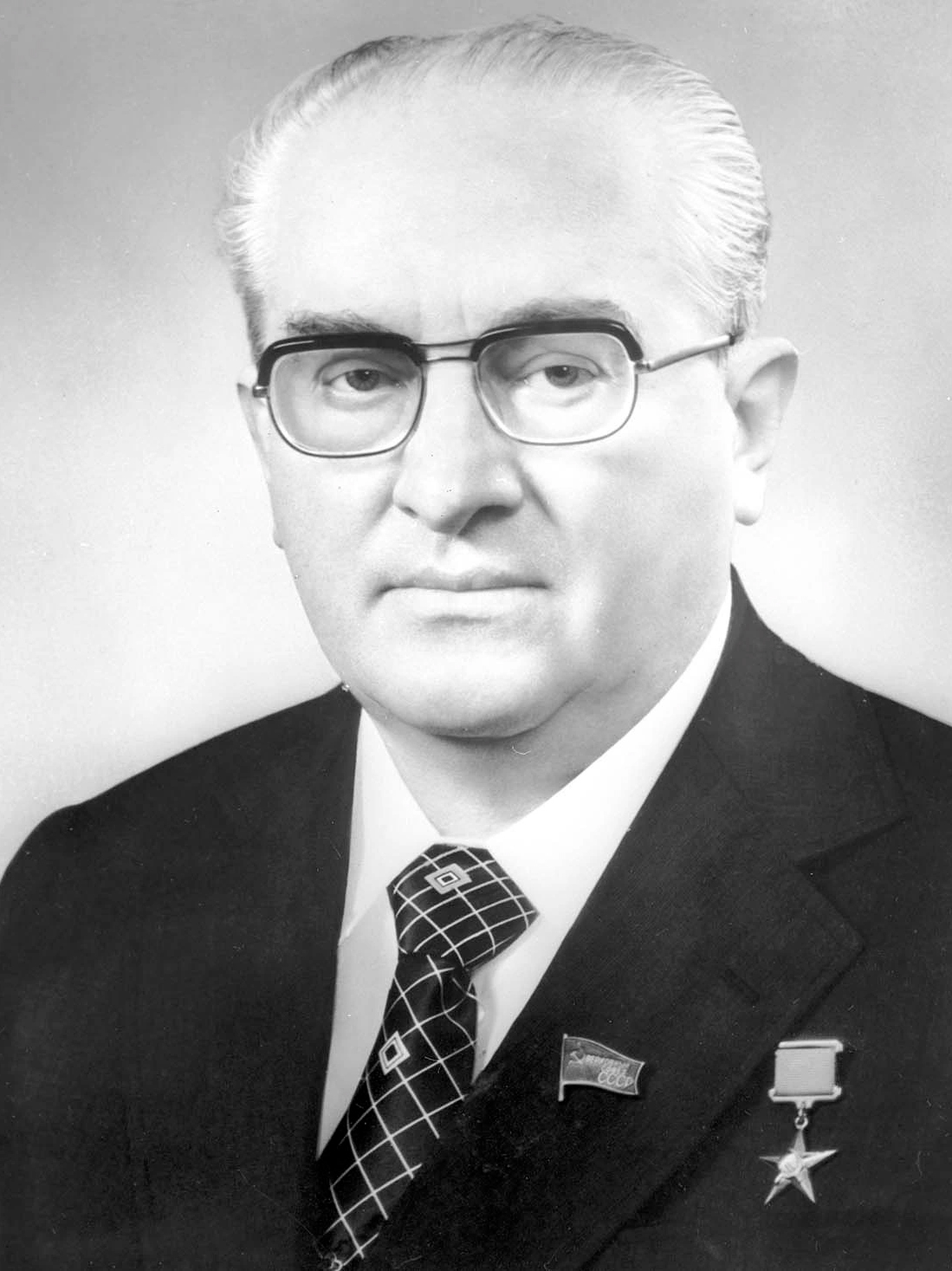
Portrait of Yuri Andropov

Photo: TASS · Public domain

Born in Russia · Nationality Russian — Politics / regimes / war / Soviet state security

Yuri Andropov

Documented profile covering 15 controversies, including “1982–1983: anti-corruption campaign and selective purge of Brezhnev-era networks” and “January 1983: raids against absenteeism in cinemas, public baths, shops and other premises”.

Are you concerned? Right of reply

Profile No. 2545 · Updated on 12 October 2026

Portrait of Yuri Andropov

Photo: TASS · Public domain

15Documented controversies+ 1 background event
12Sources
0Formal charge · all time
0Conviction

I. Documented controversies

01

November 1982–1983

1982–1983: anti-corruption campaign and selective purge of Brezhnev-era networks

Civil / administrative proceedings

After becoming General Secretary, Andropov launched investigations and personnel changes targeting several corrupt networks and officials protected under Brezhnev. The campaign helped expose scandals previously regarded as politically untouchable.

State of the evidence
Documented
Attribution
Directly implicated

Sources · 2

  1. [1]
    The Washington PostVigilantes Enforce Andropov's War Against AbsenteeismPressHigh reliability
  2. [2]
    The Washington PostSoviet CorruptionPressHigh reliability

Last verified: 15 September 2026

Add to this entry

02

January 1983

January 1983: raids against absenteeism in cinemas, public baths, shops and other premises

Civil / administrative proceedings

Andropov's discipline campaign sent police and auxiliaries to check people present during working hours in cinemas, restaurants, public baths and shops to identify employees absent from their jobs.

State of the evidence
Documented
Attribution
Directly implicated

Sources · 1

  1. [1]
    The Washington PostVigilantes Enforce Andropov's War Against AbsenteeismPressHigh reliability

Last verified: 15 September 2026

Add to this entry

03

1983

1983: tightening of workplace discipline measures

Civil / administrative proceedings

The authorities strengthened penalties and controls intended to reduce absenteeism, drinking at work and low productivity. This policy formed part of Andropov's attempt to restore efficiency to a stagnating economy.

State of the evidence
Documented
Attribution
Directly implicated

Sources · 1

  1. [1]
    The Washington PostVigilantes Enforce Andropov's War Against AbsenteeismPressHigh reliability

Last verified: 15 September 2026

Add to this entry

04

1 September 1983

1 September 1983: Soviet air defences shoot down civilian flight KAL 007

No legal proceedings

A Soviet fighter shot down Korean Air Lines flight 007 after it entered Soviet airspace, killing all 269 people on board. The incident triggered a major international crisis under Andropov's leadership.

State of the evidence
Documented
Attribution
Political responsibility

Sources · 1

  1. [1]

Last verified: 15 September 2026

Add to this entry

05

28 September 1983

September 1983: official statement attributing KAL 007 to an American 'provocation'

No legal proceedings

After KAL 007 was shot down, Andropov issued a statement accusing US intelligence of orchestrating an elaborate provocation involving the South Korean aircraft. Subsequently released archives characterise this allegation as false.

State of the evidence
Documented
Attribution
Personally implicated

Sources · 1

  1. [1]

Last verified: 15 September 2026

Add to this entry

06

August 1983

August 1983: warns US senators that failure of arms control would increase risk of nuclear war

No legal proceedings

During a meeting with a delegation of US senators, Andropov stressed the urgency of a nuclear agreement and warned that the absence of limits would increase the threat of war.

State of the evidence
Documented
Attribution
Directly implicated

Sources · 1

  1. [1]
    National Security ArchiveDangerous Stalemate: Superpower Relations in Autumn 1983ArchiveVery high reliability

Last verified: 15 September 2026

Add to this entry

07

1967–1982

Late 1960s–1970s: central role of Andropov's KGB in punitive psychiatry

No legal proceedings

Specialist literature attributes to Andropov a crucial role in systematising the use of psychiatric diagnoses and special hospitals against dissidents considered ideologically dangerous.

State of the evidence
Documented
Attribution
Directly implicated

Sources · 1

  1. [1]
    BJPsych Bulletin / PMCIs there a resumption of political psychiatry in the former Soviet Union?Academic publicationVery high reliability

Last verified: 15 September 2026

Add to this entry

08

1976–1982

1976–1982: progressive neutralisation of Moscow Helsinki Group

Conviction — against dissidents

Protagonist not prosecuted — these proceedings are not counted in their formal charges or convictions.

Andropov's KGB monitored and then helped dismantle the Moscow Helsinki Group, whose members documented violations of Soviet human rights commitments. Arrests, trials, exile and pressure almost silenced the group.

State of the evidence
Documented
Attribution
Directly implicated
Person targeted by the proceedings
dissidents
Role of the person profiled
Protagonist not prosecuted

Sources · 2

  1. [1]
    National Security ArchiveSoviet Crackdown on the Moscow Helsinki GroupArchiveVery high reliability
  2. [2]

Last verified: 15 September 2026

Add to this entry

09

January 1980

1980: participation of apparatus under his control in Andrei Sakharov's internal exile

Civil / administrative proceedings

Following Sakharov's criticism of Afghanistan, he was sent to Gorky without trial and placed under close surveillance. As head of the KGB and a Politburo member, Andropov was central to the apparatus responsible for monitoring him.

State of the evidence
Documented
Attribution
Shared responsibility

Sources · 2

  1. [1]
    The Washington PostSoviets Strip Sakharov of Honors, Exile HimPressHigh reliability
  2. [2]

Last verified: 15 September 2026

Add to this entry

10

1979

1979: Andropov moves from scepticism to becoming major supporter of military intervention in Afghanistan

No legal proceedings

Archives show that Andropov, head of the KGB, joined Ustinov and Gromyko among the small group advocating military intervention and the removal of Hafizullah Amin. The final decision was adopted on 12 December 1979 in Brezhnev's office.

State of the evidence
Documented
Attribution
Personally implicated

Sources · 1

  1. [1]
    National Security Archive“On the Situation in A”, December 12, 1979Primary sourceVery high reliability

Last verified: 15 September 2026

Add to this entry

11

1977–1978

1977–1978: arrest and conviction of Anatoly Shcharansky in campaign against dissidents

Conviction — against Anatoly Shcharansky

Protagonist not prosecuted — these proceedings are not counted in their formal charges or convictions.

Human rights activist Anatoly Shcharansky was arrested and then convicted, notably of treason, in a trial that became an international cause. The case formed part of the KGB's campaign against dissident and Jewish emigration networks.

State of the evidence
Documented
Attribution
Institutional responsibility
Person targeted by the proceedings
Anatoly Shcharansky
Role of the person profiled
Protagonist not prosecuted

Sources · 2

  1. [1]
  2. [2]
    National Security ArchiveSoviet Crackdown on the Moscow Helsinki GroupArchiveVery high reliability

Last verified: 15 September 2026

Add to this entry

12

February 1974

1974: KGB supports expulsion of Aleksandr Solzhenitsyn following 'The Gulag Archipelago'

No legal proceedings

Andropov was among the leaders favouring a solution involving expelling Solzhenitsyn rather than imprisoning him for an extended period in the USSR. The writer was arrested, deprived of citizenship and sent to the West.

State of the evidence
Documented
Attribution
Directly implicated

Sources · 2

  1. [1]
  2. [2]
    The Washington PostPresident Leonid Ilyich Brezhnev: 1906-1982PressHigh reliability

Last verified: 15 September 2026

Add to this entry

13

1968–début des années 1970

1968: KGB intensifies campaign against dissent following Prague Spring

No legal proceedings

The Czechoslovak crisis strengthened the KGB's conviction that political liberalisation could threaten the regime. Under Andropov, the security apparatus intensified surveillance of intellectuals, national activists and networks considered ideologically dangerous.

State of the evidence
Documented
Attribution
Directly implicated

Sources · 2

  1. [1]
  2. [2]
    National Security ArchiveThe Prague Spring '68ArchiveVery high reliability

Last verified: 15 September 2026

Add to this entry

14

années 1960–1970

1960s–1970s: surveillance and harassment of dissident physicist Andrei Sakharov

No legal proceedings

The KGB closely monitored Sakharov, his visitors, correspondence and public statements while seeking to limit his influence. Fifth Directorate files illustrate the personal attention given to prominent dissidents.

State of the evidence
Documented
Attribution
Directly implicated

Sources · 1

  1. [1]

Last verified: 15 September 2026

Add to this entry

15

October–November 1956

1956: ambassador in Budapest during Hungarian Revolution and Soviet intervention

No legal proceedings

As Soviet ambassador to Hungary, Andropov was central to exchanges between Nagy's government and Moscow during the uprising. Hungarian leaders questioned him about Soviet troop movements as the intervention was being prepared.

State of the evidence
Documented
Attribution
Directly implicated

Sources · 1

  1. [1]
    U.S. Department of State, Office of the HistorianKhrushchev and the Twentieth Congress of the Communist Party, 1956Official documentVery high reliability

Last verified: 15 September 2026

Add to this entry

II. Documented background

Documented biographical or institutional milestones (elections, appointments, foundings, acquisitions…). These are not controversies and are not counted as such.

  1. 1967

    1967: takes charge of KGB and establishes Fifth Directorate against 'ideological subversion'

    After being appointed head of the KGB, Andropov made the struggle against 'ideological subversion' a major priority and supervised creation of the Fifth Directorate, specialising in dissidents, nationalists, religious communities and other internal opponents.

    Sources · 2
    1. National Security Archive — Soviet Crackdown on the Moscow Helsinki Group and KGB Fifth Directorate records
    2. BJPsych Bulletin / PMC — Is there a resumption of political psychiatry in the former Soviet Union?

III. Constellation of documented links

No documented link with another published profile for now.

Two profiles are linked when a documented controversy of one names the other. The link points to that controversy and its sources; it does not indicate a personal relationship.

IV. Has something changed?

A new court decision, a missing source, a mistake? Tell us what should be updated: every request is read by the editorial team.

Support the archive

Controversia checks and updates its profiles independently. Support is optional and has no effect on the content of profiles.

Donate

iPhone and iPad

Install Controversia

  1. Tap Share
  2. then Add to Home Screen

Tap Share, then Add to Home Screen.