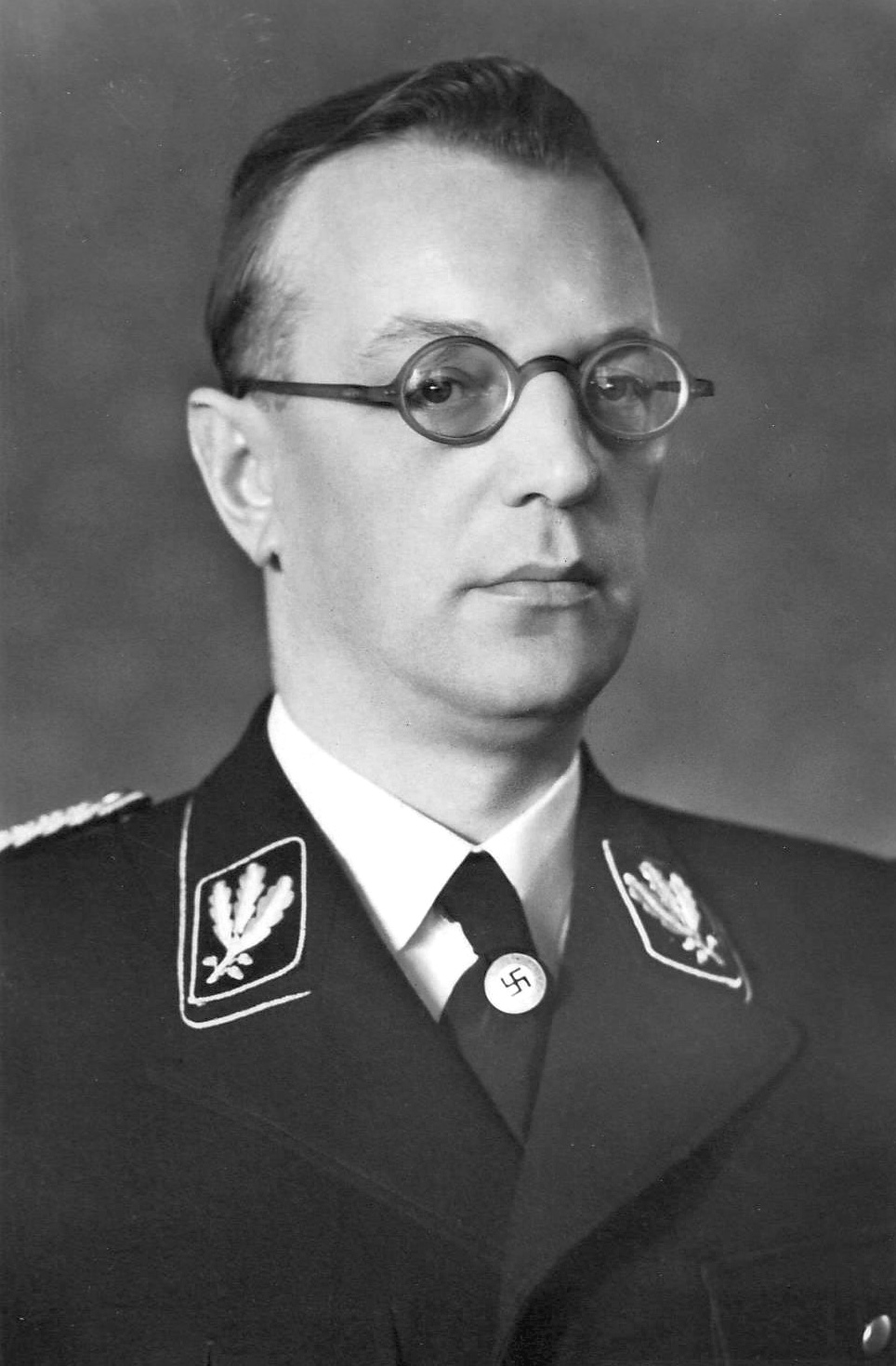
Portrait of Arthur Seyss-Inquart

Photo: Unknown author Unknown author · Public domain

Born in Czech Republic · Nationalities German, Austrian — Nazism / Anschluss / occupation / Holocaust / war crimes

Arthur Seyss-Inquart

Documented profile covering 9 controversies, including “1945: limits scorched-earth policy, negotiates food supplies and is subsequently sentenced to death at Nuremberg” and “1941–1945: reprisals, hostage executions and repression of Dutch resistance”.

Are you concerned? Right of reply

Profile No. 2649 · Updated on 12 October 2026

Portrait of Arthur Seyss-Inquart

Photo: Unknown author Unknown author · Public domain

9Documented controversies+ 1 background event
9Sources
1 followed by a conviction

I. Documented controversies

Case · 8 documented stages

1945: limits scorched-earth policy, negotiates food supplies and is subsequently sentenced to death at Nuremberg

Conviction
01

April–16 October 1946

1945: limits scorched-earth policy, negotiates food supplies and is subsequently sentenced to death at Nuremberg

Conviction

In the final weeks of the war, Seyss-Inquart restrained a policy of total destruction and agreed to negotiations allowing Allied food drops. These favourable elements did not prevent the Tribunal from finding him guilty of crimes against peace, war crimes and crimes against humanity; he was hanged on 16 October 1946.

State of the evidence
Established by a court
Attribution
Accused

Sources · 3

  1. [1]
    Nederlands Instituut voor Militaire HistorieOperaties Manna en ChowhoundOfficial documentVery high reliability
  2. [2]
    Avalon Project / Yale Law SchoolJudgment: Seyss-InquartCourt recordVery high reliability
  3. [3]
    Memorium Nuremberg TrialsVerdicts of the IMTOfficial documentVery high reliability

Last verified: 14 September 2026

Add to this entry

02

1941–May 1945

1941–1945: reprisals, hostage executions and repression of Dutch resistance

Conviction

Under his regime, hostages and resistance members were executed in reprisals. The Tribunal acknowledged that he did not personally order every execution and sometimes attempted to reduce certain quotas, but found him a knowing and willing participant in the crimes committed during the occupation.

State of the evidence
Established by a court

Sources · 2

  1. [1]
    United States Holocaust Memorial MuseumArthur Seyss-InquartOfficial documentVery high reliability
  2. [2]
    Avalon Project / Yale Law SchoolJudgment: Seyss-InquartCourt recordVery high reliability

Last verified: 14 September 2026

Add to this entry

04

été 1942–September 1944

1942–1944: deportation of majority of Dutch Jews to Auschwitz and other camps

Conviction

Deportations from Westerbork began in 1942. As head of the civilian occupation regime, Seyss-Inquart shared responsibility for deporting Dutch Jews to Auschwitz and other killing or concentration camps.

State of the evidence
Established by a court

Sources · 3

  1. [1]
    United States Holocaust Memorial MuseumArthur Seyss-InquartOfficial documentVery high reliability
  2. [2]
    Avalon Project / Yale Law SchoolJudgment: Seyss-InquartCourt recordVery high reliability
  3. [3]
    United States Holocaust Memorial MuseumThe NetherlandsOfficial documentVery high reliability

Last verified: 14 September 2026

Add to this entry

05

1942–1944

1942–1944: forced labour and deportation of Dutch workers for benefit of Reich

Conviction

The German occupation imposed forced labour and sent numerous Dutch people to work in Germany or on military projects. Seyss-Inquart participated in the system of economic exploitation of the occupied country.

State of the evidence
Documented

Sources · 2

  1. [1]
    Avalon Project / Yale Law SchoolJudgment: Seyss-InquartCourt recordVery high reliability
  2. [2]
    United States Holocaust Memorial MuseumThe NetherlandsOfficial documentVery high reliability

Last verified: 14 September 2026

Add to this entry

06

May 1940–1942

1940–1942: establishment of occupation administration and system of anti-Jewish discrimination in Netherlands

Conviction

As Reichskommissar, Seyss-Inquart headed the German civil administration that excluded Jews from public service, imposed registration of people and property, organised segregation and prepared their concentration and deportation.

State of the evidence
Documented

Sources · 2

  1. [1]
    United States Holocaust Memorial MuseumThe NetherlandsOfficial documentVery high reliability
  2. [2]
    Avalon Project / Yale Law SchoolJudgment: Seyss-InquartCourt recordVery high reliability

Last verified: 14 September 2026

Add to this entry

07

1939–May 1940

1939–1940: deputy to Hans Frank in General Government of occupied Poland

Conviction

Before his appointment in the Netherlands, Seyss-Inquart served as Hans Frank's deputy in the General Government of occupied Poland, within an occupation regime already marked by terror, dispossession and racial persecution.

State of the evidence
Well documented

Sources · 1

  1. [1]
    United States Holocaust Memorial MuseumArthur Seyss-InquartOfficial documentVery high reliability

Last verified: 14 September 2026

Add to this entry

08

1938–1939

1938–1939: Reichsstatthalter of Austria and consolidation of Nazi regime after Anschluss

Conviction

Seyss-Inquart became Reich governor in Austria during the consolidation of Nazi rule, a period marked by the abolition of the independent Austrian state and its accelerated integration into Reich institutions.

State of the evidence
Well documented
Attribution
Political responsibility

Sources · 2

  1. [1]
    United States Holocaust Memorial MuseumArthur Seyss-InquartOfficial documentVery high reliability
  2. [2]
    Avalon Project / Yale Law SchoolJudgment: Seyss-InquartCourt recordVery high reliability

Last verified: 14 September 2026

Add to this entry

09

11–13 March 1938

11–13 March 1938: Chancellor during Anschluss and participant in Austria's incorporation into Reich

Conviction

Following Schuschnigg's forced resignation, Seyss-Inquart became Chancellor. The German army entered Austria, and the Austrian state was subsequently incorporated into the Reich; Seyss-Inquart became one of the principal Austrian officials in the new regime.

State of the evidence
Documented
Attribution
Close aide

Sources · 2

  1. [1]
    United States Holocaust Memorial MuseumNazi Territorial Aggression: The AnschlussOfficial documentVery high reliability
  2. [2]
    Avalon Project / Yale Law SchoolJudgment: Seyss-InquartCourt recordVery high reliability

Last verified: 14 September 2026

Add to this entry

03

September 1944–hiver 1944-1945

September 1944–winter 1945: transport embargo after railway strike contributes to western Dutch food crisis

No legal proceedings

Following the railway strike, Seyss-Inquart temporarily prohibited the transport of goods by water, worsening western Netherlands' isolation from food supplies. The famine also resulted from war, the strike, frozen waterways, requisitions and logistical collapse.

State of the evidence
Disputed
Attribution
Directly implicated

Sources · 2

  1. [1]
    SpoorwegmuseumThe Railway strikeArchiveHigh reliability
  2. [2]
    Taylor & Francis / scholarly articleCoordinating Hunger: The Evacuation of Children During the Dutch Food Crisis, 1945Academic publicationHigh reliability

Last verified: 14 September 2026

Add to this entry

II. Documented background

Documented biographical or institutional milestones (elections, appointments, foundings, acquisitions…). These are not controversies and are not counted as such.

  1. 12 February–11 March 1938

    February–March 1938: appointed Interior and Security Minister under Hitler's pressure

    At Berchtesgaden, Hitler threatened Austria with invasion and secured, among other things, Seyss-Inquart's appointment as Minister of the Interior and Security, giving him leverage over the police at the decisive point in the crisis.

    Sources · 2
    1. United States Holocaust Memorial Museum — Nazi Territorial Aggression: The Anschluss
    2. Avalon Project / Yale Law School — Judgement: The Invasion of Austria

III. Constellation of documented links

  • Linked profile (portrait or initials) — click to open it
  • Line width: number of documented references
  • Hover over or tap a line: controversies and sources

Two profiles are linked when a documented controversy of one names the other. The link points to that controversy and its sources; it does not indicate a personal relationship.

List of documented links (1)
  1. Hans Frank1 documented reference

IV. Has something changed?

A new court decision, a missing source, a mistake? Tell us what should be updated: every request is read by the editorial team.

Support the archive

Controversia checks and updates its profiles independently. Support is optional and has no effect on the content of profiles.

Donate

iPhone and iPad

Install Controversia

  1. Tap Share
  2. then Add to Home Screen

Tap Share, then Add to Home Screen.