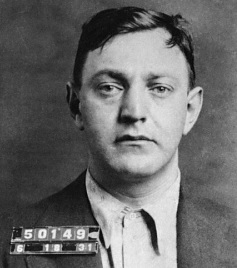
Portrait of Dutch Schultz

Photo: New York Police Department · Public domain

Born in United States · Nationality American — crime / mafias / terrorism / criminal cases — bootlegging, gambling, racketeering

Dutch Schultz

Documented profile covering 8 controversies, including “April 1935: First federal tax fraud trial ends with hung jury” and “August 1935: Acquitted at second tax trial after local public relations campaign”.

Are you concerned? Right of reply

Profile No. 2179 · Updated on 12 October 2026

Portrait of Dutch Schultz

Photo: New York Police Department · Public domain

8Documented controversies+ 1 background event
6Sources
1 followed by a conviction ·

I. Documented controversies

Case · 3 documented stages

August 1935: Acquitted at second tax trial after local public relations campaign

Acquitted / conviction overturned
01

16–29 April 1935

April 1935: First federal tax fraud trial ends with hung jury

Formally charged

Schultz's first tax trial in Syracuse ended without a verdict because the jury could not reach agreement. The government's failure led to a second trial a few months later.

State of the evidence
Documented
Attribution
Accused

Sources · 2

  1. [1]
    Bridgeport History CenterDutch SchultzArchiveHigh reliability
  2. [2]
    Encyclopedia.comThomas E. DeweySecondary sourceHigh reliability

Last verified: 14 September 2026

Add to this entry

02

2 August 1935

August 1935: Acquitted at second tax trial after local public relations campaign

Acquitted / conviction overturned

The second trial, moved to Malone, ended in acquittal. Historical biographies describe a local public relations campaign involving spending and donations intended to improve his image before the verdict.

Attribution
Accused

Sources · 2

  1. [1]
    HISTORYMobster Dutch Schultz is bornSecondary sourceHigh reliability
  2. [2]
    Encyclopedia.comThomas E. DeweySecondary sourceHigh reliability

Last verified: 14 September 2026

Add to this entry

05

1933–28 November 1934

1933–1934: Tax indictment, flight and subsequent surrender

Formally charged

Schultz was indicted for tax offences relating to failure to file income tax returns. He hid for months and became a wanted fugitive before surrendering to authorities in Albany in November 1934.

State of the evidence
Documented
Attribution
Directly implicated

Sources · 2

  1. [1]
    Federal Bureau of InvestigationBrick from the Palace Chop House — Dutch Schultz murder caseOfficial documentVery high reliability
  2. [2]
    Bridgeport History CenterDutch SchultzArchiveHigh reliability

Last verified: 14 September 2026

Add to this entry

03

été–automne 1935

1935: Alleged plot to assassinate prosecutor Thomas E. Dewey rejected by Syndicate leaders

Allegations

Following Dewey's prosecutions, Schultz proposed having the prosecutor assassinated and had his habits investigated. Other organised crime leaders rejected the plan, fearing widespread repression, while Schultz indicated that he intended to act despite their opposition.

State of the evidence
Documented
Attribution
Directly implicated

Sources · 2

  1. [1]
    Federal Bureau of InvestigationBrick from the Palace Chop House — Dutch Schultz murder caseOfficial documentVery high reliability
  2. [2]
    Encyclopedia.comThomas E. DeweySecondary sourceHigh reliability

Last verified: 14 September 2026

Add to this entry

04

23–24 October 1935

October 1935: Schultz murdered following conflict with Syndicate over plan against Dewey

No legal proceedings

Schultz and several associates were shot at the Palace Chop House in Newark, and he died the following day. Historical accounts link the decision to eliminate him to his insistence on assassinating Dewey, which was considered too dangerous for the rest of the Syndicate.

State of the evidence
Documented
Attribution
Protagonist is the victim

Sources · 2

  1. [1]
    Federal Bureau of InvestigationBrick from the Palace Chop House — Dutch Schultz murder caseOfficial documentVery high reliability
  2. [2]
    HISTORYMobster Dutch Schultz is bornSecondary sourceHigh reliability

Last verified: 14 September 2026

Add to this entry

06

années 1920–1933

1920s: Bootlegging empire built on intimidation and extortion of drinking establishments

No legal proceedings

With Joey Noe, Schultz developed an illicit beer network in the Bronx and then Manhattan, compelling drinking establishments to purchase his product. The FBI explicitly describes intimidation being used to enforce this trade.

State of the evidence
Documented
Attribution
Directly implicated

Sources · 1

  1. [1]
    Federal Bureau of InvestigationBrick from the Palace Chop House — Dutch Schultz murder caseOfficial documentVery high reliability

Last verified: 14 September 2026

Add to this entry

07

1928–1932

1928–1932: Territorial wars with Legs Diamond and Vincent Coll, killings attributed to his men

No legal proceedings

The expansion of Schultz's group led to violent wars with the gangs of Legs Diamond and Vincent Coll. The FBI indicates that Schultz gang members may have killed Diamond and Coll, while Noe himself was killed by the opposing faction.

State of the evidence
Documented
Attribution
Directly implicated

Sources · 2

  1. [1]
    Federal Bureau of InvestigationBrick from the Palace Chop House — Dutch Schultz murder caseOfficial documentVery high reliability
  2. [2]
    EBSCODutch Schultz — Research StarterDatabaseHigh reliability

Last verified: 14 September 2026

Add to this entry

08

1919–1921

1919–1921: Burglary conviction and imprisonment

Conviction

As a teenager, Arthur Flegenheimer was arrested for burglary, convicted and imprisoned in New York. The FBI notes that his sentence was extended after disciplinary problems and an attempted escape from a work farm.

State of the evidence
Documented
Attribution
Directly implicated

Sources · 1

  1. [1]
    Federal Bureau of InvestigationBrick from the Palace Chop House — Dutch Schultz murder caseOfficial documentVery high reliability

Last verified: 14 September 2026

Add to this entry

II. Documented background

Documented biographical or institutional milestones (elections, appointments, foundings, acquisitions…). These are not controversies and are not counted as such.

  1. vers 1931–1935

    Early 1930s: Violent takeover of numbers racket in Harlem

    After the decline of bootlegging, Schultz turned to illegal gambling and entered Harlem's lucrative numbers racket. A study circulated by the DOJ describes a takeover conducted through force, threats and attempted murder at the expense of black and Hispanic operators.

    Sources · 2
    1. U.S. Department of Justice / OJP — Historical study of Harlem numbers racket
    2. Federal Bureau of Investigation — Brick from the Palace Chop House — Dutch Schultz murder case

III. Constellation of documented links

  • Linked profile (portrait or initials) — click to open it
  • Line width: number of documented references
  • Hover over or tap a line: controversies and sources

Two profiles are linked when a documented controversy of one names the other. The link points to that controversy and its sources; it does not indicate a personal relationship.

List of documented links (2)
  1. Bumpy Johnson1 documented reference
  2. Vincent Coll1 documented reference

IV. Has something changed?

A new court decision, a missing source, a mistake? Tell us what should be updated: every request is read by the editorial team.

Support the archive

Controversia checks and updates its profiles independently. Support is optional and has no effect on the content of profiles.

Donate

iPhone and iPad

Install Controversia

  1. Tap Share
  2. then Add to Home Screen

Tap Share, then Add to Home Screen.