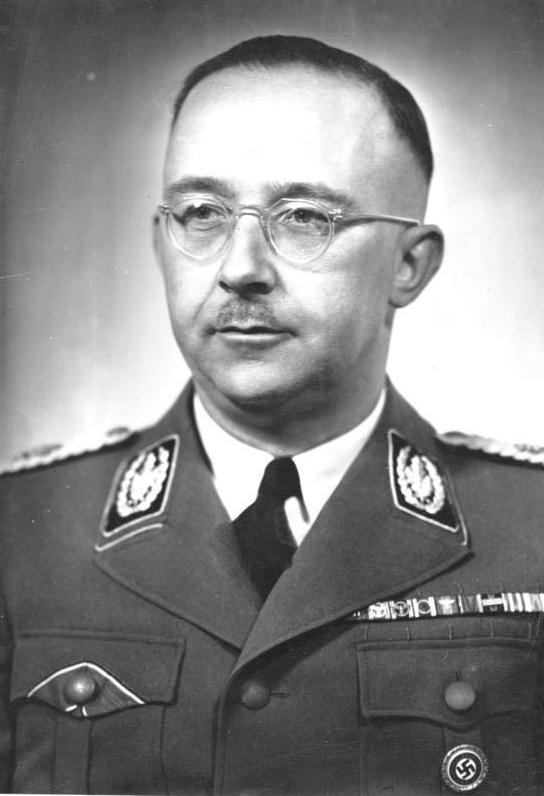
Portrait of Heinrich Himmler

Photo: Friedrich Franz Bauer · CC BY-SA 3.0 de · Wikimedia Commons

Born in Germany · Nationality German — Nazism / SS / police / Holocaust / genocide / war crimes / crimes against humanity

Heinrich Himmler

Documented profile covering 21 controversies, including “1939–1945: expansion of Waffen-SS and involvement of SS units in war crimes and massacres” and “1944–1945: camp evacuations and death marches under SS authority”.

Are you concerned? Right of reply

Profile No. 2715 · Updated on 12 October 2026

Portrait of Heinrich Himmler

Photo: Friedrich Franz Bauer · CC BY-SA 3.0 de · Wikimedia Commons

21Documented controversies+ 3 background events
13Sources
0Formal charge · all time
0Conviction

I. Documented controversies

01

1939–1945

1939–1945: expansion of Waffen-SS and involvement of SS units in war crimes and massacres

No legal proceedings

Under Himmler, the Waffen-SS became a major fighting force within the SS apparatus; several of its units massacred civilians and prisoners and participated in repression operations.

State of the evidence
Documented

Sources · 2

  1. [1]
    United States Holocaust Memorial Museum — Holocaust EncyclopediaHeinrich HimmlerArchiveVery high reliability
  2. [2]
    United States Holocaust Memorial Museum — Holocaust EncyclopediaSS and Nazi PolicyArchiveVery high reliability

Last verified: 14 September 2026

Add to this entry

02

été 1944–May 1945

1944–1945: camp evacuations and death marches under SS authority

No legal proceedings

As Allied forces advanced, Himmler and the SS apparatus ordered camp evacuations, resulting in deadly marches and transports during which tens of thousands of prisoners died of hunger or exhaustion or were shot.

State of the evidence
Documented

Sources · 2

  1. [1]
    United States Holocaust Memorial Museum — Holocaust EncyclopediaDeath MarchesArchiveVery high reliability
  2. [2]
    United States Holocaust Memorial Museum — Holocaust EncyclopediaHeinrich HimmlerArchiveVery high reliability

Last verified: 14 September 2026

Add to this entry

03

23 April–23 May 1945

April–May 1945: attempts to negotiate separate surrender in West, dismissal and suicide after capture

No legal proceedings

In the Reich's final days, Himmler attempted through Count Folke Bernadotte to obtain a surrender on the Western Front. Hitler dismissed him from his posts. After hiding under a false identity, Himmler was captured by British forces and committed suicide with cyanide on 23 May 1945.

State of the evidence
Documented
Attribution
Directly implicated

Sources · 2

  1. [1]
    U.S. Department of State, Office of the HistorianForeign Relations of the United States, 1945 — Himmler approach through Count BernadotteArchiveVery high reliability
  2. [2]
    United States Holocaust Memorial Museum — Holocaust EncyclopediaHeinrich HimmlerArchiveVery high reliability

Last verified: 14 September 2026

Add to this entry

04

1940–1944

1940–1944: selection, abduction and Germanisation of children deemed "racially valuable" in occupied territories

No legal proceedings

As part of his Germanisation policy as RKFDV, Himmler developed principles for racially selecting children from occupied peoples, particularly Poles, allowing some children to be taken from their families and Germanised.

State of the evidence
Documented
Attribution
Directly implicated

Sources · 2

  1. [1]
    Instytut Pamięci Narodowej (IPN)Obsesja aryjskiej krwi. Rabunek dzieci „wartościowych rasowo”Official documentHigh reliability
  2. [2]
    United States Holocaust Memorial Museum — Holocaust EncyclopediaHeinrich HimmlerArchiveVery high reliability

Last verified: 14 September 2026

Add to this entry

05

1942–1944

1942–1944: direct authorisation and support for criminal medical experiments on detainees

No legal proceedings

Himmler supported and authorised human experiments in the camps, particularly Sigmund Rascher's high-altitude and hypothermia experiments at Dachau. Documents produced at the Doctors' Trial show that he personally accepted responsibility for supplying prisoners for these tests.

Attribution
Directly implicated

Sources · 2

  1. [1]
    Auschwitz-Birkenau State MuseumMedical experimentsOfficial documentVery high reliability
  2. [2]
    Harvard Law School Library — Nuremberg Trials ProjectTranscript for NMT 1: Medical Case — Himmler correspondence on human experimentsArchiveVery high reliability

Last verified: 14 September 2026

Add to this entry

06

August 1943–1944

1943–1944: Interior Minister and further concentration of repressive power

No legal proceedings

Himmler became Reich Interior Minister in 1943, combining that position with leadership of the SS and police, further strengthening his authority over the apparatus of repression and persecution.

State of the evidence
Documented
Attribution
Directly implicated

Sources · 1

  1. [1]
    United States Holocaust Memorial Museum — Holocaust EncyclopediaHeinrich HimmlerArchiveVery high reliability

Last verified: 14 September 2026

Add to this entry

07

automne 1941–1943

October 1941: instructs Odilo Globocnik to implement Operation Reinhard

No legal proceedings

Himmler instructed SS and police chief in Lublin Odilo Globocnik to implement the operation that became known as Reinhard, aimed at the systematic murder of Jews in the General Government. Approximately 1.7 million Jews would be killed at Bełżec, Sobibór and Treblinka and in associated operations.

State of the evidence
Documented
Attribution
Directly implicated

Sources · 2

  1. [1]
    United States Holocaust Memorial Museum — Holocaust EncyclopediaOperation ReinhardArchiveVery high reliability
  2. [2]
    United States Holocaust Memorial Museum — Holocaust EncyclopediaFinal Solution: In DepthArchiveVery high reliability

Last verified: 14 September 2026

Add to this entry

08

16 December 1942–1943

16 December 1942: order to deport Roma and Sinti from Reich to Auschwitz-Birkenau

No legal proceedings

Himmler ordered the deportation of Roma and Sinti from the enlarged Reich to a family camp at Auschwitz-Birkenau. According to the USHMM, more than 18,000 people were deported under this decree.

State of the evidence
Documented
Attribution
Directly implicated

Sources · 3

  1. [1]
    United States Holocaust Memorial Museum — Holocaust EncyclopediaHimmler Orders Deportation of Roma and Sinti to AuschwitzArchiveVery high reliability
  2. [2]
    United States Holocaust Memorial Museum — Holocaust Encyclopedia1942: Key DatesArchiveVery high reliability
  3. [3]
    United States Holocaust Memorial Museum — Holocaust EncyclopediaSS and the HolocaustArchiveVery high reliability

Last verified: 14 September 2026

Add to this entry

09

4 October 1943

4 October 1943: Posen speech explicitly acknowledges and justifies extermination of Jews

No legal proceedings

Addressing senior SS officials in Posen, Himmler explicitly discussed the extermination of the Jewish people and presented mass murder as a task carried out by the SS. The speech constitutes major primary evidence of his knowledge of and commitment to the genocide.

State of the evidence
Documented
Attribution
Directly implicated

Sources · 2

  1. [1]
    Harvard Law School Library — Nuremberg Trials ProjectSpeeches to SS officers at Posen (October 1943)ArchiveVery high reliability
  2. [2]
    United States Holocaust Memorial Museum — Holocaust EncyclopediaHeinrich HimmlerArchiveVery high reliability

Last verified: 14 September 2026

Add to this entry

10

1942

Spring–summer 1942: Auschwitz-Birkenau integrated into mass-killing apparatus and Final Solution accelerated

No legal proceedings

Under Himmler's authority, Auschwitz-Birkenau increasingly became a killing centre for Jews deported from across Europe in spring 1942, while the SS coordinated the Final Solution throughout the continent.

State of the evidence
Documented

Sources · 2

  1. [1]
    United States Holocaust Memorial Museum — Holocaust EncyclopediaHeinrich HimmlerArchiveVery high reliability
  2. [2]
    United States Holocaust Memorial Museum — Holocaust EncyclopediaFinal Solution: In DepthArchiveVery high reliability

Last verified: 14 September 2026

Add to this entry

11

19 July–31 December 1942

19 July 1942: order to complete deportation of Jews from General Government by end of year

No legal proceedings

Himmler ordered Jews in the General Government to be "resettled" — in practice deported to killing centres or confined in a few camps — by 31 December 1942.

State of the evidence
Documented
Attribution
Directly implicated

Sources · 2

  1. [1]
    United States Holocaust Memorial Museum — Holocaust Encyclopedia1942: Key DatesArchiveVery high reliability
  2. [2]
    United States Holocaust Memorial Museum — Holocaust EncyclopediaOperation ReinhardArchiveVery high reliability

Last verified: 14 September 2026

Add to this entry

12

7 October 1939–1941

October 1939: Commissioner for the Strengthening of Germandom — expulsions, displacement and racial colonisation in occupied Poland

No legal proceedings

Hitler appointed Himmler Reich Commissioner for the Strengthening of Germandom (RKFDV), empowering him to plan population movements and the settlement of German colonists. Structures under his authority determined who should be Germanised, expelled or eliminated to make way for settlers.

State of the evidence
Documented
Attribution
Directly implicated

Sources · 2

  1. [1]
    United States Holocaust Memorial Museum — Holocaust EncyclopediaHeinrich HimmlerArchiveVery high reliability
  2. [2]
    United States Holocaust Memorial Museum — Holocaust EncyclopediaSS and Nazi PolicyArchiveVery high reliability

Last verified: 14 September 2026

Add to this entry

13

1 March 1941

March 1941: orders Auschwitz-Birkenau expansion for tens of thousands of Soviet prisoners and forced labourers

No legal proceedings

Himmler ordered a major expansion of the Auschwitz complex at Birkenau, initially linked particularly to the intended exploitation of Soviet prisoners of war and forced labour.

State of the evidence
Documented
Attribution
Directly implicated

Sources · 2

  1. [1]
    United States Holocaust Memorial Museum — Holocaust EncyclopediaHeinrich HimmlerArchiveVery high reliability
  2. [2]
    United States Holocaust Memorial Museum — Holocaust EncyclopediaSS and Nazi PolicyArchiveVery high reliability

Last verified: 14 September 2026

Add to this entry

14

June–1941 onward

June–July 1941: authority over security in East and Einsatzgruppen mass massacres

No legal proceedings

Following the invasion of the Soviet Union, Hitler granted Himmler extensive security powers behind the front. The Einsatzgruppen and other SS-police units then began systematic massacres of Jews, Soviet officials, Roma and other civilians.

State of the evidence
Documented

Sources · 3

  1. [1]
    United States Holocaust Memorial Museum — Holocaust EncyclopediaFinal Solution: In DepthArchiveVery high reliability
  2. [2]
    United States Holocaust Memorial Museum — Holocaust EncyclopediaHeinrich HimmlerArchiveVery high reliability
  3. [3]
    United States Holocaust Memorial Museum — Holocaust EncyclopediaSS and the HolocaustArchiveVery high reliability

Last verified: 14 September 2026

Add to this entry

15

été–automne 1941

1941: search for more industrialised killing methods following mass shootings

No legal proceedings

As mass shootings expanded, SS structures explored killing methods involving exhaust gases and fixed installations, among others, as part of the shift towards more systematic extermination.

State of the evidence
Documented

Sources · 2

  1. [1]
    United States Holocaust Memorial Museum — Holocaust EncyclopediaFinal Solution: In DepthArchiveVery high reliability
  2. [2]
    United States Holocaust Memorial Museum — Holocaust EncyclopediaHeinrich HimmlerArchiveVery high reliability

Last verified: 14 September 2026

Add to this entry

16

8 December 1938

1938: decree on racial persecution of Roma and Sinti

No legal proceedings

Himmler issued a decree portraying Roma and Sinti as a racial problem and intensifying their identification, surveillance and persecution by the criminal police and SS.

State of the evidence
Documented
Attribution
Directly implicated

Sources · 1

  1. [1]
    United States Holocaust Memorial Museum — Holocaust EncyclopediaSS and the HolocaustArchiveVery high reliability

Last verified: 14 September 2026

Add to this entry

17

1931–1935

1931–1935: SS racial bureaucracy, genealogical selection and Lebensborn programme

No legal proceedings

Under Himmler, the SS developed race and settlement offices, genealogical criteria for its members and the Lebensborn programme, intended to encourage a population defined as "racially valuable".

State of the evidence
Documented
Attribution
Directly implicated

Sources · 2

  1. [1]
    United States Holocaust Memorial Museum — Holocaust EncyclopediaHeinrich HimmlerArchiveVery high reliability
  2. [2]
    United States Holocaust Memorial Museum — Holocaust EncyclopediaSS and Nazi PolicyArchiveVery high reliability

Last verified: 14 September 2026

Add to this entry

18

1933–1934

1933–1934: control of political police and centralisation of SS concentration camp system

No legal proceedings

Following the Nazi seizure of power, Himmler extended his authority over regional political police forces, and the SS took control of concentration camps, with Dachau serving as the model for a centralised system.

State of the evidence
Documented
Attribution
Institutional responsibility

Sources · 2

  1. [1]
    United States Holocaust Memorial Museum — Holocaust EncyclopediaHeinrich HimmlerArchiveVery high reliability
  2. [2]
    United States Holocaust Memorial Museum — Holocaust EncyclopediaSS and Nazi PolicyArchiveVery high reliability

Last verified: 14 September 2026

Add to this entry

19

30 June–2 July 1934

June–July 1934: SS role in "Night of the Long Knives"

No legal proceedings

Himmler's SS participated in the arrest and execution of SA leaders and other political opponents or rivals during the 1934 purge. The SS emerged stronger and independent of the SA.

State of the evidence
Documented
Attribution
Directly implicated

Sources · 2

  1. [1]
    United States Holocaust Memorial Museum — Holocaust EncyclopediaHeinrich HimmlerArchiveVery high reliability
  2. [2]
    United States Holocaust Memorial Museum — Holocaust EncyclopediaSS and Nazi PolicyArchiveVery high reliability

Last verified: 14 September 2026

Add to this entry

20

1929–1933

1929: Reichsführer-SS — SS transformed into major ideological and coercive apparatus

No legal proceedings

Appointed Reichsführer-SS, Himmler developed a small party guard into a mass organisation based on personal loyalty, racial ideology and paramilitary discipline.

State of the evidence
Documented
Attribution
Directly implicated

Sources · 2

  1. [1]
    United States Holocaust Memorial Museum — Holocaust EncyclopediaHeinrich HimmlerArchiveVery high reliability
  2. [2]
    United States Holocaust Memorial Museum — Holocaust EncyclopediaSS and Nazi PolicyArchiveVery high reliability

Last verified: 14 September 2026

Add to this entry

21

1923

1923: participation in Beer Hall Putsch and involvement in Nazi movement

No legal proceedings

Himmler participated in Hitler's failed Munich putsch and became permanently involved in the National Socialist movement.

State of the evidence
Documented
Attribution
Directly implicated

Sources · 1

  1. [1]
    United States Holocaust Memorial Museum — Holocaust EncyclopediaHeinrich HimmlerArchiveVery high reliability

Last verified: 14 September 2026

Add to this entry

II. Documented background

Documented biographical or institutional milestones (elections, appointments, foundings, acquisitions…). These are not controversies and are not counted as such.

  1. September 1939

    September 1939: RSHA established, bringing together Gestapo, criminal police and SD

    Himmler established the Reich Main Security Office under Heydrich, merging the principal SS-police repression and intelligence bodies into an institution central to persecution and genocide.

    Sources · 2
    1. United States Holocaust Memorial Museum — Holocaust Encyclopedia — SS and Nazi Policy
    2. United States Holocaust Memorial Museum — Holocaust Encyclopedia — Heinrich Himmler
  2. 1934–17 June 1936

    1934–1936: control of Gestapo and appointment as chief of all German police

    Himmler progressively gained control of the political police forces, becoming Chief of the German Police in 1936 and effectively merging the police apparatus with the SS while reducing ordinary legal constraints.

    Sources · 2
    1. United States Holocaust Memorial Museum — Holocaust Encyclopedia — Heinrich Himmler
    2. United States Holocaust Memorial Museum — Holocaust Encyclopedia — SS and Nazi Policy
  3. 1931

    1931: creation of SD and development of SS political intelligence service

    Himmler established the Sicherheitsdienst, under Reinhard Heydrich, to monitor opponents and rivals of the Nazi movement. The SD subsequently became a pillar of the security and persecution apparatus.

    Sources · 2
    1. United States Holocaust Memorial Museum — Holocaust Encyclopedia — SS and Nazi Policy
    2. United States Holocaust Memorial Museum — Holocaust Encyclopedia — Heinrich Himmler

III. Constellation of documented links

  • Linked profile (portrait or initials) — click to open it
  • Line width: number of documented references
  • Hover over or tap a line: controversies and sources

Two profiles are linked when a documented controversy of one names the other. The link points to that controversy and its sources; it does not indicate a personal relationship.

List of documented links (1)
  1. Odilo Globocnik1 documented reference

IV. Has something changed?

A new court decision, a missing source, a mistake? Tell us what should be updated: every request is read by the editorial team.

Support the archive

Controversia checks and updates its profiles independently. Support is optional and has no effect on the content of profiles.

Donate

iPhone and iPad

Install Controversia

  1. Tap Share
  2. then Add to Home Screen

Tap Share, then Add to Home Screen.