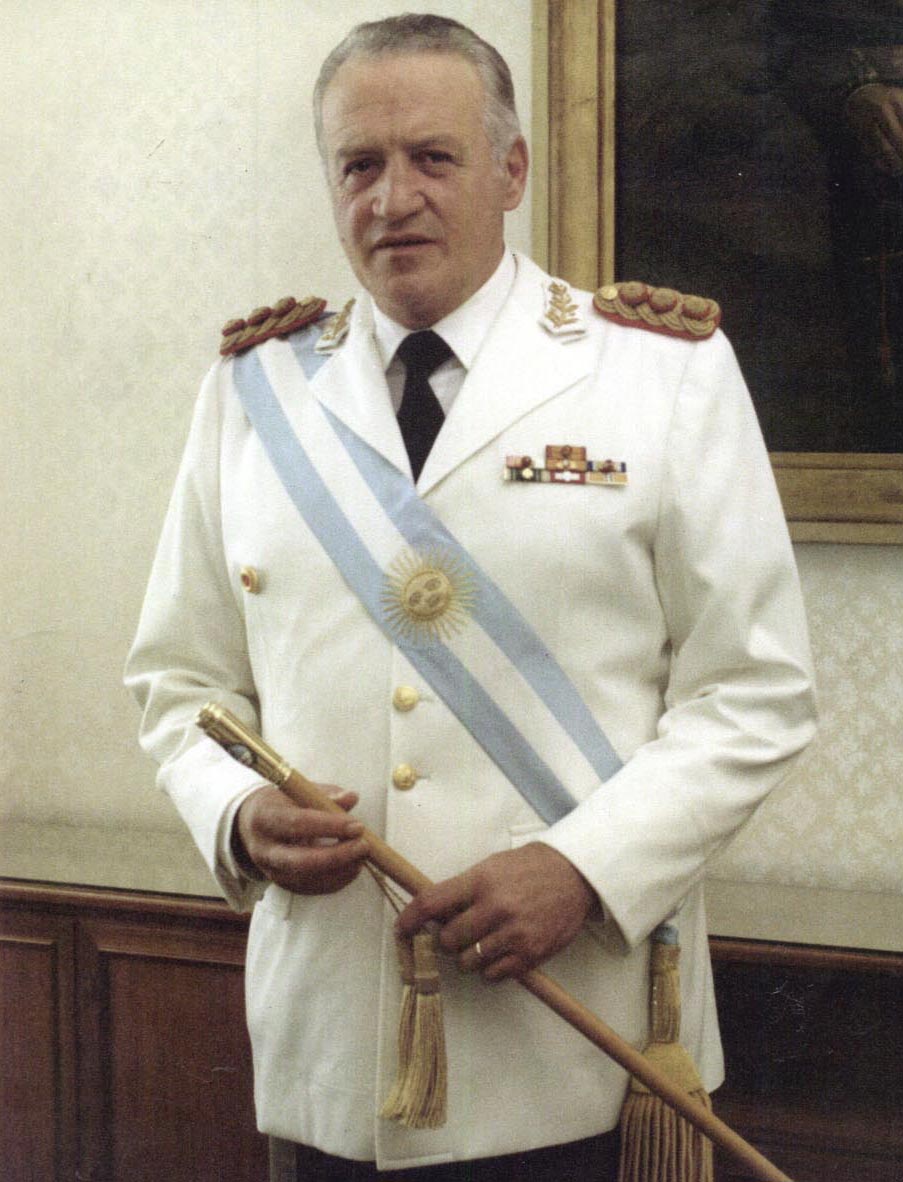
Portrait of Leopoldo Galtieri

Photo: Presidencia de la Nación Argentina · CC BY-SA 2.0 · Wikimedia Commons

Born in Argentina · Nationality Argentine — Military dictatorship / human rights / Falklands War / military justice

Leopoldo Galtieri

Documented profile covering 6 controversies, including “1979–2003: disappearance of Montoneros members under First Army Corps — Galtieri arrested in 2002” and “1982–1989: Rattenbach Report and military conviction for negligence in the war, followed by presidential pardon”.

Are you concerned? Right of reply

Profile No. 2025 · Updated on 12 October 2026

Portrait of Leopoldo Galtieri

Photo: Presidencia de la Nación Argentina · CC BY-SA 2.0 · Wikimedia Commons

6Documented controversies
7Sources
1 followed by a conviction ·

I. Documented controversies

01

1979–1980, procédure 2002–2003

1979–2003: disappearance of Montoneros members under First Army Corps — Galtieri arrested in 2002

Investigation

As commander of the First Army Corps, Galtieri was considered by federal judge Claudio Bonadío in 2002 to share responsibility for the disappearance of eighteen Montoneros members who had returned or planned to return to Argentina in 1979–1980. He was arrested in connection with the case.

Attribution
Command responsibility

Sources · 1

  1. [1]
    Human Rights WatchArgentina: Arrest of Army Chief HailedNGO reportVery high reliability

Last verified: 14 September 2026

Add to this entry

02

1982–1989

1982–1989: Rattenbach Report and military conviction for negligence in the war, followed by presidential pardon

Conviction

After defeat, the Rattenbach Commission examined political, strategic and military responsibility for the war. Galtieri was subsequently convicted by a military court of negligence related to the conflict's conduct, before being pardoned by President Carlos Menem in 1989.

State of the evidence
Established by a court
Attribution
Accused

Sources · 2

  1. [1]
    Argentina.gob.arInforme Rattenbach — documentación y análisis oficialArchiveVery high reliability
  2. [2]
    Human Rights WatchArgentina: Arrest of Army Chief HailedNGO reportVery high reliability

Last verified: 14 September 2026

Add to this entry

03

1985

1985: prosecuted at Trial of the Juntas but acquitted of human rights charges examined

Acquitted / conviction overturned

Galtieri was among the third junta members brought before the courts in the Trial of the Juntas. Unlike Videla, Massera and several other officers, he was not among those convicted: he was acquitted of the human rights violations examined at that trial.

Attribution
Accused
Course of the proceedings
  1. Formally charged — Formal charge before the current outcome

Sources · 2

  1. [1]
    Argentina.gob.ar35 aniversario de la sentencia del Juicio a las JuntasArchiveVery high reliability
  2. [2]
    Human Rights WatchArgentina: Arrest of Army Chief HailedNGO reportVery high reliability

Last verified: 14 September 2026

Add to this entry

04

December 1981–June 1982

1981–1982: de facto presidency within third military junta

No legal proceedings

Galtieri assumed the de facto presidency in late 1981 and led the third junta alongside the navy and air force chiefs. His government continued the authoritarian regime established by the 1976 coup until its collapse following the Falklands War.

State of the evidence
Documented
Attribution
Directly implicated

Sources · 1

  1. [1]
    Argentina.gob.ar35 aniversario de la sentencia del Juicio a las JuntasArchiveVery high reliability

Last verified: 14 September 2026

Add to this entry

05

30 March 1982

30 March 1982: repression of 'Peace, Bread and Work' trade union march

No legal proceedings

Two days before the invasion of the Falklands, the CGT attempted to march towards Plaza de Mayo in protest against economic policy and the dictatorship. Security forces brutally dispersed demonstrators using tear gas, charges and mass arrests; the ILO recorded complaints concerning arrests of union leaders and participants.

State of the evidence
Documented
Attribution
Command responsibility

Sources · 2

  1. [1]
    International Labour OrganizationDefinitive Report — Case No. 1125 (Argentina), June 1982ReportVery high reliability
  2. [2]

Last verified: 14 September 2026

Add to this entry

06

2 April–14 June 1982

April–June 1982: Falklands invasion despite diplomatic warnings and rejection of final Haig proposal

No legal proceedings

Despite direct warnings from Ronald Reagan and US mediation offers, Galtieri refused to renounce the use of force and Argentine troops landed in the Falklands on 2 April 1982. The Galtieri-led junta subsequently formalised Argentine control and rejected Alexander Haig's final peace proposal on 29 April. The war ended with Argentina's defeat on 14 June.

State of the evidence
Documented
Attribution
Directly implicated

Sources · 2

  1. [1]
    U.S. Department of State, Office of the HistorianPresident Reagan message on Falklands crisis, April 2 1982ArchiveVery high reliability
  2. [2]
    U.S. Department of State, Office of the HistorianCrisis in the South Atlantic: The Reagan Administration and the Anglo-Argentine War of 1982Official documentVery high reliability

Last verified: 14 September 2026

Add to this entry

II. Constellation of documented links

  • Linked profile (portrait or initials) — click to open it
  • Line width: number of documented references
  • Hover over or tap a line: controversies and sources

Two profiles are linked when a documented controversy of one names the other. The link points to that controversy and its sources; it does not indicate a personal relationship.

List of documented links (1)
  1. Carlos Menem1 documented reference

III. Has something changed?

A new court decision, a missing source, a mistake? Tell us what should be updated: every request is read by the editorial team.

Support the archive

Controversia checks and updates its profiles independently. Support is optional and has no effect on the content of profiles.

Donate

iPhone and iPad

Install Controversia

  1. Tap Share
  2. then Add to Home Screen

Tap Share, then Add to Home Screen.