Born in France · Nationality French — monarchy / French Revolution / public finances / counter-revolution / political trial

Louis XVI

Documented profile covering 8 controversies, including “1792–1793: Trial by Convention, death sentence and execution in procedurally controversial circumstances” and “1791–1792: Use of veto against measures targeting émigrés and non-juring priests”.

Are you concerned? Right of reply

Profile No. 2127 · Updated on 12 October 2026

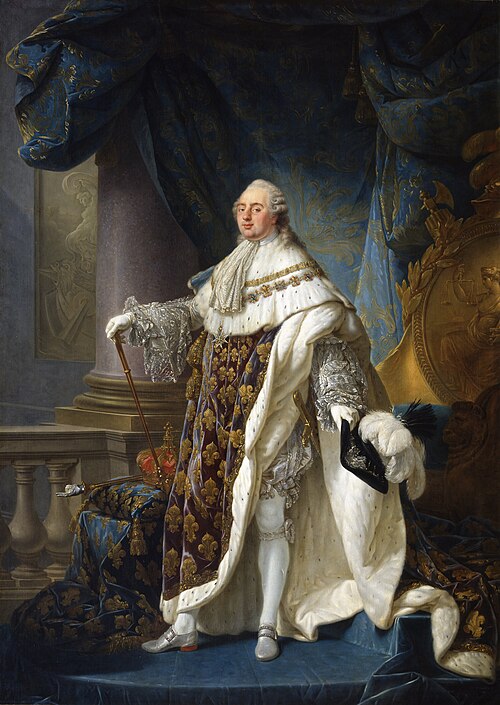
Portrait of Louis XVI

Photo: Wikimedia Commons

8Documented controversies
8Sources
1 followed by a conviction

I. Documented controversies

Case · 3 documented stages

1792–1793: Trial by Convention, death sentence and execution in procedurally controversial circumstances

Conviction
01

11 December 1792–21 January 1793

1792–1793: Trial by Convention, death sentence and execution in procedurally controversial circumstances

Conviction

After abolition of the monarchy, Louis XVI is tried by the National Convention for conspiracy against public liberty and attacks on state security. The deputies find him guilty, reject an appeal to the people and vote for death. He is guillotined on 21 January 1793.

State of the evidence
Established by a court
Attribution
Accused

Sources · 1

  1. [1]
    World History EncyclopediaLouis XVI of FranceSecondary sourceHigh reliability

Last verified: 14 September 2026

Add to this entry

03

1789–November 1792

1789–1792: Secret funds, counter-revolutionary contacts and "armoire de fer" documents

Investigation

The discovery of secret documents at the Tuileries, together with investigations by the Convention, fuels allegations of clandestine payments, dealings with Mirabeau and the use of public funds for a counter-revolutionary strategy.

Attribution
Directly implicated

Sources · 1

  1. [1]
    Ministère de la JusticeLe procès de Louis XVIOfficial documentVery high reliability

Last verified: 14 September 2026

Add to this entry

04

20–21 June 1791

20–21 June 1791: Flight to Varennes and manifesto hostile to revolutionary order

Conviction

Louis XVI and his family secretly leave Paris for the Montmédy area, where the King hopes to regain freedom of action under the protection of royalist troops. Recognised and arrested at Varennes, he is brought back to Paris. His manifesto left at the Tuileries condemns much of the Revolution.

State of the evidence
Documented
Attribution
Directly implicated

Sources · 1

  1. [1]
    World History EncyclopediaFlight to VarennesSecondary sourceHigh reliability

Last verified: 14 September 2026

Add to this entry

02

November 1791–1792

1791–1792: Use of veto against measures targeting émigrés and non-juring priests

No legal proceedings

Under the constitutional monarchy, Louis XVI uses his suspensive veto against several decrees targeting émigrés and non-juring priests. These decisions foster his image as "Monsieur Veto" and suspicions that the King is protecting forces hostile to the Revolution.

State of the evidence
Documented
Attribution
Directly implicated

Sources · 1

  1. [1]
    Wikisource / Encyclopaedia BritannicaEncyclopaedia Britannica, Ninth Edition — French Revolution sectionSecondary sourceMedium reliability

Last verified: 14 September 2026

Add to this entry

05

1774–1789

1770s–1789: Failure to impose lasting fiscal reform amid state crisis

No legal proceedings

Under Louis XVI, ministers Turgot, Necker and then Calonne successively attempt to reform a tax system characterised by exemptions for the privileged. The King gives equivocal support to challenging those exemptions, and the reforms fail as the financial crisis worsens.

State of the evidence
Documented
Attribution
Institutional responsibility

Sources · 1

  1. [1]
    Château de VersaillesLouis XVIOfficial documentVery high reliability

Last verified: 14 September 2026

Add to this entry

06

1788–5 May 1789

1788–1789: Belated summoning of Estates-General following uncontrollable budgetary crisis

No legal proceedings

Facing a financial and political crisis that the monarchy's ordinary mechanisms can no longer resolve, Louis XVI summons the Estates-General, which opens on 5 May 1789 with an announced deficit of 56 million.

State of the evidence
Documented
Attribution
Directly implicated

Sources · 1

  1. [1]
    Château de VersaillesSummoning of the Estates General, 1789Official documentVery high reliability

Last verified: 14 September 2026

Add to this entry

07

20–23 June 1789

20–23 June 1789: Attempt to contain National Assembly and Tennis Court Oath crisis

No legal proceedings

After deputies of the Third Estate constitute themselves as the National Assembly, the hall at the Menus-Plaisirs is closed and the deputies meet at the Jeu de Paume. During the subsequent royal session, Louis XVI attempts to maintain the traditional order of the Estates and restrict the Assembly's initiatives.

State of the evidence
Documented
Attribution
Directly implicated

Sources · 1

  1. [1]
    Château de VersaillesJeu de Paume Oath, 1789Official documentVery high reliability

Last verified: 14 September 2026

Add to this entry

08

1774–12 May 1776

1774–1776: Insufficient support for Turgot's fiscal reforms and minister's dismissal

No legal proceedings

Louis XVI appoints Turgot Controller-General of Finances to reduce the deficit and reform economic and fiscal privileges. Faced with opposition from the Court, guilds and privileged groups, the King fails to sustain his support for the reforms, and Turgot leaves government in 1776.

State of the evidence
Documented
Attribution
Directly implicated

Sources · 1

  1. [1]
    Château de VersaillesTurgotOfficial documentVery high reliability

Last verified: 14 September 2026

Add to this entry

II. Constellation of documented links

  • Linked profile (portrait or initials) — click to open it
  • Line width: number of documented references
  • Hover over or tap a line: controversies and sources

Two profiles are linked when a documented controversy of one names the other. The link points to that controversy and its sources; it does not indicate a personal relationship.

List of documented links (2)
  1. Robespierre2 documented references
  2. Marie Antoinette1 documented reference

III. Has something changed?

A new court decision, a missing source, a mistake? Tell us what should be updated: every request is read by the editorial team.

Support the archive

Controversia checks and updates its profiles independently. Support is optional and has no effect on the content of profiles.

Donate

iPhone and iPad

Install Controversia

  1. Tap Share
  2. then Add to Home Screen

Tap Share, then Add to Home Screen.