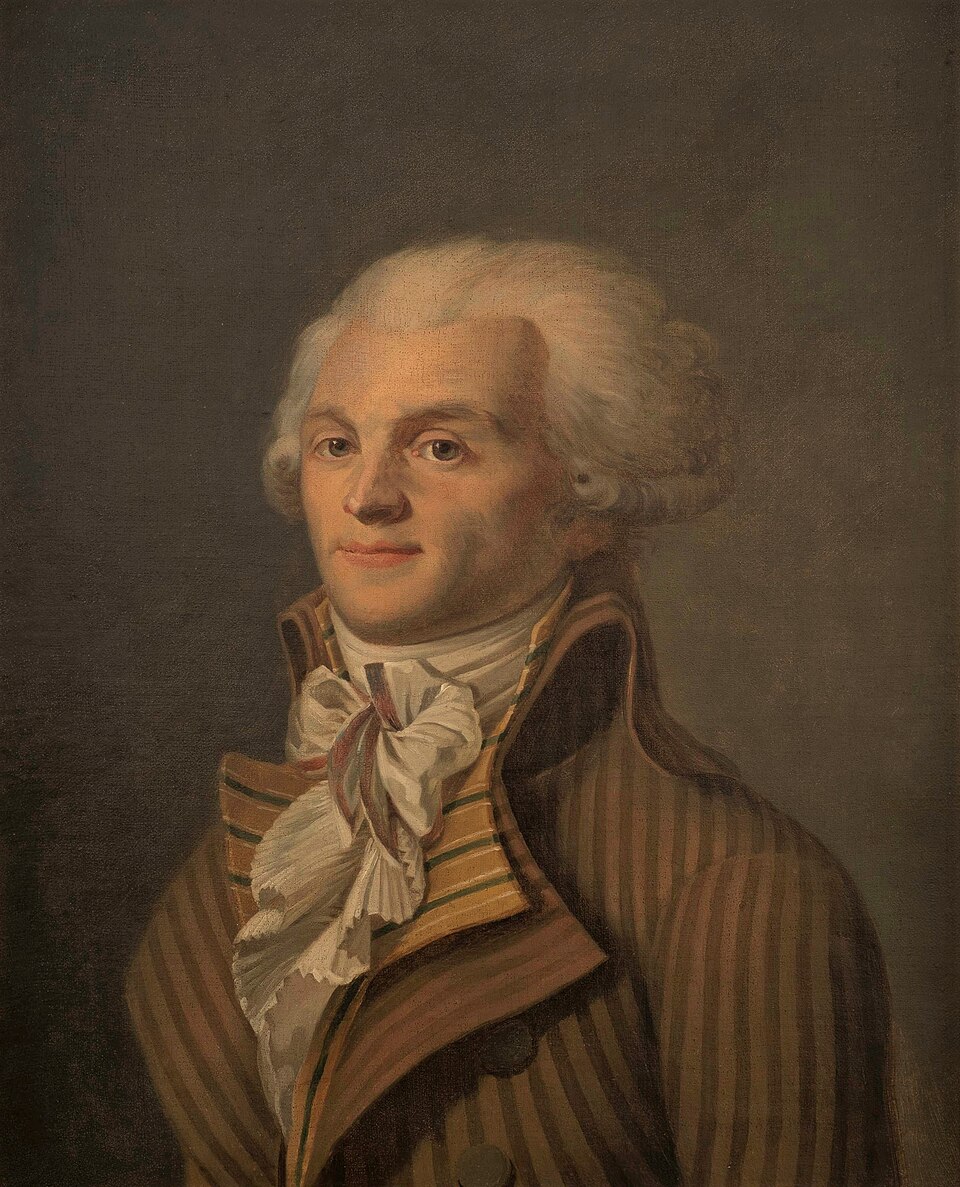
Portrait of Robespierre

Photo: Unidentified painter · CC0 · Wikimedia Commons

Born in France · Nationality French — French Revolution / power / Terror / civic religion

Robespierre

Documented profile covering 12 controversies, including “1793–1794: Association with the Terror despite shared and historically disputed responsibility” and “Late 1793–March 1794: Campaign against radical dechristianisation and Hébertists”.

Are you concerned? Right of reply

Profile No. 2149 · Updated on 12 October 2026

Portrait of Robespierre

Photo: Unidentified painter · CC0 · Wikimedia Commons

12Documented controversies+ 1 background event
8Sources
0Formal charge · all time
0Conviction

I. Documented controversies

01

1793–1794

1793–1794: Association with the Terror despite shared and historically disputed responsibility

No legal proceedings

Robespierre became the symbol of the Reign of Terror, a period of exceptional tribunals, political repression and thousands of executions.

State of the evidence
Documented

Sources · 2

  1. [1]
    Cambridge University PressRobespierre and the TerrorAcademic publicationVery high reliability
  2. [2]
    Cambridge University PressFrench historians and RobespierreAcademic publicationVery high reliability

Last verified: 14 September 2026

Add to this entry

02

1793–1794

Late 1793–March 1794: Campaign against radical dechristianisation and Hébertists

No legal proceedings

Robespierre denounced militant atheism and campaigns to close churches, believing that they alienated the population and served the counter-revolution. This conflict merged with the campaign against the Hébertists.

State of the evidence
Documented
Attribution
Political responsibility

Sources · 1

  1. [1]
    Cambridge University PressRobespierre and religionAcademic publicationVery high reliability

Last verified: 14 September 2026

Add to this entry

03

1794-03

March 1794: Arrest and execution of Hébertists

Conviction — against the Hébertists

Protagonist not prosecuted — these proceedings are not counted in their formal charges or convictions.

Hébert, Ronsin, Momoro and other radicals were arrested, tried and executed. Robespierre politically supported their downfall in the name of combating the "ultra-revolutionaries".

State of the evidence
Documented
Attribution
Political responsibility
Person targeted by the proceedings
the Hébertists
Role of the person profiled
Protagonist not prosecuted

Sources · 1

  1. [1]
    Cambridge University PressRobespierre and the TerrorAcademic publicationVery high reliability

Last verified: 14 September 2026

Add to this entry

04

1794-03–1794-04

March–April 1794: Elimination of Danton, Desmoulins and Indulgents

Conviction — against Danton and Desmoulins

Protagonist not prosecuted — these proceedings are not counted in their formal charges or convictions.

Robespierre abandoned his former allies Danton and Desmoulins, endorsed Saint-Just's attacks and contributed to the political climate that enabled their arrest and conviction.

State of the evidence
Documented
Attribution
Political responsibility
Person targeted by the proceedings
Danton and Desmoulins
Role of the person profiled
Protagonist not prosecuted

Sources · 2

  1. [1]
    Cambridge University PressRobespierre and the TerrorAcademic publicationVery high reliability
  2. [2]
    Ministère de la JusticeLe procès de DantonOfficial documentVery high reliability

Last verified: 14 September 2026

Add to this entry

05

1794-05–1794-06

May–June 1794: Establishment of Cult of Supreme Being and accusations of personal state religion

No legal proceedings

Robespierre secured adoption of the recognition of the Supreme Being and immortality of the soul and played a central role in the national festival on 8 June, prompting ridicule and accusations that he sought to make himself a high priest or moral dictator.

State of the evidence
Documented

Sources · 2

  1. [1]
    Cambridge University PressRobespierre and religionAcademic publicationVery high reliability
  2. [2]
    Cambridge University PressRobespierre and the Festival of the Supreme BeingAcademic publicationVery high reliability

Last verified: 14 September 2026

Add to this entry

06

1794-05-26

26 May 1794: Support for decree ordering no prisoners to be taken from British and Hanoverian forces

No legal proceedings

Following assassination attempts in Paris and amid anti-British propaganda, Robespierre supported the policy leading to the decree denying quarter to British and Hanoverian soldiers.

State of the evidence
Documented
Attribution
Directly implicated

Sources · 1

  1. [1]
    The Historical Journal / Cambridge CoreROBESPIERRE, THE DUKE OF YORK, AND PISISTRATUS DURING THE FRENCH REVOLUTIONARY TERRORAcademic publicationVery high reliability

Last verified: 14 September 2026

Add to this entry

07

1794-06-10

10 June 1794: Law of 22 Prairial drastically reduces safeguards before Revolutionary Tribunal

No legal proceedings

The law curtailed defence rights, restricted witnesses, broadened the categories of "enemies of the people" and essentially left only acquittal or death as possible outcomes.

State of the evidence
Documented
Attribution
Political responsibility

Sources · 2

  1. [1]
    The Historical Journal / Cambridge CoreROBESPIERRE, THE DUKE OF YORK, AND PISISTRATUS DURING THE FRENCH REVOLUTIONARY TERRORAcademic publicationVery high reliability
  2. [2]
    Cambridge University PressRobespierre and the Festival of the Supreme BeingAcademic publicationVery high reliability

Last verified: 14 September 2026

Add to this entry

08

1794-06–1794-07

June–July 1794: Great Terror and dramatic increase in executions in Paris

Civil / administrative proceedings

Following 22 Prairial, the pace of death sentences handed down by the Revolutionary Tribunal increased dramatically, making this its bloodiest period in Paris.

State of the evidence
Documented
Attribution
Shared responsibility

Sources · 2

  1. [1]
    The Historical Journal / Cambridge CoreROBESPIERRE, THE DUKE OF YORK, AND PISISTRATUS DURING THE FRENCH REVOLUTIONARY TERRORAcademic publicationVery high reliability
  2. [2]
    Cambridge University PressRobespierre and the TerrorAcademic publicationVery high reliability

Last verified: 14 September 2026

Add to this entry

09

1794-07-26–1794-07-27

26–27 July 1794: Accusatory speech without names, fear of further purge and Thermidorian downfall

No legal proceedings

Robespierre denounced plots and traitors before the Convention without clearly naming all his targets. Several deputies feared they would be accused next and united the following day to overthrow him.

State of the evidence
Documented
Attribution
Directly implicated

Sources · 2

  1. [1]
    World History EncyclopediaMaximilien RobespierreSecondary sourceHigh reliability
  2. [2]
    Cambridge University PressFrench historians and RobespierreAcademic publicationVery high reliability

Last verified: 14 September 2026

Add to this entry

10

1791–1793

1791–1793: Opponent of death penalty becomes supporter of Louis XVI's execution

No legal proceedings

Robespierre had advocated abolishing the death penalty in 1791. During Louis XVI's trial, however, he argued that the King had to die to save the Republic.

State of the evidence
Documented
Attribution
Directly implicated

Sources · 2

  1. [1]
    World History EncyclopediaTrial and Execution of Louis XVISecondary sourceHigh reliability
  2. [2]
    Cambridge University PressRobespierre and the TerrorAcademic publicationVery high reliability

Last verified: 14 September 2026

Add to this entry

11

1792–1793

December 1792–January 1793: Opposition to referendum and campaign for immediate execution of Louis XVI

Conviction — against Louis XVI

Protagonist not prosecuted — these proceedings are not counted in their formal charges or convictions.

Robespierre argued that Louis should not be tried as an ordinary citizen and opposed an appeal to the people, contributing to the political momentum leading to the King's execution.

State of the evidence
Documented
Attribution
Directly implicated
Person targeted by the proceedings
Louis XVI
Role of the person profiled
Protagonist not prosecuted

Sources · 1

  1. [1]
    World History EncyclopediaTrial and Execution of Louis XVISecondary sourceHigh reliability

Last verified: 14 September 2026

Add to this entry

12

May–June 1793

1793: Campaign against Girondins and support for their exclusion from Convention

No legal proceedings

Robespierre participated in the political campaign against the Girondins, accused of federalism and treason, culminating in the events that forced the Convention to place deputies under arrest.

State of the evidence
Documented

Sources · 2

  1. [1]
    Cambridge University PressRobespierre and the TerrorAcademic publicationVery high reliability
  2. [2]
    Cambridge University PressFrench historians and RobespierreAcademic publicationVery high reliability

Last verified: 14 September 2026

Add to this entry

II. Documented background

Documented biographical or institutional milestones (elections, appointments, foundings, acquisitions…). These are not controversies and are not counted as such.

  1. 1793-07–1794-07

    July 1793–1794: Joins Committee of Public Safety and defends exceptional "revolutionary government"

    Robespierre joined the Committee of Public Safety and became its principal public speaker, justifying an exceptional government based on virtue and terror until the Republic achieved victory.

    Sources · 2
    1. Cambridge University Press — Robespierre and the Terror
    2. Cambridge University Press — French historians and Robespierre

III. Constellation of documented links

  • Linked profile (portrait or initials) — click to open it
  • Line width: number of documented references
  • Hover over or tap a line: controversies and sources

Two profiles are linked when a documented controversy of one names the other. The link points to that controversy and its sources; it does not indicate a personal relationship.

List of documented links (1)
  1. Louis XVI2 documented references

IV. Has something changed?

A new court decision, a missing source, a mistake? Tell us what should be updated: every request is read by the editorial team.

Support the archive

Controversia checks and updates its profiles independently. Support is optional and has no effect on the content of profiles.

Donate

iPhone and iPad

Install Controversia

  1. Tap Share
  2. then Add to Home Screen

Tap Share, then Add to Home Screen.