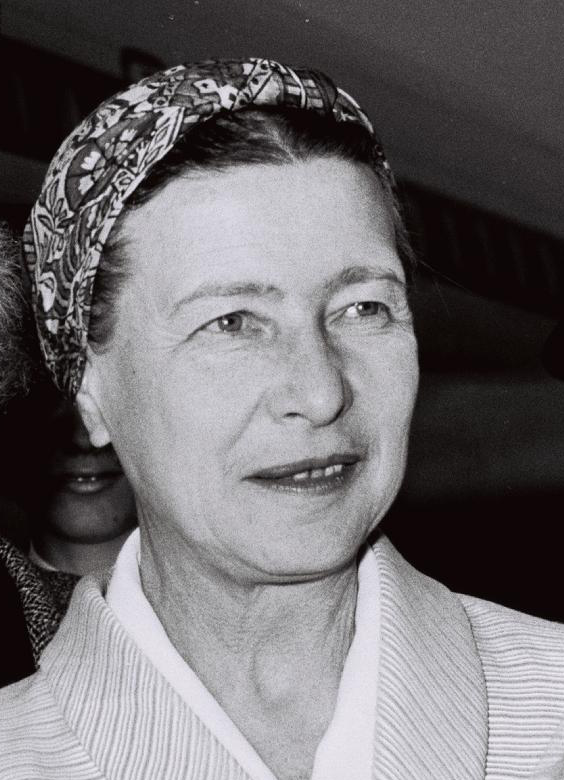
Portrait of Simone de Beauvoir

Photo: Moshe Milner · CC BY-SA 3.0 · Wikimedia Commons

Born in France · Nationality French — Science / intellectuals / activism

Simone de Beauvoir

Documented profile covering 8 controversies, including “Bianca Bienenfeld/Lamblin: Relationship with teenage pupil and posthumous controversy over power imbalance” and “1977 'À propos d'un procès' petition: Challenge to severity of criminal law in case involving minors”.

Are you concerned? Right of reply

Profile No. 2317 · Updated on 12 October 2026

Portrait of Simone de Beauvoir

Photo: Moshe Milner · CC BY-SA 3.0 · Wikimedia Commons

8Documented controversies
10Sources
0Formal charge · all time
0Conviction

I. Documented controversies

01

1937–1940; controverse publique en 1990–1993

Bianca Bienenfeld/Lamblin: Relationship with teenage pupil and posthumous controversy over power imbalance

No legal proceedings

Bianca Bienenfeld, later Bianca Lamblin, born in 1921, was Simone de Beauvoir's pupil in 1937–1938. In memoirs published in 1993, she described a relationship that quickly became romantic with her teacher, followed by her introduction to Sartre and a triangular relationship she subsequently experienced as seduction and abandonment. Publication of Beauvoir's diaries and letters in the early 1990s had revealed Bianca's identity and prompted her autobiographical response.

State of the evidence
Documented

Last verified: 15 September 2026

Add to this entry

02

26 January 1977

1977 'À propos d'un procès' petition: Challenge to severity of criminal law in case involving minors

Protagonist not prosecuted

Protagonist not prosecuted — these proceedings are not counted in their formal charges or convictions.

Beauvoir signed the statement 'À propos d'un procès', published shortly before the trial of three men charged with sexual acts involving children under fifteen. The statement criticised more than three years of pre-trial detention and considered the criminal classification disproportionate in light of the law and social attitudes cited by the petitioners.

State of the evidence
Documented
Attribution
Directly implicated
Role of the person profiled
Protagonist not prosecuted

Sources · 1

  1. [1]
    Le MondeÀ propos d'un procèsPressVery high reliability

Last verified: 15 September 2026

Add to this entry

03

23 May 1977

May 1977 appeal to revise criminal law on adult–minor relationships

No legal proceedings

Beauvoir signed an appeal by eighty public figures seeking to relax and modernise criminal provisions governing certain relationships between adults and minors, including rules concerning children under fifteen and homosexual relationships involving minors aged fifteen to eighteen. The statement explicitly questioned the age at which an adolescent could be considered capable of freely consenting.

State of the evidence
Documented
Attribution
Directly implicated

Last verified: 15 September 2026

Add to this entry

04

1971

Manifesto of the 343: Public declaration of illegal abortion and campaign for decriminalisation

No legal proceedings

Beauvoir played a central role in preparing the Manifesto of the 343, published on 5 April 1971, mobilising her contacts and helping Gisèle Halimi finalise the text. Signatories declared that they had undergone abortions while abortion was illegal, openly engaging in civil disobedience to bring about legislative change.

State of the evidence
Documented
Attribution
Directly implicated

Sources · 2

  1. [1]
    Assemblée nationaleManifeste des 343 : c'était il y a cinquante ansOfficial documentVery high reliability
  2. [2]
    INA5 avril 1971 : le manifeste des 343ArchiveVery high reliability

Last verified: 15 September 2026

Add to this entry

05

June 1960

Djamila Boupacha case: Public denunciation of alleged torture during Algerian War and seizure of Le Monde in Algiers

Investigation

Beauvoir published an appeal in Le Monde detailing allegations of torture and sexual violence made by Djamila Boupacha after her arrest. The article helped internationalise the case. That edition of Le Monde was seized in Algiers, and the government issued a statement disputing elements of its presentation and recalling that an investigation was under way.

State of the evidence
Documented
Attribution
Personally implicated

Sources · 1

  1. [1]
    Le MondePour Djamila BoupachaPressVery high reliability

Last verified: 15 September 2026

Add to this entry

06

September–November 1960

Manifesto of the 121: Support for right to refuse military service during Algerian War and police questioning

Investigation

Beauvoir signed the Manifesto of the 121, which recognised the right to refuse military service and assist Algerians during the war. A judicial investigation was opened after its publication, and Beauvoir, like Sartre, was questioned by the criminal investigation police in November 1960.

State of the evidence
Documented
Attribution
Directly implicated

Last verified: 15 September 2026

Add to this entry

07

1955–1957; réévaluations ultérieures

Visit to China and La Longue Marche: Account criticised as overly favourable towards Maoist China

No legal proceedings

After a six-week visit to the People's Republic of China in 1955, Beauvoir published La Longue Marche in 1957. Her account acknowledged some limitations of the regime but viewed communist China broadly with sympathy and confidence in its future. Critics described it as illustrating Western intellectuals' difficulty in fully recognising coercion and the blind spots of an organised visit.

State of the evidence
Documented
Attribution
Directly implicated

Sources · 2

  1. [1]
    Le MondeLa Longue Marche, de Simone de BeauvoirBookVery high reliability
  2. [2]
    Oxford Academic / Edinburgh Scholarship Online‘An Honest Failure’: Simone de Beauvoir in ChinaAcademic publicationVery high reliability

Last verified: 15 September 2026

Add to this entry

08

1951–1952; débats ultérieurs

Should We Burn Sade?: Philosophical defence of Sade as a 'great moralist' and feminist controversy

No legal proceedings

In 'Faut-il brûler Sade ?', Beauvoir treats Sade as a major philosophical interlocutor and emphasises his moral significance. This interpretation long troubled some feminist theorists, who saw tension with her ethics of reciprocity and The Second Sex. Recent scholarship re-examines that tension rather than reducing the essay to simple endorsement.

State of the evidence
Documented
Attribution
Directly implicated

Sources · 1

  1. [1]
    Continental Philosophy Review / Springer NatureThe ethical night of libertinism: Beauvoir’s reading of SadeAcademic publicationVery high reliability

Last verified: 15 September 2026

Add to this entry

II. Constellation of documented links

  • Linked profile (portrait or initials) — click to open it
  • Line width: number of documented references
  • Hover over or tap a line: controversies and sources

Two profiles are linked when a documented controversy of one names the other. The link points to that controversy and its sources; it does not indicate a personal relationship.

List of documented links (1)
  1. Jean-Paul Sartre1 documented reference

III. Has something changed?

A new court decision, a missing source, a mistake? Tell us what should be updated: every request is read by the editorial team.

Support the archive

Controversia checks and updates its profiles independently. Support is optional and has no effect on the content of profiles.

Donate

iPhone and iPad

Install Controversia

  1. Tap Share
  2. then Add to Home Screen

Tap Share, then Add to Home Screen.